
KINGDOM OF GREAT BRITAIN AUTHOR · HISTORY · EARLY WORKS TO 1800
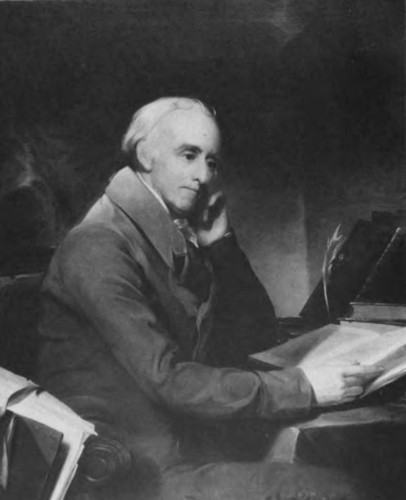
Benjamin Rush
Also known as: Benjamin Rush M.D.
Benjamin Rush was a physician, philosopher, educator, anti-slavery activist, writer, and a founding father of the United States. For an extensive bibliography of works by and about him, see Nathan G. Goodman`s Benjamin Rush - physician and citizen, pages 379-406
Two very beautiful naked girls are crouched facing each other.
— from Essays, 1987
Most acclaimed

Letters
"A landmark of postmodern American fiction, Letters is (as the subtitle genially informs us) "an old time epistolary novel by seven fictitious drolls & dreamers each of which imagines himself factual." Seven characters (including the Author himself) exchange a novel's worth of letters during a 7-month period in 1969, a time of revolution that recalls the U.S.'s first revolution in the 18th century - the heyday of the epistolary novel. Recapitulating American history as well as the plots of his first six novels, Barth's seventh novel is a witty and profound exploration of the nature of revolution and renewal, rebellion and reenactment, at both the private and public levels. It is also an ingenious meditation on the genre of the novel itself, recycling an older form to explore new directions, new possibilities for the novel."--BOOK JACKET.
Essays
1987
The titles of Ralph Waldo Emerson’s essays consist of a range of general concepts such as character, experience, friendship, history, intellect, love, nature, politics, prudence and, most famously, self-reliance. However, in no case is the content of an essay limited to considerations relevant to its title concept. Emerson’s style is digressive and aphoristic, his lengthy paragraphs strewn with terse, dogmatic assertions. The pieces record the diffuse preconceptions and opinions of the author, typically without arguing for them. “Nature,” Emerson’s first published essay, was published independently five years before his first collection of essays. It became a foundational text for transcendentalism, the New England intellectual movement that upheld the divine character of the natural world and the importance of spiritual connection with it. In its emphasis on reason, individual conscience, and innate human goodness, transcendentalism was related to Unitarianism, where Emerson began his career as a minister. While Emerson resigned from this post after only a few years, he retained a lifelong concern with religion and theology that is frequently manifest in his essays. Even in the earlier essays Emerson expresses in passing a general opposition to slavery, but he has sometimes been criticized for remaining aloof from the social issues of his day, and especially from abolition. Emerson’s growing willingness to think and speak about slavery as he aged is visible in the collection; its final essay is a lecture given before the American Anti-Slavery Society. In “Politics,” he includes “emancipat[ing] the slave” alongside befriending the poor, building schools and cherishing the arts in a list of causes that he takes to represent “real good.” Emerson’s essays were especially influential among the members of the Transcendental Club that met in Cambridge, Massachusetts, which included Henry Thoreau among its members. Reading the essays was also instrumental in the literary development of Emerson’s later correspondent Walt Whitman, who in Leaves of Grass aimed to attain the ideal of the American poet described in “The Poet.” In German translation, the essays were read and appreciated by Nietzsche, who chose a quotation from “History” as the epigraph for the first edition of his 1882 book The Gay Science and in the same book named Emerson among the few men he judged to be “masters of prose.” The essays collected here were originally released in two volumes, or “series,” the first in 1841 and the second in 1844. In the original editions, each essay was prefaced by a poem of Emerson’s own authorship. While some of these poems were omitted in later editions, all have been included here.