
UNITED KINGDOM AUTHOR · HISTORY · INTELLECTUAL LIFE
Christopher Hill
Also known as: Hill, Christopher
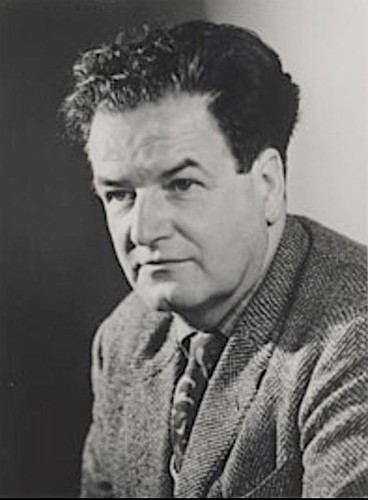
John Edward Christopher Hill (6 February 1912 – 23 February 2003) was an English Marxist historian and academic, specialising in 17th-century English history. From 1965 to 1978 he was Master of Balliol College, Oxford.
POPULAR revolt was for many centuries an essential feature of the English tradition, and the middle decades of the seventeenth century saw the greatest upheaval that has yet occurred in Britain.
Most acclaimed

The World Turned Upside Down?
Within the English revolution of the mid-seventeenth century which resulted in the triumph of the protestant ethic—the ideology of the propertied class—there threatened another, quite different, revolution. Its success “might have established communal property, a far wider democracy in political and legal institutions, might have disestablished the state church and rejected the protestant ethic.”In The World Turned Upside Down Christopher Hill studies the beliefs of such radical groups as the Diggers, the Ranters, the Levellers, and others, and the social and emotional impulses that gave rise to them. The relations between rich and poor classes, the part played by wandering “master-less” men, the outbursts of sexual freedom and deliberate blasphemy, the great imaginative creations of Milton and Bunyan—these and many other elements build up into a marvelously detailed and coherent portrait of this strange, sudden effusion of revolutionary beliefs. It is a portrait not of the bourgeois revolution that actually took place but of the impulse towards a far more fundamental overturning of society.
Survival and Change
2007
Explores the extraordinary richness and diversity of the art of three generations of Balinese painters. From the stylised religious paintings to the unique visions of daily life painted in the era of mass tourism.
Essays
1987
The titles of Ralph Waldo Emerson’s essays consist of a range of general concepts such as character, experience, friendship, history, intellect, love, nature, politics, prudence and, most famously, self-reliance. However, in no case is the content of an essay limited to considerations relevant to its title concept. Emerson’s style is digressive and aphoristic, his lengthy paragraphs strewn with terse, dogmatic assertions. The pieces record the diffuse preconceptions and opinions of the author, typically without arguing for them. “Nature,” Emerson’s first published essay, was published independently five years before his first collection of essays. It became a foundational text for transcendentalism, the New England intellectual movement that upheld the divine character of the natural world and the importance of spiritual connection with it. In its emphasis on reason, individual conscience, and innate human goodness, transcendentalism was related to Unitarianism, where Emerson began his career as a minister. While Emerson resigned from this post after only a few years, he retained a lifelong concern with religion and theology that is frequently manifest in his essays. Even in the earlier essays Emerson expresses in passing a general opposition to slavery, but he has sometimes been criticized for remaining aloof from the social issues of his day, and especially from abolition. Emerson’s growing willingness to think and speak about slavery as he aged is visible in the collection; its final essay is a lecture given before the American Anti-Slavery Society. In “Politics,” he includes “emancipat[ing] the slave” alongside befriending the poor, building schools and cherishing the arts in a list of causes that he takes to represent “real good.” Emerson’s essays were especially influential among the members of the Transcendental Club that met in Cambridge, Massachusetts, which included Henry Thoreau among its members. Reading the essays was also instrumental in the literary development of Emerson’s later correspondent Walt Whitman, who in Leaves of Grass aimed to attain the ideal of the American poet described in “The Poet.” In German translation, the essays were read and appreciated by Nietzsche, who chose a quotation from “History” as the epigraph for the first edition of his 1882 book The Gay Science and in the same book named Emerson among the few men he judged to be “masters of prose.” The essays collected here were originally released in two volumes, or “series,” the first in 1841 and the second in 1844. In the original editions, each essay was prefaced by a poem of Emerson’s own authorship. While some of these poems were omitted in later editions, all have been included here.