
UNITED STATES AUTHOR · FICTION · SHORT
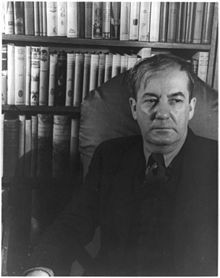
Sherwood Anderson
Also known as: SHERWOOD ANDERSON, Sherwood, Anderson
Sherwood Anderson was born in Camden, Ohio on the 13th of September, 1876. He attended school only intermittently, while helping to support his family by working as a newsboy, housepainter, stock handler, and stable groom. At the age of 17 he moved to Chicago where he worked as a warehouse laborer and attended business classes at night. During the Spanish-American war Anderson fought in Cuba and returned after the war to Ohio, for a final year of schooling at Wittenberg College, Springfield. Anderson's two first novels were Windy McPherson’s Son (1916) and Marching Men (1917), both containing the psychological themes of inner lives of Midwestern villages, the pursuit of success and disillusionment. His third novel, Winesburg, Ohio, was "half individual tales, half long novel form", as the author himself described it. It consisted of twenty-three thematically related sketches and stories. Written in a simple, realistic language illuminated by a muted lyricism, Anderson dramatized crucial episodes in the lives of his characters. In 1921 Anderson received the first Dial Award for his contribution to American literature. After traveling extensively in Europe, he returned back to the United States, settling in New Orleans, where he shared an apartment with William Faulkner. From New Orleans Anderson moved to New York for some time, and from there finally to Marion, Virginia, where he built a country house, and worked as a farmer and journalist. In 1927 he bought both of Marion's weekly newspapers, one Republican, one Democrat, and edited them for two years. To earn extra income he continued his series of lectures throughout the country. Commissioned by Today magazine, Anderson studied the labor conditions during the Depression and collected his articles in Puzzled America (1935). Anderson's newspaper pieces were collected in Hello Towns (1929), Return to Winesburg (1967) and The Buck Fever Papers (1971). Anderson's best works influenced almost every important American writer of the next generation. He also encouraged William Faulkner and Ernest Hemingway in their writing aspirations. Anderson died of peritonitis on an unofficial good-will tour to South America, at Christobal, Canal Zone, on March 8, in 1941. --from thefreelibrary.com
THE WRITER, an old man with a white mustache, had some difficulty in getting into bed.
— from Winesburg, Ohio
Most acclaimed

Winesburg, Ohio
Winesburg, Ohio is Sherwood Anderson's masterpiece, a cycle of short stories concerning life in a small Ohio town at the end of the nineteenth century. At the centre is George Willard, a young reporter who becomes the confidant of the town's 'grotesques'--solitary figures unable to communicate with others. George is their conduit for expression and solace from loneliness, but he has his own longings which eventually draw him away from home to seek a career in the city. He carries with him the dreams and unuttered words of remarkable characters such as Wing Biddlebaum, the disgraced former teacher, and the story-telling Doctor Parcival.
The Norton Anthology of Short Fiction -- Shorter Seventh Edition
Stories I want to know why / Sherwood Anderson Death by Landscape Related: Atwood, Why do you write? / Margaret Atwood Sonny's blues / James Baldwin Gorilla, my love Related: Bambara, What is it I think I'm doing anyhow? / Toni Cade Bambara Snow / Ann Beattie [Occurrence at Owl Creek Bridge]( / Ambrose Bierce Pierre Menard, author of the Quixote / Jorge Luis Borges Miriam /Truman Capote Cathedral Related: Carver, From on writing / Raymond Carver Paul's case Related: Andrea Barrett on Paul's case / Willa Cather Enormous radio / John Cheever Lady with the dog Related: Chekhov, Letter to DV Grigorovich Letter to A S Suvorin / Anton Chekhov [Story of an hour]( / Kate Chopin Heart of darkness Related: Conrad, Preface to the nigger of the Narcissus'' Letter to Barrett H Clark Barry Hannah on heart of darkness C P Sarvan, Racism and the heart of darkness / Joseph Conrad Continuity of parks / Julio Cortazar Open boat Related: Crane, Letter to John Northern Hiliard Allan Gurganus on the open boat Charles C Walcutt, [Stephen Crane: Naturalist] / Stephen Crane Wall of fire rising / Edwidge Danticat Intruder / Andre Dubus King of the bingo game Related: Ellison, an interview / Ralph Ellison Matchimanito / Louise Erdrich [Barn burning]( [Rose for Emily]( Related: Faulkner, an interview / William Faulkner Babylon revisited / F Scott Fitzgerald Great falls Related: Ford on Bharati Mukherjee's Management of grief / Richard Ford Handsomest drowned man in the world / Gabriel Garcia Marquez Yellow wallpaper / Charlotte Perkins Gilman Soldier's embrace / Nadine Gordimer [Young Goodman Brown]( Related: Edgar Allan Poe, Review of Hawthorne's twice told tales / Nathaniel Hawthorne Hills like white elephants Related: Frederick Busch on hills like white elephants Hemingway, an interview / Ernest Hemingway Conscience of the court / Zora Neale Hurston [Araby]( [Dead]( Related: C C Loomis, Jr., structure and sympathy in Joyce's The dead'' / James Joyce Metamorphosis Hunger artist Related: Stanley Corngold, Kafka's the metamorphosis: metamorphosis of the metaphor Kafka, Letter to Max Brod / Franz Kafka White horse / Yasunari Kawabata Girl / Jamaica Kincaid Horse dealer's daughter Rocking horse winner Related: Lawrence, Why the novel matters / DH Lawrence Ones who walk away from Omelas / Ursula K Le Guin Angel Levine / Bernard Malamud Disorder and early sorrow Related: Mann, letter to Paul Amann / Thomas Mann Bliss / Katherine Mansfield Shiloh / Bobbie Ann Mason Adventure in Paris Related: Maupassant, the novel / Guy De Maupassant Why I like country music / James Alan Mcpherson [Bartleby, the Scrivener]( Related: Leo Marx, Melville's parable of the walls / Herman Melville Management of grief Related: Richard Ford on the Management of grief Mukherjee, a four-hundred-year-old woman / Bharati Mukherjee Royal beatings Related: Munro, What is real? / Alice Munro Signs and symbols / Vladimir Nabokov How I contemplated the world from the Detroit house of correction and began my life over again Related: Oates, the Art and craft of revision / Joyce Carol Oates Things they carried / Tim O'Brien Good man is hard to find Everything that rises must converge Related: O'Connor, the Nature and aim of fiction Lee Smith on a good man is hard to find / Flannery O'Connor Guests of the nation Related: Edward P Jones on Guests of the nation / Frank O'Connor O yes / Tillie Olsen [Fall of the House of Usher]( Related: Poe, the Philosophy of composition Poe, Review of Hawthorne's twice told tales Richard Wilbur, the House of Poe / Edgar Allan Poe Jilting of Granny Weatherall Related: Porter, an interview / Katherine Anne Porter Conversion of the Jews / Philip Roth Gimpel the fool / Isaac Bashevis Singer Chrysanthemums / John Steinbeck Rules of the game / Amy Tan Secret life of Walter Mitty Related: Thurber, an interview / James Thurber Death of Ivan Ilych Related: Gary Saul Morson, the Reader as Voyeur: Tolstoi and the poetics of didactic fiction Tolstoy, What is art? / Leo Tolstoy A & P Related: Updike, Accepting the Howells medal / John Updike Moths / Helena Maria Viramontes Everyday use / Alice Walker Blackberry winter / Robert Penn Warren Worn path Related: Susan Dodd on a Worn path Welty, an interview / Eudora Welty Use of force / William Carlos Williams In the garden of the North American martyrs / Tobias Wolff Kew gardens / Virginia Woolf Man who was almost a man / Richard Wright Writers On Writing Why do you write? / Margaret Atwood What is it I think I'm doing anyhow? / Toni Cade Bambara Letter to a young writer / Richard Bausch from On writing / Raymond Carver Letter to DV Grigorovich, March 28, 1886 Letter to AS Suvorin, October 27, 1888 / Anton Chekhov Preface to the Nigger of the Narcissus'' Letter to Barrett H Clark, May 14, 1918 / Joseph Conrad Letter to John Northern Hiliard, February 1895 / Stephen Crane Interview / Ralph Ellison Interview / William Faulkner Interview / Ernest Hemingway Letter to Max Brod, July 5, 1922 / Franz Kafka Why the novel matters / D H Lawrence Letter to Paul Amann, September 10, 1915 / Thomas Mann Novel / Guy De Maupassant Four-hundred-year-old woman / Bharati Mukherjee What is real /Alice Munro Art and craft of revision / Joyce Carol Oates Nature and aim of fiction / Flannery O'Connor Philosophy of composition / Edgar Allan Poe Interview / Katherine Anne Porter Interview / James Thurber What is art? / Leo Tolstoy Accepting the Howells medal / John Updike Interview / Eudora Welty Writing Fiction Reviews And Commentaries Willa Cather's Paul's case'' / Andrea Barrett Ernest Hemingway's Hills like white, elephants'' / Frederick Busch Kafka's the Metamorphosis: metamorphosis of the metaphor / Stanley Corngold Eudora Welty's A worn path'' / Susan Dodd Bharati Mukherjee's The management of grief'' / Richard Ford Stephen Crane's The open boat / Allan Gurganus Joseph Conrad's Heart of darkness / Barry Hannah Frank O'Connor's Guests of the nation'' / Edward P Jones Structure and Sympathy in Joyce's The dead'' / C C Loomis, Jr Melville's Parable of the walls / Leo Marx Reader as voyeur: Tolstoi and the poetics of didactic fiction / Gary Saul Morson Review of Hawthorne's twice told tales / Edgar Allan Poe Racism and the heart of darkness / C P Sarvan Flannery O'Connor's "A good man is hard to find'' / Lee Smith [Stephen Crane: Naturalist] / Charles C Walcutt From the house of Poe / Richard Wilbur Glossary of critical terms Permissions acknowledgments Index of titles
Great American Short Stories
Washington Irving -- The legend of sleepy hollow -- The spectre bridegroom -- Nathaniel Hawthorne -- [Young Goodman Brown]( [Rappaccini's Daughter]( Edgar Allan Poe -- [The murders in the Rue Morgue]( [William Wilson]( [The pit and the pendulum]( [The cask of Amontillado]( Harriet Beecher Stowe -- Captain Kidd's money -- Herman Melville -- Benito Cereno -- The lightning-rod man -- Fitz-James O'Brien -- The diamond lens -- Mark Twain -- The celebrated jumping frog of Calaveras County -- The stolen white elephant -- The man who corrupted Hadleyburg -- Bret Harte -- The luck of roaring camp -- Tennessee's partner -- Ambrose Bierce -- [An Occurrence at Owl Creek Bridge]( A horseman in the sky -- Henry James -- The turn of the screw -- The jolly corner -- Sarah Orne Jewett -- The courting of Sister Wisby -- The Hiltons' holiday -- O. Henry -- The love-philtre of Ikey Schoenstein -- One dollar's worth -- Art and the bronco -- The furnished room -- Calloway's code -- Edith Wharton -- The Rembrandt -- The recovery -- Stephen Crane -- Maggie -- The bride comes to yellow sky -- Willa Cather -- The clemency of the court -- Lou, the prophet -- A night at Greenway Court -- Jack London -- To the man on trail -- The son of the wolf -- The wife of a king -- William Faulkner -- [That Evening Sun]( Ernest Hemingway -- The killers -- John Steinbeck -- The leader of the people -- Flannery O'Connor -- A late encounter with the enemy.