
ECONOMIC CONDITIONS · POLITICS AND GOVERNMENT
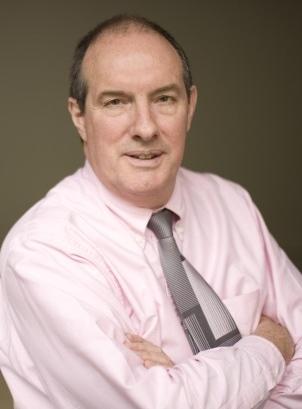
Will Hutton
Also known as: William Nicolas Hutton
British academic and journalist
When William Jefferson Clinton, as he now called himself, retiring momentarily the informal "Bill," took the oath of office on a brilliant, cold January 20, hopes and expectations of what he could achieve were high.
— from On the Edge
Most acclaimed

Writing on the Wall
"From the first slave writings to contemporary hip hop, the canon of African American literature offers a powerful counter-narrative to dominant notions of American culture, history, and politics. Resonant with voices of prophecy and resistance, the African American literary tradition runs deep with emancipatory currents that have had an indelible impact on the United States and the world. Mumia Abu-Jamal has been one of our most important contributors to this canon for decades, writing from the confines of the US prison system to give voice to those most silenced by chronic racism, impoverishment, and injustice. Writing on the Wall is a selection of one hundred previously unpublished essays that crystalize Mumia Abu-Jamal's essential perspectives on community, politics, power, social change, and US history. From discussions of Rosa Parks and Trayvon Martin to John Walker Lindh and Edward Snowden, Abu-Jamal articulates lucid, humorous, and often prescient insight into the past, present, and future of American politics and society. Written as radio commentaries from his prison cell in Death Row, where he was held in solitary confinement for close to thirty years, Mumia's revolutionary perspective brims with hope, encouragement, and profound faith in the possibility of social change and redemption. MUMIA ABU-JAMAL is an award-winning journalist and author of two best-selling books, Live From Death Row and Death Blossoms, which address prison life from a critical and spiritual perspective. In 1981 he was elected president of the Association of Black Journalists (Philadelphia chapter). That same year he was arrested for allegedly killing a white police officer in Philadelphia. He was convicted and sentenced to death in 1982, in a process that has been described as an epic miscarriage of justice. After spending more than 28 years on death row, in 2011 his death sentence was vacated when the Supreme Court allowed to stand the decisions of four federal judges who had earlier declared his death sentence unconstitutional. He is now serving a life sentence without the possibility of parole. In spite of his three-decade-long imprisonment, most of which was spent in solitary confinement on Death Row, Abu-Jamal has relentlessly fought for his freedom and for his profession. From prison he has written seven books and thousands of radio commentaries. He holds a BA from Goddard College and an MA from California State University, Dominguez Hills. His books have sold more than 100,000 copies and have been translated into seven languages. JOHANNA FERNÁNDEZ is a former Fulbright Scholar to Jordan and Assistant Professor of History at Baruch College of the City University of New York where she teaches 20th Century US history and African American History. She is author of the forthcoming When the World Was Their Stage: A History of the Young Lords Party, 1968-1976 (Princeton University Press). Fernandez is the writer and producer of the film, Justice on Trial: the Case of Mumia Abu-Jamal and she is featured in the critically acclaimed documentary about Mumia Abu-Jamal, Long Distance Revolutionary. Her writings have been published internationally, from Al Jazeera to the Huffington Post. She gives interviews often and has appeared in a diverse range of print, radio, online and televised media including Democracy Now! with Amy Goodman, the Fox News shows Hannity and Megyn Kelley, Al Jazeera and The New York Times. She is a coordinator of the Campaign to Bring Mumia Home. CORNEL WEST is a scholar, philosopher, activist and author of over a dozen books including his bestseller, Race Matters. He appears frequently in the media, and has appeared on the Bill Maher Show, Colbert Report, CNN and C-Span as well as on Tavis Smiley's PBS TV Show. "--
On the Edge
Elizabeth Drew's On the Edge is the first inside, full-spectrum report on the Clinton Presidency. Since he came to office, Clinton has been hard to read - ambitious and uncertain, looking toward the future and hounded by the past. From the first days of the administration, Drew has been speaking with and learning from the President's top advisers, key Cabinet officers, and well-placed members of Congress, as she has watched - up close, behind the scenes - as plans are hammered out, policies set, and problems confronted. Drew tells the remarkable story of this turbulent term - and deciphers what it means. Clinton's far-reaching domestic proposals and considerable achievements are recounted, as well as the distracting and corrosive personal struggles, especially Whitewater. Drew portrays his legislative gambles - from health care to NAFTA - and his costly inattention to foreign policy - the confused policymaking on Somalia, Bosnia, Haiti. She reveals the struggles within the President's foreign policy team. She traces how controversies over such a wide range of issues and events - gays in the military, the mishandling of Zoe Baird's and Lani Guinier's nominations, the $200 haircut, the travel office, and the death of Vincent Foster - have undermined confidence in Clinton's Presidency and fanned the flames of "the character issue." She shows sides of Clinton never seen before and explores the critical and little-understood role of Hillary Rodham Clinton - both as a power and as a personality - and measures the truly unprecedented influence of Vice President Al Gore.
The state we're in
1995
This is about more than geographical location of Maine, and certainly is not a picture postcard of the coastal state. Some characters have arrived by accident, others are trying to get out. The collection opens, closes, and is interlaced with stories that focus on Jocelyn, a wryly disaffected teenager living with her aunt and uncle while attending summer school. As in life, the narratives of other characters interrupt Jocelyn's, sometimes challenging, sometimes embellishing her view.