
UNITED STATES AUTHOR · AFRICAN AMERICANS · POETRY
James Weldon Johnson
Also known as: james weldon johnson, james johnson
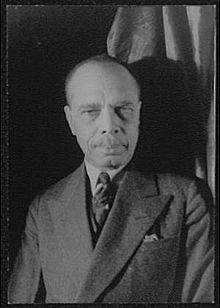
James Weldon Johnson (June 17, 1871 – June 26, 1938) was an American writer and civil rights activist. He was married to civil rights activist Grace Nail Johnson. Johnson was a leader of the National Association for the Advancement of Colored People (NAACP), where he started working in 1917. In 1920, he was the first African American to be chosen as executive secretary of the organization, effectively the operating officer. He served in that position from 1920 to 1930. Johnson established his reputation as a writer, and was known during the Harlem Renaissance for his poems, novel, and anthologies collecting both poems and spirituals of black culture. He wrote the lyrics for "Lift Every Voice and Sing", which later became known as the Negro National Anthem. Johnson was appointed under President Theodore Roosevelt as U.S. consul in Venezuela and Nicaragua for most of the period from 1906 to 1913. In 1934 he was the first African-American professor to be hired at New York University. Later in life, he was a professor of creative literature and writing at Fisk University, a historically black university.
THE fact that within New York, the greatest city of the New World, there is found the greatest single community anywhere of people descended from age
— from Black Manhattan
Most acclaimed

God’s Trombones
The inspiring sermon-poems of James Weldon Johnson. James Weldon Johnson was a leading figure of the Harlem Renaissance, and one of the most revered African Americans of all time, whose life demonstrated the full spectrum of struggle and success. In God's Trombones, one of his most celebrated works, inspirational sermons of African American preachers are reimagined as poetry, reverberating with the musicality and splendid eloquence of the spirituals. This classic collection includes "Listen Lord (A Prayer)," "The Creation," "The Prodigal Son," "Go Down Death (A Funeral Sermon)," "Noah Built the Ark," "The Crucifixion," "Let My People Go," and "The Judgment Day."
Writings
An Exact Exposition of the Orthodox Faith (Koinē Greek: Ἔκδοσις Ἀκριβὴς τῆς Ὀρθοδόξου Πίστεως, Ékdosis akribès tēs Orthodóxou Písteōs) – a summary of the teachings and dogmatic writings of the Early Church Fathers. More specifically the Cappadocian Fathers (Saint Basil, Saint Gregory of Nazianzus and Saint Gregory of Nyssa) from the 4th century. It incorporates Aristotelian language and demonstrates originality through John's selection of texts and annotations influenced by Antiochene analytical theology. This work, when translated into Oriental languages and Latin, became a valuable resource for both Eastern and Western thinkers, offering logical and theological concepts. Additionally, its systematic style served as a model for subsequent theological syntheses composed by medieval Scholastics. The "Exposition" delves into speculations about the nature and existence of God, giving rise to points of debate among later theologians.This writing was the first work of systematic theology in Eastern Christianity and an important influence on later Scholastic works
Complete poems
This volume of E.J. Pratt's selected poems introduces Pratt's poems to the college and university student, providing the background necessary for an informed reading of the poems. The volume offers a full sampling of Pratt's poems chosen both for their representativeness and for their intrinsic value. Included are the major long poems, The Witches' Brew, The Iron Door, The Titanic, Brébeuf and His Brethren, and Towards the Last Spike, and important shorter lyrics such as 'Newfoundland,' 'Come Away, Death,' and 'From Stone to Steel.' The editorial approach is historical, chronological, and biographical. The introduction locates E.J. Pratt in his Newfoundland and Canadian contexts, and discusses the development of his work in relation to his early modernist contemporaries, concluding that Pratt remains the most important and influential Canadian poet up to the mid-fifties. As such, he has been a key figure in shaping the Canadian literary imagination of his day and the later poetics of landscape adopted by Earle Birney and Margaret Atwood. The editors provide annotations, textual notes, and a biographical chronology. The printed volume is supplemented by the electronic resources of the Selected Pratt website at www.trentu.ca/pratt/selected.