Discover

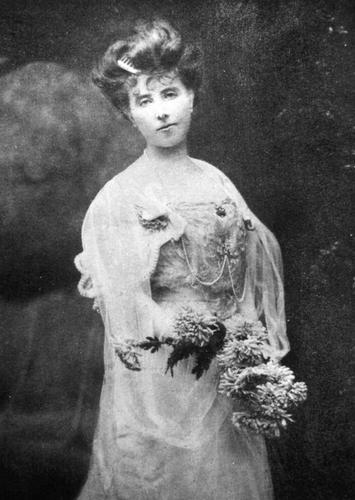
Elizabeth von Arnim

Personal Information

Born August 31, 1866
Died February 9, 1941 (74 years old)
Sydney, German Reich
Also known as: Elizabeth Countess von Arnim-Schlagenthin, Elizabeth Countess Russell
19 books
4.4 (13)
135 readers

Description

Born in Australia, she married a German aristocrat and her earliest works are set in Germany. Her first marriage made her Countess von Arnim-Schlagenthin and her second Elizabeth Russell, Countess Russell. After her first husband's death, she had a three-year affair with the writer H. G. Wells, then later married Frank Russell, elder brother of the Nobel prize-winner and philosopher Bertrand Russell. She was a cousin of the New Zealand-born writer Katherine Mansfield. Though known in early life as May, her first book introduced her to readers as Elizabeth, which she eventually became to friends and finally to family. Her writings are ascribed to Elizabeth von Arnim. She used the pseudonym Alice Cholmondeley only for a novel, Christine, published in 1917. [Wikipedia]

Books

Newest First

Christopher and Columbus

3.0 (1)
6

The protagonists are Anna-Rose and Anna-Felicitas von Twinkler, 17-year-old twins from an aristocratic, half-German family. Orphaned, they are sent to an uncle in England, but World War I is on and afraid of anti-German hysteria, the uncle packs them off to America. On the ship they are befriended by a man who becomes the girls' protector on their American adventure.

The Enchanted April

3.0 (1)
1

The four women at the center of The Enchanted April are alike only in their dissatisfaction with their everyday lives. They find each other--and the castle of their dreams--through a classified ad in a London newspaper one rainy February afternoon. The ladies expect a pleasant holiday, but they don't anticipate that the month they spend in Portofino will reintroduce them to their true natures and reacquaint them with joy.

The caravaners

5.0 (1)
12

A devasting and hilarious comedy about an Edwardian caravan holiday in Kent: In the early years of the twentieth century, Baron Otto von Ottringel, a pompous and self-important major in the German army, is about to take a holiday abroad with his long-suffering second wife. His narrative of pained bewilderment at the bizarre behavior of the English people with whom he has chosen to spend a month in a convoy or horse-drawn holiday caravans is side-splittingly funny. We sympathize deeply with the lady whom he pursues in a platonic and very one sided holiday affair, and even more with Baroness Edelgard, who discovers her own holiday freedoms, and becomes newly emancipated in her marriage, to the Baron's horror. Reflecting frustration with and exasperated affection for German aristocratic society, The Caravaners reveals the lost world of European social networks and crusted assumptions that disappeared forever with the First World War.

Elizabeth and Her German Garden

4.8 (4)
34

Told in a series of diary entries, Elizabeth and Her German Garden recounts one year in the life of an Englishwoman determined to revitalize the neglected garden of their German estate. It is in the process of laying out flower beds, ordering rose varietals, and supervising the planting that she finds peace and escape from her three young children (referred to simply as the April, May, and June babies) and husband, a German aristocrat who she satirically calls the “Man of Wrath.” For Elizabeth, each season brings delightful and unexpected changes to her garden—and less delightful visits from unwanted houseguests who fail to appreciate the beauty and calm that she strives to create. Elizabeth and Her German Garden was published anonymously in 1898 due to its semi-autobiographical nature: like the Elizabeth of the novel, Arnim lived in a manor in Pomerania with her first husband, a German Count, with whom she shared several children. This novel, her first, was an instant bestseller. It was reprinted numerous times in its first few years and rereleased in 1900 as an expanded edition with new diary entries added. There was much speculation about the author’s identity (with at least one publisher incorrectly crediting the novel to Princess Henry von Pless), and thanks to its runaway success, her following works were simply attributed to “the author of Elizabeth and Her German Garden” or even just “Elizabeth.” Today, it continues to be loved by readers drawn in by Elizabeth’s witty, sarcastic observations about life, family, and nineteenth century German society intertwined with idyllic descriptions of nature and solitude.

The Solitary Summer

4.0 (2)
16

From the book:May 2nd. - Last night after dinner, when we were in the garden, I said, "I want to be alone for a whole summer, and get to the very dregs of life. I want to be as idle as I can, so that my soul may have time to grow. Nobody shall be invited to stay with me, and if any one calls they will be told that I am out, or away, or sick. I shall spend the months in the garden, and on the plain, and in the forests. I shall watch the things that happen in my garden, and see where I have made mistakes. On wet days I will go into the thickest parts of the forests, where the pine needles are everlastingly dry, and when the sun shines I'll lie on the heath and see how the broom flares against the clouds. I shall be perpetually happy, because there will be no one to worry me. Out there on the plain there is silence, and where there is silence I have discovered there is peace."
Vera

0.0 (0)
0

De bewogen levensloop van een Haagse lerares van peuter tot 43-jarige.
