
FRANCE AUTHOR · BIOGRAPHY · INTERNATIONALE SITUATIONNISTE
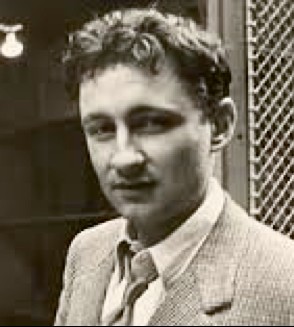
Guy Debord
Also known as: GUY DEBORD, Guy DEBORD
Bernard's sermon On Conversion was given in 1140 in Paris, as a public discourse.
— from Correspondence, 1975
Most acclaimed

Correspondance
1994
How to reconcile the necessary loneliness of the creator and the need to build a community of spirits that are close to the neighboring requirements? For Yves Bonnefoy, sharing is the meaning of the poetic experience, in his eyes different from mere literature. One of the moments is that of writing a letter. The edition of his Correspondence associates the letters he has written with those he has received. It brings out the fabric of a life of man and poet, with its network of friendships, constant or mobile, according to alliances, chances and crumples. This first volume, begun with the collaboration of Yves Bonnefoy, brings together more than nine hundred letters exchanged in the second half of the twentieth century, to which are added some e-mails.^ The dialogues, with forty-nine correspondents, are organized around two axes: on the one hand, links from surrealism - André Breton, Pierre Alechinsky, Gilbert Lely, Christian Dotremont, George Henein, Raoul Ubac, Jacqueline Lamba, André Pieyre of Mandiargues, Hans Bellmer, Jean Brun; on the other hand, the friendships which after fifteen years led to the creation of L'Éphémère (1967-1972), the magnificent magazine published by the Maeght editions: André du Bouchet, Jacques Dupin and Gaëtan Picon , Louis-René des Forêts and Paul Celan.^ The other authors of the letters are in no way secondary characters, neither in themselves, nor by the place they occupied in the world of Bonnefoy: Gaston Bachelard, Jean Wahl and Andre Chastel, his masters; then Gilbert Lely, Salah Stétié, Pierre Jean Jouve, Gabriel Bounoure, Christiane Martin du Gard, Philippe Jaccottet, Boris Schloezer, André Frenaud, Michel Butor, Emil Cioran, Monique Wittig, Paul Benichou, Jean-Pierre Richard or Henry Corbin, for to name only them. Here you will find a wealth of information about the poet's work and the sensibility of an era, with notes enriched with excerpts from the writer's Chronology by himself, also unpublished.--Translation of page 4 of cover by Fabula.
Correspondence
1975
""I am leaving to Tahiti where I shall hope to end my days. My art...I regard as no more than a tender shoot, though one that I hope to develop into a wild and primitive growth.... The European Gauguin has ceased to exist and nobody will ever see any of his works here again."" "With these words, Paul Gauguin set off on a voyage that would not only irrevocably change his own life and work, but also the entire course of modern art. This volume combines for the first time the artist's public expressions of his world - his paintings - with his private correspondence - to his estranged wife, his agent, and his illustrious contemporaries such as Strindberg and van Gogh. Gauguin vividly describes his creative movements as well as the details of his daily life, most poignantly his consuming worries about health and finances." "The book is illustrated throughout with many of Gauguin's most ambitious and beautiful canvases. Watercolors and pencil sketches illuminate the early stages of these major works, and illustrated journal pages and rare vintage photographs reveal the people and places he knew." "An invaluable insight into Gauguin's life, this volume is equally important for its determined look at the transgressive spirit of those artists who challenge the conventions of their time to create an art of the future."--BOOK JACKET.