
SPAIN AUTHOR · HISTORY · BIOGRAPHY
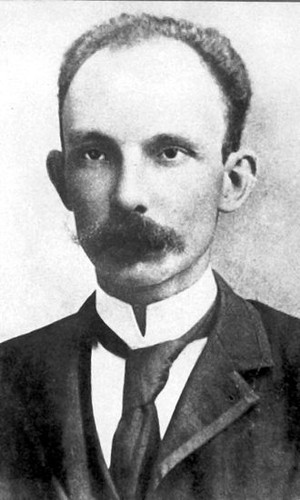
José Martí
Also known as: Jose Marti Marti, Jose Marti
José Julián Martí Pérez más conocido como José Martí (La Habana, 28 de enero de 1853-Dos Ríos, 19 de mayo de 1895) fue un político republicano democrático, pensador, escritor, periodista, filósofo y poeta cubano, creador del Partido Revolucionario Cubano y organizador de la Guerra del 95 o Guerra Necesaria, llamada así a la Guerra de Independencia de Cuba. Perteneció al movimiento literario del modernismo.
Bernard's sermon On Conversion was given in 1140 in Paris, as a public discourse.
— from Correspondence, 1975
Most acclaimed

Thoughts
When TLC was between albums, I had no way to release my creativity. One night, feeling put-out by my boyfriend and wondering about how much women had to go through to make a relationship work, I sat down and started writing poems. "Unpretty" was the first. Up until then, I hadn't realized how badly I needed to release what I was feeling inside. They were my thoughts from the heart, and my art. The poems cover a whole range of topics: Love, relationships, heartbreak, body image, family, society, abortion, and many other things. They each mean alot to me, and I hope they inspire you, give you a different perspective on what's going on around you, or just help you relax. You'll find a little bit of me in these words, and maybe you'll find a little bit of yourself or someone you know. I reached out to my friends, including my fans, while I was putting Thoughts. together and they realty inspired me and helped me figure out which stories to tell. Stories about the important people in my life, like my mom who's always been there for me, my family, my TLC partners Lisa and Rozonda, and those who have all helped me along the way. I've had to deal with some tough stuff, like my relationship with my dad, who left when I was three, my never-ending battle with sickle cell, the bad high school years, my self-image problems, and my fight to survive in this crazy music business. Sharing these stories and poems has helped me face big issues in my life. Maybe they'll help you, too. Or maybe they'll give you a better understanding of who I am as a person. I can only express myself so much through my songs. On my own, though, I can let you into my heart and mind. Thank you for allowing me to share my Thoughts with you. Love, Tionne
Correspondence
1975
""I am leaving to Tahiti where I shall hope to end my days. My art...I regard as no more than a tender shoot, though one that I hope to develop into a wild and primitive growth.... The European Gauguin has ceased to exist and nobody will ever see any of his works here again."" "With these words, Paul Gauguin set off on a voyage that would not only irrevocably change his own life and work, but also the entire course of modern art. This volume combines for the first time the artist's public expressions of his world - his paintings - with his private correspondence - to his estranged wife, his agent, and his illustrious contemporaries such as Strindberg and van Gogh. Gauguin vividly describes his creative movements as well as the details of his daily life, most poignantly his consuming worries about health and finances." "The book is illustrated throughout with many of Gauguin's most ambitious and beautiful canvases. Watercolors and pencil sketches illuminate the early stages of these major works, and illustrated journal pages and rare vintage photographs reveal the people and places he knew." "An invaluable insight into Gauguin's life, this volume is equally important for its determined look at the transgressive spirit of those artists who challenge the conventions of their time to create an art of the future."--BOOK JACKET.