Discover

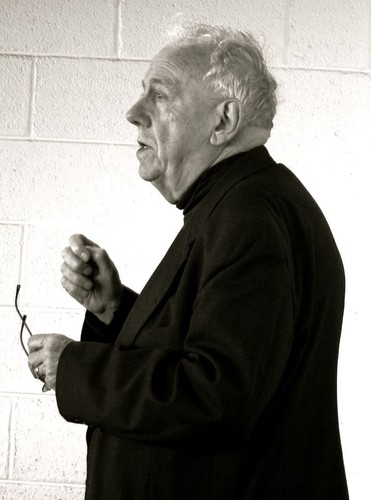
Alasdair C. MacIntyre

Personal Information

Born January 1, 1929 (97 years old)
Also known as: Alasdair MacIntyre, Alasdair Macintyre
27 books
0.0 (0)
60 readers

Description

Alasdair Chalmers MacIntyre (born 12 January 1929) is a Scottish philosopher, primarily known for his contribution to moral and political philosophy, but also known for his work in history of philosophy and theology. MacIntyre's After Virtue (1981) is widely recognised as one of the most important works of Anglophone moral and political philosophy in the 20th century. He is senior research fellow at the Centre for Contemporary Aristotelian Studies in Ethics and Politics (CASEP) at London Metropolitan University, Emeritus Professor of Philosophy at the University of Notre Dame, and Permanent Senior Distinguished Research Fellow at the Notre Dame Center for Ethics and Culture. During his lengthy academic career, he also taught at Brandeis University, Duke University, Vanderbilt University, and Boston University. Source: [Alasdair MacIntyre]( on Wikipedia

Books

Newest First

Dependent rational animals

0.0 (0)
1

"The overall argument of this book presupposes the truth of certain contentious philosophical theses: that human identity is primarily an animal identity, that understanding the resemblance between human beings and some other types of intelligent animals is a necessary prerequisite for also understanding how they differ, that human flourishing requires the exercise of certain types of virtue, and that it is only within a certain type of local political community that those virtues can be developed and sustained. The latter part of this book is directed to the discussion and defence of these theses."--Jacket.

The MacIntyre reader

0.0 (0)
1

Alasdair MacIntyre is one of the most controversial philosophers and social theorists of our time. He opposes liberalism and postmodernism with the teleological arguments of an updated Thomistic Aristotelianism. It is this tradition, he claims, which presents the best theory so far about the nature of rationality, morality and politics. This is the first Reader of MacIntyre's work.

Whose justice? Which rationality?

0.0 (0)
8

Is there any cause or war worth risking one's life for? How can we determine which actions are vices and which virtues? MacIntyre, professor of philosophy at Vanderbilt University, unravels these and other such questions by linking the concept of justice to what he calls practical rationality. He rejects the grab-what-you-can, utilitarian yardstick adopted by moral relativists. Instead, he argues that four wholly different, incompatible ideas of justice put forth by Aristotle, Augustine, Aquinas and Hume have helped shape our modern individualistic world. In his unorthodox view, each person seeks the good through an ongoing dialogue with one of these traditions or within Jewish, non-Western or other historical traditions. This weighty sequel to After Virtue (1981) is certain to stir debate.

Selected essays

0.0 (0)
1

"With his wit, eloquence and shrewd perception of contemporary morals, Samuel Johnson was the most versatile of Augustan writers. His dictionary, dramas and poetry established his reputation, but it was the essays published in The Rambler, The Adventurer and The Idler that demonstrated the range of his talent. Tackling ethical questions such as the importance of self-knowledge, awareness of mortality, the role of the novel, and, in a lighter vein, marriage, sleep and deceit, these brilliant and thought-provoking essays are a mirror of the time in which they were written and a testament to Johnson's stature as the leading man of letters of his age." "This new edition contains a broad selection of essays presenting both the forcefully argued moral pieces of Johnson's middle years and the more light-hearted essays of his later work. The introduction places the works in their historical and literary context, and there is also a chronology of Johnson's life and times."--Jacket.

Religious Significance of Atheism

0.0 (0)
2

From two perspectives; one philosophical, one cultural, these two essays explore the religious significance of atheism.