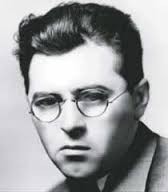
James T. Farrell
Personal Information
Description
An American novelist, most famous for the Studs Lonigan trilogy.
Books
Lonely for the future
Three young men attempt to come to terms with the immediate problems of Chicago in the 20s, in fulfilling their dreams.
My baseball diary
"First published in 1957, My Baseball Diary chronicles James T. Farrell's enduring passion for the game, from his earliest baseball memory at the age of six through his reminiscences of his first World Series game in 1917 to his later meetings with and recollections of Hall of Famers Ray Schalk, Eddie Collins, Red Faber, Ty Cobb, and Gabby Hartnett."--Jacket.
Selected essays
"With his wit, eloquence and shrewd perception of contemporary morals, Samuel Johnson was the most versatile of Augustan writers. His dictionary, dramas and poetry established his reputation, but it was the essays published in The Rambler, The Adventurer and The Idler that demonstrated the range of his talent. Tackling ethical questions such as the importance of self-knowledge, awareness of mortality, the role of the novel, and, in a lighter vein, marriage, sleep and deceit, these brilliant and thought-provoking essays are a mirror of the time in which they were written and a testament to Johnson's stature as the leading man of letters of his age." "This new edition contains a broad selection of essays presenting both the forcefully argued moral pieces of Johnson's middle years and the more light-hearted essays of his later work. The introduction places the works in their historical and literary context, and there is also a chronology of Johnson's life and times."--Jacket.
The road between
"Farrell's first novel since Bernard Ciare (1946), this has some of the standard Farrell features- and some differences; the same socio-journalistic approach, the hard realism, the Chicago Irish-Catholic background, sex, and as a central character- Bernard Carr- a young man fighting his environment, though more successful in eliminating his influences than other Farrell figures. The period too is different; Farrell has left the '20's, progressed to the dark depression days of the '30's. Bernard and Elizabeth have eloped, left Chicago, and live in one small room in Greenwich Village. Bernard, a struggling author, is trying to write a great novel; Elizabeth, naive, even childlike, loves Bernard but doesn't understand his conflicts, his loneliness, nor does he understand her desire for the material comforts which to him are the symbols of the background he hates. At the end, their sympathy is closer, though the baby they expected is dead; Bernard's novel is well on its way, and they go to Europe together. Washington Square and Union Square in the Depression, replete with Communists, here portrayed as irrational fanatics,- for the artist cannot subject himself to the group and must go through an individualistic struggle such as Bernard's. For the Farrell audience."--Kirkus.
