Discover

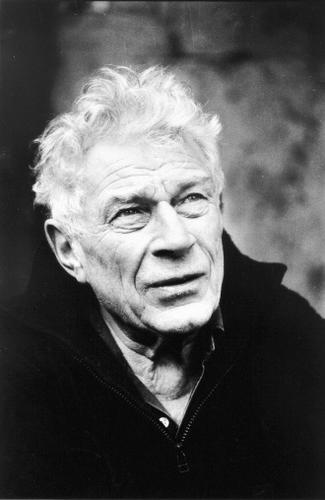
John Berger

Personal Information

Born November 5, 1926
Died January 2, 2017 (90 years old)
London Borough of Hackney, United Kingdom
Also known as: John Peter Berger
66 books
3.5 (13)
405 readers

Description

John Peter Berger (5 November 1926 – 2 January 2017) was an English art critic, novelist, painter and poet. His novel G. won the 1972 Booker Prize, and his essay on art criticism Ways of Seeing, written as an accompaniment to the BBC series of the same name, is often used as a university text. He lived in France for over fifty years. Source: [John Berger]( on Wikipedia.

Books

Newest First

Hold Everything Dear

0.0 (0)
5

John Berger occupies a unique position in the international cultural landscape: artist, filmmaker, poet, philosopher, novelist, essayist, he is also a deeply thoughtful political activist. In Hold Everything Dear, he artistry and activism mesh in an attempt to make sense of the world as we have come to know it during the past six years.Berger analyzes the nature of terrorism and the profound despair that gives rise to it. He writes about the homelessness of millions across the globe who have been forced by poverty and war into lives as refugees. He discusses Afghanistan, Iraq, Palestine, Serbia, Bosnia, China, Indonesia--anyplace the power of corporations, the military, or paramilitary elements is being exercised, depriving ordinary citizens of autonomy or livelihoods or the most basic of freedoms.Singularly lucid and bold, Hold Everything Dear fully acknowledges the depth of suffering occurring around the world and suggests ideas and action that might finally help bring it to an end. From one of the most widely admired, articulate, and impassioned writers of our time, this is a powerful collections of essays that holds a starkly reflective mirror up to post-9/11 realities.From the Hardcover edition.

Collected Poems

D. J. Enright, Peter Redgrove, Alfred Noyes, Herman Melville, Wyatt, Thomas Sir, Vachel Lindsay, Dylan Thomas, Saint-John Perse, Kay Boyle, Stéphane Mallarmé, Elder Olson, Wilfred Owen, Yvor Winters, Jack Kerouac, Primo Levi, W. R. Rodgers, Edgell Rickword, William Butler Yeats, Patrick Kavanagh, Kōnstantinos Petrou Kabaphēs, Isabella Valancy Crawford, Stephen Crane, Lorna Goodison, Edwin Arlington Robinson, Howard Paton Vincent, Nikolai Tolstoy, John Betjeman, James Arlington Wright, Edith Dame Sitwell, Horace Gregory, Tomas Tranströmer, Kingsley Amis, Omoseye Bolaji, W. H. Auden, Rita Dove, Miriam Waddington, Marianne Moore, Allan Ahlberg, Patrick O'Brian, Dorothy Livesay, Edgar Allan Poe, Chinua Achebe, Conrad Aiken, George Seferis, John Collings Squire, Mervyn Peake, Oliver St. John Gogarty, Richard L. Tierney, Lewis, Alun, Alan Sillitoe, Thom Gunn, John Berger, Mark Strand, Clarke, Austin, Christy Brown, Robert Bly, Sylvia Plath, Paul Goodman, Lawrence Durrell, Austin Dobson, Louis MacNeice, Jonathan Swift, Edward Thomas, C. H. Sisson, Emily Dickinson, Robert Hillyer, Abbie Huston Evans, Ted Hughes, Condé Bénoist Pallen, David Constantine, Gascoyne, David, Eavan Boland, Pratt, E. J., U. A. Fanthorpe, Ruth Pitter, Josephine Miles, Frederick William Rolfe, Hope Mirrlees, Anthony Thwaite, Thomas Kinsella, John Reed, Edwin Muir, Clive James, Padraic Colum, William Blake, Stevie Smith, F. T. Prince, Louise Glück, Paul Auster, William Plomer, Maurice Lindsay, Theodore Roethke, Justice, Donald Rodney, Iain Crichton Smith, Nicholson, Norman, Federico García Lorca, Leslie Norris, Robert Hayden, Rolfe Humphries, Edna St. Vincent Millay, Ronald Duncan, Sylvia Townsend Warner
0.0 (0)
6

Landscapes

0.0 (0)
6

Features die-cut and transparent pages introducing landscapes as portrayed in art.

Photocopies

0.0 (0)
5

John Berger uses words to capture a splendid array of moments, passing encounters, and unnoticed gestures - together they express a frieze in history as we near the end of the century, and Berger places us there within it. Through Berger's words we see a street performer achieve a stillness so profound it recalls death. We enter a room where Simone Weil once lived, and where her presence lingers unexpectedly. We watch a man whose youth was spent in the maze of the Gulag, now forced to leave the house he had always imagined for himself in the years of his imprisonment. A vagabond cyclist pedals into our line of sight: she sees the world as if through a moving window, flowers grow in her basket as though on a windowsill. Each "photocopy" is about someone for whom Berger felt a kind of love. In giving life to these moments that caught his heart, Berger gives us, involuntarily, an intimate yet elusive portrait of himself.

Isabelle

0.0 (0)
2

Biografie van Isabelle Eberhardt (1877-1904), die zeven jaar als man verkleed door Noord-Afrika reisde. Biografie van de schrijfster en reizigster in Noord-Afrika (1877-1904).

To the wedding

4.0 (2)
8

The love story of Gino and Ninon, he an Italian salesman, she a Czech engineer's daughter. They meet in Verona, start dating. When Ninon learns she has the aids virus by a man she knew earlier, she breaks off the relationship. But such is Gino's love that he proposes anyway and they marry, fully aware of what is in store for them. By the author of Corker's Freedom.
