
FRANCE AUTHOR · FICTION · GENERAL
Joris-Karl Huysmans
Also known as: J.-K. Huysmans, J. K. Huysmans
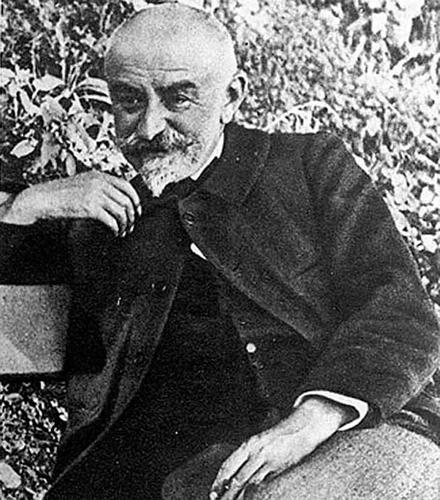
Joris-Karl Huysmans is the pen name of 19th century French novelist and art critic Charles-Marie-Georges Huysmans. His early works were in the Naturalist school, and he later wrote Symbolist and Catholic literature, paralleling his own conversion to Roman Catholicism. Huysmans is best remembered for his 1884 Décadent novel À rebours. Joris-Karl Huysmans was born on 5 February 1848 in Paris, the son of a Dutch lithographer and a former school teacher. When Joris-Karl was eight, his father died, and his mother soon after remarried. After earning the baccalauréat, Huysmans held a clerical position in the French Ministry of the Interior for 32 years. He was drafted for the Franco-Prussian War of 1870, but discharged due to dysentery. Huysmans' first published book was a Décadent prose poem collection entitled Le drageoir à épices (1874). It was followed two years later by his first novel, Marthe, histoire d'un fille (Marthe, the Story of a Girl). This novel and those that would follow over the next decade were written in the Naturalist school and praised by Emile Zola. Marthe was about a prostitute, and other themes Huysmans explored in his early works included failed marriage, dead-end jobs, and everyday life in Paris. À rebours, which details the increasingly bizarre entertainments of an effete, reclusive antihero, marked a turning point in Huysmans' career. Zola, among others, condemned the work, which represented a major departure in style for Huysmans. Critics were scandalized at the book's content. However, though the work lost its author some supporters, it gained him a new following among Symbolist and Décadent writers, including Oscar Wilde, Paul Valéry, and Stéphane Mallarmé. Wilde incorporated À rebours into his novel The Picture of Dorian Gray, though he did not mention it by name. A few more Décadent works were to follow À rebours, including En rade in 1887 and Là-Bas in 1891. The latter became notorious for its portrayal of Parisian Satanism and featured the debut of a recurring semi-autobiographical character in Huysmans' works, the writer Durtal. In Là-Bas, Durtal is working on a book about the medieval serial killer Giles de Rais when he finds himself torn between the influences of a pious cathedral bell-ringer and a woman involved in a Satanic cult who becomes his mistress. Durtal would reappear in Huysmans' next two books, En route (1895) and La cathédrale (1898), which deal with the protagonist's conversion to Catholicism. La cathédrale became his best-selling work in his lifetime and allowed him to retire from his work as a civil servant. Durtal appeared in one more of Huysmans' novels, L'Oblat, in which he becomes an oblate, or a layperson dedicated to prayer. Durtal's experiences throughout Huysmans' work reflect the author's real life. Huysmans became a Chevalier of the Légion d'honneur in 1892 for his work at the Ministry of the Interior, and was promoted to Officier in 1905 in honor of his contribution to French literature. Sadly, he was diagnosed with oral cancer the same year. Joris-Karl Huysmans passed away on 12 May 1907 and is buried in the Montparnasse cemetery in Paris. [Source]
"You believe pretty thoroughly in these things, or you wouldn't abandon the eternal triangle and the other stock subjects of the modern novelists to write the story of Gilles de Rais," and after a silence Des Hermies added, I do not object to the latrine; hospital; and workshop vocabulary of naturalism.
— from Là-bas, 2001
Most acclaimed

Là-bas
2001
Là-Bas, translated as Down There or The Damned, is a novel by the French writer Joris-Karl Huysmans, first published in 1891. It is Huysmans' most famous work after À rebours. Là-Bas deals with the subject of Satanism in contemporary France, and the novel stirred a certain amount of controversy on its first appearance. It is the first of Huysmans' books to feature the character Durtal, a thinly disguised portrait of the author himself, who would go on to be the protagonist of all of Huysmans' subsequent novels: En route, La cathédrale and L'oblat. - wikipedia
À rebours
1972
À rebours (French pronunciation: [a ʁ(ə).buʁ]; translated Against Nature or Against the Grain) is an 1884 novel by the French writer Joris-Karl Huysmans. The narrative centers on a single character: Jean des Esseintes, an eccentric, reclusive, ailing aesthete. The last scion of an aristocratic family, Des Esseintes loathes nineteenth-century bourgeois society and tries to retreat into an ideal artistic world of his own creation. The narrative is almost entirely a catalogue of the neurotic Des Esseintes's aesthetic tastes, musings on literature, painting, and religion, and hyperaesthetic sensory experiences. À rebours contains many themes that became associated with the Symbolist aesthetic. In doing so, it broke from Naturalism and became the ultimate example of "Decadent" literature, inspiring works such as Oscar Wilde's The Picture of Dorian Gray (1890). In his preface for the 1903 publication of the novel, Huysmans wrote that he had the idea to portray a man "soaring upwards into dream, seeking refuge in illusions of extravagant fantasy, living alone, far from his century, among memories of more congenial times, of less base surroundings ... each chapter became the sublimate of a specialism, the refinement of a different art; it became condensed into an essence of jewellery, perfumes, religious and secular literature, of profane music and plain-chant." (Wikipedia)
À vau l'eau
1927
"Set in late-nineteenth-century Paris, Downstream is the story of civil servant Jean Folantin, a man beset with melancholy induced by middle-aged loneliness, nihilism, and toiling for a wage that scarcely allows him to subsist. His days are composed of office drudgery; in the evenings he searches in vain for a decent meal. His nights are spent alone." "Whether Downstream is the political tale of a man's enslavement by poverty or, instead, a psychological tale of his reluctance to genuinely invest hope in anything that actually matters, it is J.K. Huysmans in a foul and visionary mood."--BOOK JACKET.