Discover

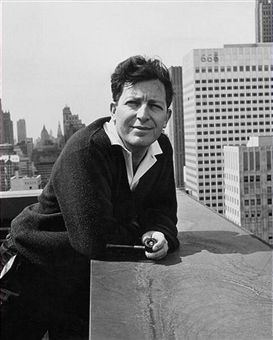
Paul Goodman

Personal Information

Born January 1, 1875
Died January 1, 1949 (74 years old)
Tartu, United Kingdom
Also known as: Goodman Paul
45 books
4.8 (14)
96 readers

Description

Paul Goodman (September 9, 1911 – August 2, 1972) was an American sociologist, poet, writer, anarchist, and public intellectual. Goodman is now mainly remembered as the author of Growing Up Absurd (1960) and an activist on the pacifist Left in the 1960s and an inspiration to that era's student movement. He is less remembered as a co-founder of Gestalt Therapy in the 1940s and '50s. [Wikipedia, October 2011]

Books

Newest First

Collected Poems

D. J. Enright, Peter Redgrove, Alfred Noyes, Herman Melville, Wyatt, Thomas Sir, Vachel Lindsay, Dylan Thomas, Saint-John Perse, Kay Boyle, Stéphane Mallarmé, Elder Olson, Wilfred Owen, Yvor Winters, Jack Kerouac, Primo Levi, W. R. Rodgers, Edgell Rickword, William Butler Yeats, Patrick Kavanagh, Kōnstantinos Petrou Kabaphēs, Isabella Valancy Crawford, Stephen Crane, Lorna Goodison, Edwin Arlington Robinson, Howard Paton Vincent, Nikolai Tolstoy, John Betjeman, James Arlington Wright, Edith Dame Sitwell, Horace Gregory, Tomas Tranströmer, Kingsley Amis, Omoseye Bolaji, W. H. Auden, Rita Dove, Miriam Waddington, Marianne Moore, Allan Ahlberg, Patrick O'Brian, Dorothy Livesay, Edgar Allan Poe, Chinua Achebe, Conrad Aiken, George Seferis, John Collings Squire, Mervyn Peake, Oliver St. John Gogarty, Richard L. Tierney, Lewis, Alun, Alan Sillitoe, Thom Gunn, John Berger, Mark Strand, Clarke, Austin, Christy Brown, Robert Bly, Sylvia Plath, Paul Goodman, Lawrence Durrell, Austin Dobson, Louis MacNeice, Jonathan Swift, Edward Thomas, C. H. Sisson, Emily Dickinson, Robert Hillyer, Abbie Huston Evans, Ted Hughes, Condé Bénoist Pallen, David Constantine, Gascoyne, David, Eavan Boland, Pratt, E. J., U. A. Fanthorpe, Ruth Pitter, Josephine Miles, Frederick William Rolfe, Hope Mirrlees, Anthony Thwaite, Thomas Kinsella, John Reed, Edwin Muir, Clive James, Padraic Colum, William Blake, Stevie Smith, F. T. Prince, Louise Glück, Paul Auster, William Plomer, Maurice Lindsay, Theodore Roethke, Justice, Donald Rodney, Iain Crichton Smith, Nicholson, Norman, Federico García Lorca, Leslie Norris, Robert Hayden, Rolfe Humphries, Edna St. Vincent Millay, Ronald Duncan, Sylvia Townsend Warner
0.0 (0)
6

The facts of life

0.0 (0)
2

Frank Arthur Vine, the product of am encounter between his mother, Cassie, and an American G.I., is brought up in Coventry, England, after World War II by her six very different sisters and his charismatic grandmother after they decide that his mother is too unstable.

Nature heals =

5.0 (1)
2

other cover design

New reformation

5.0 (1)
1

Emphasizing the importance of culture and the arts in society, this reprint of a 1960s classic?the author's last book of social criticism?includes a new introduction that situates the late Paul Goodman in his era and traces the development of his characteristic insights. The probing introduction speaks for a new generation of young scholars as it discusses the initial impact and continuing relevance of Goodman's problematic love affair with the radical youth of the 1960s. Timely and compelling, Goodman's narrative reassesses what he considered a moral and spiritual upheaval comparable to the Protestant Reformation?the breakdown of belief, and the emergence of new belief, in sciences and professions, education, and civil legitimacy. With new analysis of 1960s activism, this survey shows that Goodman's prescient voice is as relevant today as it was four decades ago.

The moral ambiguity of America

0.0 (0)
1

Dr. Paul Goodman, social critic, talks about the problems of contemporary America in this 1966 Massey Lectures. Pt. 1: The Empty Society Pt. 2: Counter Forces for a Decent Society Pt. 3: Dr. Paul Goodman criticizes the purposelessness of much of our technology and its isolation from humanity and human principles. Pt. 4: Urbanization and Rural Reconstruction Pt. 5: The Psychology of Being Powerless Pt. 6: Is American Democracy Viable?