Discover

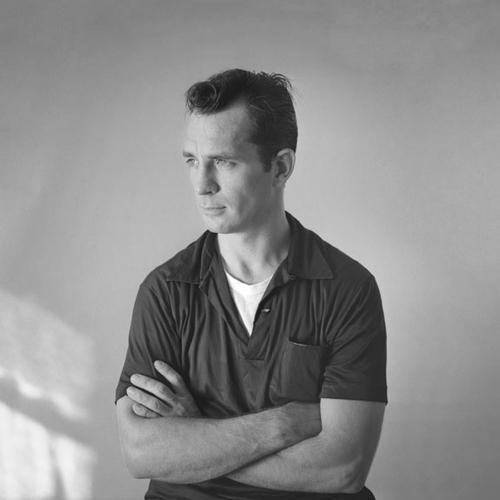
Jack Kerouac

Personal Information

Born March 12, 1922
Died October 21, 1969 (47 years old)
Lowell, United States
Also known as: Jean-Louis Lebris de Kerouac, Kerouac
65 books
3.5 (154)
512 readers

Description

Jack Kerouac was an American novelist and poet of French-Canadian ancestry. He is considered a literary iconoclast and, alongside William S. Burroughs and Allen Ginsberg, a pioneer of the Beat Generation Kerouac is recognized for his method of spontaneous prose. Thematically, his work covers topics such as Catholic spirituality, jazz, promiscuity, Buddhism, drugs, poverty, and travel. He became an underground celebrity and, with other beats, a progenitor of the hippie movement, although he remained antagonistic toward some of its politically radical elements.

Books

Newest First

Collected Poems

D. J. Enright, Peter Redgrove, Alfred Noyes, Herman Melville, Wyatt, Thomas Sir, Vachel Lindsay, Dylan Thomas, Saint-John Perse, Kay Boyle, Stéphane Mallarmé, Elder Olson, Wilfred Owen, Yvor Winters, Jack Kerouac, Primo Levi, W. R. Rodgers, Edgell Rickword, William Butler Yeats, Patrick Kavanagh, Kōnstantinos Petrou Kabaphēs, Isabella Valancy Crawford, Stephen Crane, Lorna Goodison, Edwin Arlington Robinson, Howard Paton Vincent, Nikolai Tolstoy, John Betjeman, James Arlington Wright, Edith Dame Sitwell, Horace Gregory, Tomas Tranströmer, Kingsley Amis, Omoseye Bolaji, W. H. Auden, Rita Dove, Miriam Waddington, Marianne Moore, Allan Ahlberg, Patrick O'Brian, Dorothy Livesay, Edgar Allan Poe, Chinua Achebe, Conrad Aiken, George Seferis, John Collings Squire, Mervyn Peake, Oliver St. John Gogarty, Richard L. Tierney, Lewis, Alun, Alan Sillitoe, Thom Gunn, John Berger, Mark Strand, Clarke, Austin, Christy Brown, Robert Bly, Sylvia Plath, Paul Goodman, Lawrence Durrell, Austin Dobson, Louis MacNeice, Jonathan Swift, Edward Thomas, C. H. Sisson, Emily Dickinson, Robert Hillyer, Abbie Huston Evans, Ted Hughes, Condé Bénoist Pallen, David Constantine, Gascoyne, David, Eavan Boland, Pratt, E. J., U. A. Fanthorpe, Ruth Pitter, Josephine Miles, Frederick William Rolfe, Hope Mirrlees, Anthony Thwaite, Thomas Kinsella, John Reed, Edwin Muir, Clive James, Padraic Colum, William Blake, Stevie Smith, F. T. Prince, Louise Glück, Paul Auster, William Plomer, Maurice Lindsay, Theodore Roethke, Justice, Donald Rodney, Iain Crichton Smith, Nicholson, Norman, Federico García Lorca, Leslie Norris, Robert Hayden, Rolfe Humphries, Edna St. Vincent Millay, Ronald Duncan, Sylvia Townsend Warner
0.0 (0)
6

On the road

3.5 (84)
0

Des règles, des conseils de sécurité à retenir et à appliquer où que tu sois : sur la route, à la maison près de l'eau, en plein air. "Les devinettes, les études de la sécurité sous forme de jeux rendent attrayant l'apprentissage de la prudence."

Dr Sax

3.0 (1)
7

Doctor Sax (Doctor Sax: Faust Part Three) is a novel by Jack Kerouac published in 1959. Kerouac wrote it in 1952 while living with William S. Burroughs in Mexico City. The novel was written quickly in the improvisatory style Kerouac called “spontaneous prose.” In a letter to Allen Ginsberg dated May 18, 1952, Kerouac wrote, “I’ll simply blow [improvise like a jazz musician] on the vision of the Shadow in my 13th and 14th years on Sarah Ave. Lowell, culminated by the myth itself as I dreamt it in Fall 1948 . . . angles of my hoop-rolling boyhood as seen from the shroud.” In a letter to Ginsberg dated November 8 of the same year, Kerouac admits “Doctor Sax was written high on tea [marijuana] without pausing to think, sometimes Bill [Burroughs] would come in the room and so the chapter ended there, . . .” (ibid, p. 185).

Scattered poems

2.0 (1)
13

"Spontaneous poetry by the author of On the Road, gathered from underground and ephemeral publications; including "San Francisco Blues," the variant texts of "Pull My Daisy," and American haiku."--BOOK JACKET.

Book of sketches, 1952-57

0.0 (0)
2

A never-before-published book of poems by Jack Kerouac?in a deluxe packageIn 1952 and 1953 as he wandered around America, Jack Kerouac jotted down spontaneous prose poems, or "sketches" as he called them, on small notebooks that he kept in his shirt pockets. The poems recount his travels—New York, North Carolina, Lowell (Massachusetts, Kerouac’s birthplace), San Francisco, Denver, Kansas, Mexico—observations, and meditations on art and life. The poems are often strung together so that over the course of several of them, a little story—or travelogue—appears, complete in itself. Published for the first time, Book of Sketches offers a luminous, intimate, and transcendental glimpse of one of the most original voices of the twentieth century at a key time in his literary and spiritual development.

Words of Ages

0.0 (0)
9

Explorers and early settlers -- The general history of Virginia, New England, and the Summer Isles / John Smith -- The history and present state of Virginia / Robert Beverley -- Of Plymouth Plantation / William Bradford -- "A model of Christian charity" / John Winthrop -- "In memory of my dear grandchild Anne Bradstreet" / Anne Bradstreet -- "The minister's black veil" / Nathaniel Hawthorne -- Voices of a revolution -- "Sinners in the hands of an angry God" / Jonathan Edwards -- "The way to wealth" / Benjamin Franklin -- "Considerations on keeping Negroes" / John Woolman -- "The last of the Mohicans: a narrative of 1757" / James Fenimore Cooper -- Common sense / Thomas Paine -- Declaration of independence / Thomas Jefferson -- personal letters / John Adams & Abigail Adams -- The search for a national identity -- "On the emigration to America and peopling the western country" / Philip Freneau -- "Federalist no.2" / John Jay -- "The interesting narrative of the life of Olaudah Equiano" / Olaudah Equiano -- The history of the Lewis and Clark expedition / Meriwether Lewis & William Clark -- A tour on the prairies / Washington Irving -- "Tecumseh's plea to the Choctaws and the Chickasaws" / Tecumseh -- The shackles of power: three Jeffersonian decades / John Dos Passos. A confident nation -- "The young American" / Ralph Waldo Emerson -- "Resistance to civil government" / Henry David Thoreau -- Woman in the nineteenth century / Margaret Fuller -- "Great are the myths" / Walt Whitman -- "Annexation" / John L. O'Sullivan -- Personal memoirs / Juan Nepomuceno Seguin -- Slavery and the abolition movement -- Narrative of the life of Frederick Douglass / Frederick Douglass -- Incidents in the life of a slave girl / Harriet Jacobs -- Uncle Tom's cabin / Harrriet Beecher Stowe -- Sociology for the South / George Fitzhugh -- "Appeal to the Christian women of the South" / Angelina Grimke Weld -- "The hunters of men" / John Greenleaf Whittier -- Civil war and reconstruction -- "The portent" / Herman Melville -- The red badge of courage: an episode of the American Civil War / Stephen Crane -- "Hospital sketches" / Louisa May Alcott -- "O Captain! My Captain!" / Walt Whitman -- "Up from slavery" / Booker T. Washington -- The souls of Black folk / W.E.B. DuBois. Industrializing America -- The closing of the frontier -- O pioneers! / Willa Cather -- "Chiquita" / Bret Harte -- The life and adventure of Nat Love, better known in the cattle country as Deadwood Dick / Nat Love -- "Kansas I" / A Mexican Folk Ballad -- "The passing of the buffalo" / Hamlin Garland -- Black Elk speaks / Black Elk -- Artists render industrialization and urbanization -- "What the engines said" / Bret Harte -- "Life in the iron mills" / Rebecca Harding Davis -- The age of innocence / Edith Wharton -- "Proem: to Brooklyn Bridge" / Hart Crane -- Yekl: a tale of the New York ghetto / Abraham Cahan -- "Chicago" / Carl Sandburg -- Social critics and reformers -- "We are all bound up together" / Francis E. Watkins Harper -- Eighty years and more: reminiscences 1815-1897 / Elizabeth Cady Stanton -- "A church mouse" / Mary Wilkins Freeman -- Huckleberry Finn / Samuel L. Clemens -- The shame of the cities / Lincoln Steffens -- The jungle / Upton Sinclair. Americans abroad and World War I -- The portrait of a lady / Henry James -- "The white man's burden" / Rudyard Kipling -- "The real 'white man's burden'" / Ernest Crosby -- "Hallelujahs" / Jose de Diego -- One of ours / Willa Cather -- "next to of course god america i" / E. E. Cummings -- Democracy and adversity -- The jazz age -- The great Gatsby / F. Scott Fitzgerald -- "Song of perfect propriety" / Dorothy Parker -- The flivver king / Upton Sinclair -- Jazz / Toni Morrison -- "The weary blues" / Langston Hughes -- Their eyes were watching God / Zora Neale Hurston -- The Great Depression and the New Deal -- The big money / John Dos Passos -- Waiting for Lefty / Clifford Odets -- "Women on the breadlines" / Meridel LeSueur -- The grapes of wrath / John Steinbeck -- "Colonial Park" / Ralph Ellison -- "Proud day" / Genevieve Taggard. World War II -- "Freedom" / E. B. White -- Battle cry / Leon Uris -- Farewell to Manzanar / Jeanne Wakatsuki Houston and James D. Houston -- "Apostrophe to the land" / Countee Cullen -- The face of war / Martha Gellhorn -- Night / Elie Wiesel -- Hiroshima / John Hershey -- The challenges of power -- Prosperity and anxiety -- An American childhood / Annie Dillard -- The man in the gray flannel suit / Sloan Wilson -- On the road / Jack Kerouac -- Coming of age in Mississippi / Anne Moody -- The cruicible / Arthur Miller -- The right stuff / Tom Wolfe -- Rights and revolutions -- "Letter from a Birmingham jail" / Martin Luther King, Jr. -- "Message to the grass roots" / Malcolm X -- "Why I want a wife" / Judy Brady -- The house on Mango Street / Sandra Cisneros -- Lakota woman / Mary Crow Dog -- "Blowin' in the wind" / Bob Dylan -- The Vietnam years -- One very hot day / David Halberstam -- Going after Cacciato / Tim O'Brien -- "Life at war" / Denise Levertov -- American pastoral / Philip Roth -- "Letters from my father" / Robert Olen Butler.

Atop an Underwood

0.0 (0)
7

An anthology of early stories by the poet of the Beat generation. Topics range from his time in Columbia University, from which he was expelled, to an excerpt from a novel which is based on his service in the merchant marine.

Jack Kerouac And Allen Ginsberg The Letters

0.0 (0)
5

The first collection of letters between the two leading figures of the Beat movement. Jack Kerouac and Allen Ginsberg are the most celebrated names of the Beat Generation, linked together not only by their shared artistic sensibility but also by a deep and abiding friendship, one that colored their lives and greatly influenced their writing. Editors Bill Morgan and David Stanford shed new light on this intimate and influential friendship in this fascinating exchange of letters, two thirds of which have never been published before. Commencing in 1944 while Ginsberg was a student at Columbia University and continuing until shortly before Kerouac's death in 1969, the two hundred letters included in this book provide profound insight into their lives and their writing. While not always in agreement, Ginsberg and Kerouac inspired each other spiritually and creatively, and their letters became a vital workshop for their art.--From publisher description.

Some of the dharma

0.0 (0)
2

Written during a critical period of his life, Some of the Dharma is a key volume in Jack Kerouac's vast autobiographical canon. He began writing it in 1953 as reading notes on Buddhism intended for his friend, poet Allen Ginsberg. As Kerouac's Buddhist study and meditation practice intensified, what had begun as notes evolved into a vast and all-encompassing work of nonfiction into which he poured his life, incorporating poems, haiku, prayers, journal entries, meditations, fragments of letters, ideas about writing, overheard conversations, sketches, blues, and more. The final manuscript, completed in 1956, was as visually complex as the writing: each page was unique, typed in patterns and interlocking shapes. The elaborate form which Kerouac so painstakingly gave the book on his manual typewriter is re-created in this typeset facsimile.

Beat Generation

0.0 (0)
1

From fashion and food to literature and music, the Beats heralded a new way of living, and a new mode of recording their lives. There is hardly a part of American culture today that is untouched by their work. Fred and Gloria McDarrah lived and worked in the heart of the Beat scene. Astute observers and participants, they faithfully recorded what they saw in word and picture. Besides their own thoughts and images, they amassed a collection of authentic Beat writings, all in the author's own hand or typed by them. Now reproduced for the first time, these writings complement the photographs and memories in giving a full picture of what it was like to be a Beat. With over 240 photographs, this work promises to be a landmark document of the Beats, their lives, and times.

Włóczędzy Dharmy

0.0 (0)
2

Two ebullient young men are engaged in a passionate search for dharma, or truth. Their major adventure is the pursuit of the Zen way, which takes them climbing into the high Sierras to seek the lesson of solitude, a lesson that has a hard time surviving their forays into the pagan groves of San Francisco's Bohemia with its marathon wine-drinking bouts, poetry jam sessions, experiments in "yabyum," and similar nonascetic pastimes.

Getting inside Jack Kerouac's head

0.0 (0)
0

Based on Morris' 2008-2009 blog. Consists chiefly of the complete text of On the road with minor edits.
