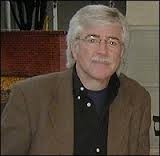
William Least Heat Moon
Personal Information
Description
William Least Heat-Moon, also named William Lewis Trogdon, is an American travel writer and historian of English, Irish, and Osage ancestry. He is the author of various bestselling books of topographical U.S. travel writing. - Wikipedia
Books
Columbus in the Americas
A stirring tale of adventure and tragedy "They brought balls of spun cotton and parrots and javelins and other little things that it would be tiresome to write down, and they gave everything for anything that was given to them. I was attentive and labored to find out if there was any gold." With these portentous words, Christopher Columbus described one of his first encounters with Native Americans on the island of Guanahani, which he had named San Salvador and claimed for Spain the day before. In Columbus in the Americas, bestselling author William Least Heat-Moon reveals that Columbus's subsequent dealings with the cultures he encountered not only did considerable immediate harm, but also set the pattern of behavior for those who followed him. Based on the logbook of Columbus and numerous other firsthand accounts of his four voyages to the New World, this vividly detailed history also examines the strengths and weaknesses of Columbus as a navigator, explorer, and leader. It recounts dramatic events such as the destruction of Fortress Navidad, the very first European settlement in the New World; a pitched battle in northern Panama with the native Guaymi people; and an agonizing year Columbus and his men spent marooned on a narrow spit of land in southern Jamaica. Filled with stories of triumph and tragedy, courage and villainy, Columbus in the Americas offers a balanced yet unflinching portrait of the most famous and controversial explorer in history. TURNING POINTS features preeminent writers offering fresh, personal perspectives on the defining events of our time.
River-horse
"In River-Horse, the preeminent chronicler of American back roads - who has given us the classics Blue Highways and PrairyErth - recounts his singular voyage on American waters from sea to sea. Along the route, he offers a lyrical shipboard perspective on the country's rivers, lakes, canals, and landscapes."--BOOK JACKET. "In his most ambitious journey ever, Heat-Moon sets off aboard a small boat he named Nikawa ("river horse" in Osage) from the Atlantic at New York Harbor in hopes of entering the Pacific near Astoria, Oregon."--BOOK JACKET. "En route, the voyagers confront massive floods, submerged rocks, dangerous weather, and their own doubts about whether they can complete the trip. But the hard days yield up incomparable pleasures: strangers generous with help and eccentric tales, landscapes unchanged since Sacagawea saw them, riverscapes flowing with a lively past, and the growing belief that efforts to protect our lands and waters are beginning to pay off. And, throughout its course, the expedition enjoys coincidences so breathtaking as to suggest the intervention of a divine and witty Providence."--BOOK JACKET.
Blue Highways
After being laid off from his college teaching position, the author traversed the United States on lesser roads, shown in blue on old road maps.
The United States in Literature [with three long stories] -- Seventh Edition
Selections include: ... - [Young Goodman Brown]( by Nathaniel Hawthorne ... - [An Occurrence at Owl Creek Bridge]( by Ambrose Bierce ... - [A Pair of Silk Stockings]( by Kate Chopin - [The Cask of Amontillado]( - [Fall of the House of Usher]( - [The Glass Menagerie]( by Tennesse Williams
Here, there, elsewhere
Heat Moon draws together for the first time his greatest short-form travel writing including his funny and touching adventures in Japan, England, Italy, Mexico, Long Island, Oregon, Arizona, and more.
Celestial Mechanics: a tale for a mid-winter night
"In this novel of haunted love, Silas Fortunato, an amateur astronomer, finds his marriage descending toward darkness until the arrival of his sister-in-law and soon thereafter the appearance of a witching neighbor who may or may not exist. Enigmatic, ghostly, and funny, the three women draw him into the equivocal nature of reality and dreams, and lead him on a journey toward something vastly beyond himself."--Jacket flap.
An Osage journey to Europe, 1827-1830
"In 1827 six Osage people--four men and two women--traveled to Europe escorted by three Americans. Their visit was big news in France, where three short publications about the travelers appeared almost immediately. Virtually lost since the 1830s, all three accounts are gathered, translated, and annotated here for the first time in English. Among the earliest writings devoted to Osage history and culture, these works provide unique insights into Osage life and especially into European perceptions of American Indians. Translated by [William Least] Heat-Moon and James K. Wallace, the three featured texts are surprisingly accurate as basic descriptions of Osage history, geography, and lifeways. The French authors, influenced by racist and sexist expectations, misinterpreted some of the behaviors they describe. But they also dismiss rumors of cannibalism among the Osages and observe that "the behavior of some whites . . . was not conducive to giving the Indians a favorable opinion of white morality." -- Publisher website.
Prentice Hall Literature -- Gold
High School level
Roads to Quoz
About a quarter century ago, a previously unknown writer named William Least Heat-Moon wrote a book called Blue Highways. Acclaimed as a classic, it was a travel book like no other. Quirky, discursive, endlessly curious, Heat-Moon had embarked on an American journey off the beaten path. Sticking to the small places via the small roads--those colored blue on maps--he uncovered a nation deep in character, story, and charm. Now, for the first time since Blue Highways, Heat-Moon is back on the backroads. ROADS TO QUOZ is his lyrical, funny, and touching account of a series of American journeys into small-town America .
