Discover
Mar 7, 1753 — Dec 5, 1784· 31 yrs

UNITED STATES AUTHOR · POETRY · POETS

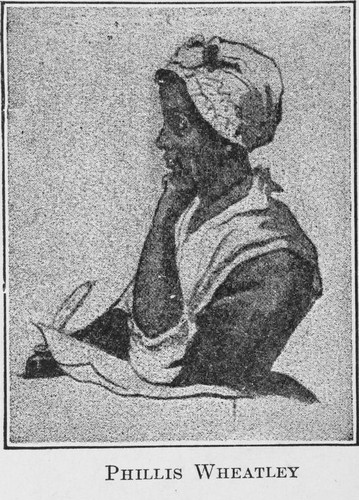
Phillis Wheatley

14
BOOKS
4.0
AVG RATING (6)
0
READERS

The first published African-American female poet (Wikipedia).

Senegambia, United States
Wikipedia

MÆCENAS, you, beneath the myrtle shade, Read o'er what poets sung, and shepherds played What felt those poets, but you feel the same?

— from Memoir and poems of Phillis Wheatley, 1835

Most acclaimed

#2

Prentice Hall Literature--Timeless Voices, Timeless Themes--The American Experience

0.0 (0)

Modern Biblical criticism (as opposed to pre-Modern criticism) is the use of critical analysis to understand and explain the Bible without appealing to the supernatural. During the eighteenth century, when it began as historical-biblical criticism, it was based on two distinguishing characteristics: (1) the scientific concern to avoid dogma and bias by applying a neutral, non-sectarian, reason-based judgment to the study of the Bible, and (2) the belief that the reconstruction of the historical events behind the texts, as well as the history of how the texts themselves developed, would lead to a correct understanding of the Bible. This sets it apart from earlier, pre-critical methods; from the anti-critical methods of those who oppose criticism-based study; from the post-critical orientation of later scholarship; and from the multiple distinct schools of criticism into which it evolved in the late twentieth and early twenty-first centuries. The emergence of biblical criticism is most often attributed by scholars to the German Enlightenment (c. 1650 – c. 1800), but some trace its roots back further, to the Reformation. Its principal scholarly influences were rationalist and Protestant in orientation; German pietism played a role in its development, as did British deism.

#1

Poems on various subjects, religious and moral

0.0 (0)

A collection of 39 poems written by Phillis Wheatley, the first published African-American woman poet.

#3

Phillis Wheatley

0.0 (0)

With Poems on Various Subjects, Religious and Moral (1773), Phillis Wheatley (1753?-1784) became the first English-speaking person of African descent to publish a book and only the second woman -- of any race or background -- to do so in America. Written in Boston while she was just a teenager, and when she was still a slave, Wheatley's work was an international sensation. In Phillis Wheatley, Vincent Carretta offers the first full-length biography of a figure whose origins and later life have remained shadowy despite her iconic status. A scholar with extensive knowledge of transatlantic literature and history, Carretta uncovers new details about Wheatley's origins, her upbringing, and how she gained freedom. Carretta solves the mystery of John Peters, correcting the record of when he and Wheatley married and revealing what became of him after her death. Assessing Wheatley's entire body of work, Carretta discusses the likely role she played in the production, marketing, and distribution of her writing. Wheatley developed a remarkable transatlantic network that transcended racial, class, political, religious, and geographical boundaries. Carretta reconstructs that network and sheds new light on her religious and political identities. In the course of his research he discovered the earliest poem attributable to Wheatley and has included it and other unpublished poems in the biography. Carretta relocates Wheatley from the margins to the center of her eighteenth-century transatlantic world, revealing the fascinating life of a woman who rose from the indignity of enslavement to earn wide recognition, only to die in obscurity a few years later. - Publisher.
Books

Newest First
