Discover

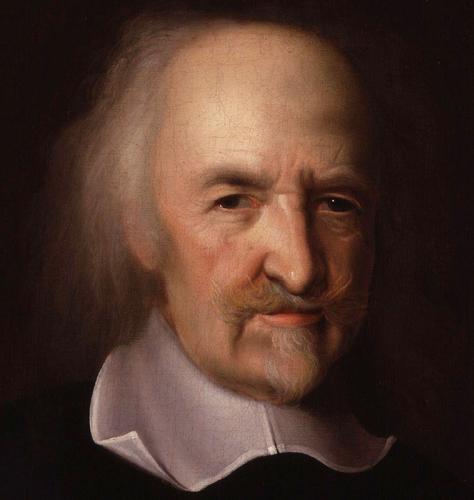
Thomas Hobbes

Personal Information

Born April 5, 1588
Died December 4, 1679 (91 years old)
Westport, Kingdom of England
Also known as: THOMAS HOBBES, HOBBES, THOMAS, 1588-1679.
41 books
3.8 (10)
75 readers

Description

Thomas Hobbes, in some older texts Thomas Hobbs of Malmsbury, was an English philosopher, remembered today for his work on political philosophy. His 1651 book Leviathan established the foundation for most of Western political philosophy from the perspective of social contract theory. Hobbes also contributed to a diverse array of fields, including history, geometry, physics of gases, theology, ethics, general philosophy, and political science. His account of human nature as self-interested cooperation has proved to be an enduring theory in the field of philosophical anthropology. He was one of the main philosophers who founded materialism.

Books

Newest First

Three Discourses

0.0 (0)
0

For the first time in three centuries, this book brings back into print three texts now confirmed to have been written by the young Thomas Hobbes. The contents of these discourses will lead, at the very least, to a serious reappraisal of the long-standing controversy surrounding Hobbes's early influences and the subsequent development of his thought. The volume begins with the recent history of the discourses, first published as part of the anonymous seventeenth-century work, Horae Subsecivae. Drawing upon both internal evidence and external confirmation afforded by new statistical "word-printing" techniques, the editors present a definitive case for Hobbes's authorship. The discourses provide the strongest evidence to date for the profound influences of Bacon and Machiavelli on the young Hobbes, and they add a new dimension to the much-debated impact of the scientific method on his thought. These texts, "Upon the Beginning of Tacitus," "Of Rome," and "Of Laws," provide direct access to the intellectual concerns and early influences and questions that eventually led Hobbes to the fully formed philosophy of Leviathan. In the discourses, Hobbes addresses the problem of identifying secular sources of political power that might provide security and stability in a world of constant flux, and works to free himself from some of the traditional foundations of political order.

Del Leviatán de Hobbes

0.0 (0)
2

Selection of chapters from Thomas Hobbes' Leviathan.

A Dialogue between a Philosopher and a Student of the Common Laws of England

0.0 (0)
2

As a critique of common law by a great philosopher, this text should be of interest to anyone studying English political thought or legal theory.

Behemoth, or, The Long Parliament

0.0 (0)
1

"Behemoth is Thomas Hobbes's narrative of the English Civil Wars from the beginning of the Scottish revolution in 1637 to the Restoration of the Monarchy in 1660. It is his only composition to address directly the history of the events which formed the context of his writings in Leviathan and elsewhere on sovereignty and the government of the Church. Although presented as an account of past events, it conceals a vigorous attack on the values of the religious and political establishment of Restoration England. This is the first fully scholarly edition of the work, and the first new edition of the text since 1889. Based on Hobbes's own presentation manuscript, it includes for the first time an accurate transcription of the passages which Hobbes had deleted in the text, and notes made by early readers."--BOOK JACKET.

On the citizen

0.0 (0)
0

De Cive (On the Citizen) is the first full exposition of the political thought of Thomas Hobbes, the greatest English political philosopher. Professors Tuck and Silverthorne have undertaken the first complete translation since 1651, a rendition long thought (in error) to have been at least sanctioned by Hobbes himself. This new translation is both accurate and accessible: it is accompanied by a full glossary of Latin terms, a chronology, a bibliography and an expository introduction. Throughout, the editors have emphasized consistency in the translation and usage of Hobbes's basic conceptual vocabulary, respecting Hobbes's own concern for accurate definition of terms.
