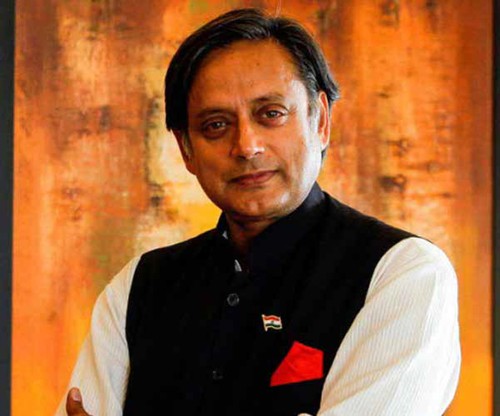
Shashi Tharoor
Personal Information
Description
Shashi Tharoor is currently a member of India's parliament. Prior to this he was for many years the assistant secretary general of the United Nations in New York.
Books
India, from midnight to the millennium
Political, economic, and social conditions in India from 1947 to date.
The great Indian novel
Writing in English, Shasi Tharoor has produced a stunning novel that is at once ambitious, daring, boldly satirical, and outrageously funny. The two structural pillars of his astonishing work are the national epic, the Mahabharata, and the Indian struggle in this century for independence from Great Britain.
India, the future is now
"India: The Future is Now presents the vision and roadmap for the country and brings together India's young parliamentarians, cutting across ideologies, geographies and political affiliations. These nation-builders provide perspectives on a wide range of issues and despite their seemingly contrasting paths, they all stand united in their desire for the upliftment of each and every Indian. The voices of these young men and women cannot be ignored, for they are the leaders of tomorrow, the ones who will chart the course of India's future."--Publisher's website.
The Vintage Book of Indian Writing 1947-1997
Stories and excerpts of novels from India since the country attained its independence in 1947. The subjects range from religious strife, to the assault on the senses of the many people one is surrounded by.
The Elephant The Tiger And The Cell Phone Reflections On India The Emerging 21stcentury Power
India
An overview of India emphasizing its cultural aspects.
Reasons of state
"One of the most significant novels in Latin American literature, written by Cuba's most important modern novelist--to win a bet with Gabriel Garcia Marquez. In the early 1970s, friends Gabriel Garcia Marquez, Augusto Roa Bastos and Alejo Carpentier reached a joint decision: they would each write a novel about the dictatorships then wreaking misery in Latin America. Garcia Marquez went on to write The Autumn of the Patriarch and Roa Bastos I, the Supreme. The third novel in this remarkable trinity is Reasons of State, hailed as the most significant novel ever to come out of Cuba. As with Garcia Marquez, Reasons of State is a bold story, boldly told -- daring in its perceptions, rich in lush detail, inventive in prose, and deadly compelling in its suspenseful plot. Inexplicably out of print for years, it tells the tale of the dictator of an unnamed Latin American country who has been living the life of luxury in high-society Paris. When news reaches him of a coup at home, he rushes back and crushes it with brutal military force. But returning to Paris he is given a chilly welcome, and learns that photographs of the atrocities have been circulating among his well-to-do friends. Meanwhile World War One has broken out, and another rebellion forces the dictator back across the ocean. As he struggles with the Marxist forces beginning to find footing in his own country, and Europe is devastated, Carpentier constructs a masterful and biting satire of the new world order"--