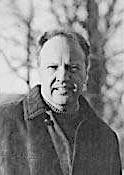
James Dickey
Personal Information
Description
James Lafayette Dickey was an American poet and novelist. He was appointed the eighteenth United States Poet Laureate in 1966. He also received the Order of the South award. Dickey is best known for his novel Deliverance (1970), which was adapted into the acclaimed 1972 film of the same name.
Books
Crux
"James Dickey was a great poet, a legend of the reading circuit, and - after the best-selling Deliverance and its celebrated movie version - a celebrity. This collection, reaching from 1943 to his death in 1997, and from a fledgling poet to an ailing man of letters, constitutes a short course in literature and poetry since World War II."--BOOK JACKET. "Dickey's correspondents include John Berryman, Harold Bloom, Philip Booth, Richard Howard, Denise Levertov, Robert Lowell, Donald Hall, James Merrill, Ezra Pound, Anne Sexton, Mark Strand, Robert Penn Warren, Richard Wilbur, and James Wright."--BOOK JACKET. "Entertaining and erudite, these letters reveal the fierce, complicated literary intellect of the man John Updike called "the high-flyer of American poets.""--BOOK JACKET.
The James Dickey reader
"This collection of James Dickey's poems and prose includes choice selections of the author's poetry, fiction, and essays, as well as some early unpublished poetry and excerpts from his unfinished novel Crux. Organized chronologically by genre, this is the definitive collection of works by one of the twentieth century's most important talents."--BOOK JACKET.
James Dickey
A collection of nine critical essays on the work of James Dickey, arranged in chronological order of original publication.
Striking in
Striking In provides the first detailed look at the artistic beginnings of one of America's most accomplished writers. Chronicling James Dickey's close scrutiny of a wide variety of literary, philosophical, and anthropological works, his extensive experimentation with the possibilities of language, and his projected outlines for poems, stories, and novels, the notebooks serve as a critical tool in understanding Dickey's literary apprenticeship during the fifties. Although the notebooks identify the influence of writers such as George Barker, Hart Crane, and Dylan Thomas, they primarily present a man endeavoring to chart his own artistic course or destination. The entries depict the process by which Dickey developed the ideas and images that characterize what he himself has labeled his "early motion," revealing the origin of Into the Stone, Drowning with Others, and Helmets, his first three published books of poetry, and suggesting the material and techniques of later volumes. The introductions by Gordon Van Ness place each notebook in a biographical context and assess its individual significance, and an appendix lists all of Dickey's poems published in the fifties. Extensive footnotes provide further information on many of the specific references within Dickey's entries. Of special importance is the inclusion of ten never-before-published poems as well as fourteen others never previously collected in Dickey's books.
The Whole Motion
For over three decades, James Dickey has been one of the nation's most important poets and a prominent man of letters. The Eagle's Mile, his most recent volume, was a triumphant success, a bold and innovative departure from his traditional verse. The New York Times declared, "Dickey continues to extend his vision as a major American poet," while Fred Chappell, himself a Bollingen Prize winner, wrote, "If there were a literary prize for Poetry That Has Shown Real Moxie, it ought to go to The Eagle's Mile." Now, The Whole Motion collects Dickey's oeuvre into a single volume: 235 poems, ranging from his first book, Into the Stone, through the prize-winning Buckdancer's Choice, to The Eagle's Mile, as well as a selection of previously uncollected and unpublished "apprentice" works gathered under the title "Summons." The Whole Motion documents the development of a major literary figure, one who has greatly influenced a younger generation of poets; it illuminates the evolution of one of the finest poetic sensibilities of our times.
Bronwen, the traw, and the shape-shifter
A narrative poem in which a young girl battles with the elements she finds in the night.
Tucky the hunter
A child hunts the animals of the world with a pop gun and the snare of his imagination.