
NIGERIA AUTHOR · HISTORY · POLITICS AND GOVERNMENT
Toyin Falola
Also known as: Toyin Omoyeni Falola, T. Falola
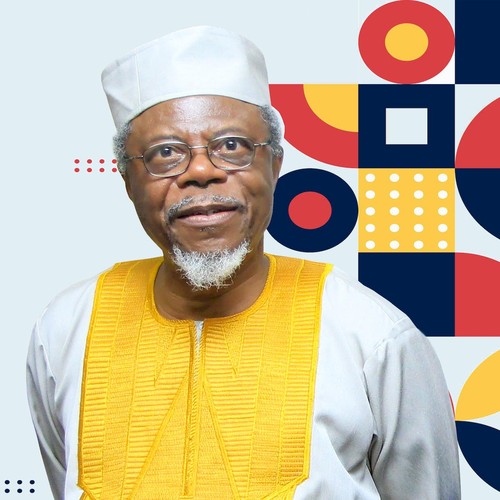
Toyin Omoyeni Falola (; born 1 January 1953) is a Nigerian historian and professor of African Studies. Falola is a Fellow of the Historical Society of Nigeria and of the Nigerian Academy of Letters, and has served as the president of the African Studies Association. He is currently the Jacob and Sanger Mossiker Chair in the Humanities at the University of Texas at Austin.
Africa is a land of contrasts.
— from Africa
Most acclaimed

Africa
"These volumes offer a one-stop resource for researching the lives, customs, and cultures of Africa's nations and peoples. Unparalleled in its coverage of contemporary customs in all of Africa, this multivolume set is perfect for both high school and public library shelves. The three-volume encyclopedia will provide readers with an overview of contemporary customs and life in North Africa and sub-Saharan Africa through discussions of key concepts and topics that touch everyday life among the nations' peoples. While this encyclopedia places emphasis on the customs and cultural practices of each state, history, politics, and economics are also addressed. Because entries average 14,000 to 15,000 words each, contributors are able to expound more extensively on each country than in similar encyclopedic works with shorter entries. As a result, readers will gain a more complete understanding of what life is like in Africa's 54 nations and territories, and will be better able to draw cross-cultural comparisons based on their reading."--Publisher's description.
World history
Surveys the cultural, political, artistic, and scientific highlights of major civilizations throughout history.
Mandela
1990
"The Life of Nelson Mandela is one of the most extraordinary epics of the twentieth century. An almost-forgotten prisoner on Robben Island twenty years ago, apparently doomed to a helpless existence as a victim of apartheid, he not only survived but almost single-handedly saved South Africa from potential chaos, to become one of the most widely admired leaders in the world. Mandela's myth is dazzling; in this biography Anthony Sampson penetrates it to show us the man himself."--BOOK JACKET. "Mandela is filled with new insights and information. We see how prison, which he and his fellow inmates turned into a kind of unofficial university, gradually transformed Mandela from a headstrong activist into a reflective and consummately skilled statesman. We learn how British and American diplomats cold-shouldered him when support was desperately needed, and about the political infighting, sometimes vicious, that went on between anti-apartheid factions. Particularly fascinating is Sampson's narrative of the incredible negotiations leading to Mandela's release from prison and the eventual collapse of the white regime, when his colleagues feared that he was selling out to the government."--BOOK JACKET. "At every turn, this book sheds fresh light on the moral dilemmas that Mandela was forced to face again and again in his personal and public lives. In the struggle for freedom for South African blacks, he paid a tragic price, becoming alienated from his wife and remote from his children. Yet he famously retained his humanity, and while Sampson does not conceal Mandela's failings - his stubbornness, his fixed loyalties, his princely manners and detachment - the man who emerges is authentically heroic."--BOOK JACKET.