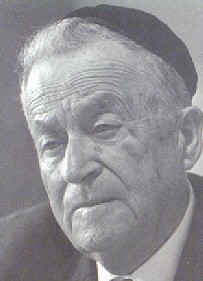

MANDATORY PALESTINE AUTHOR · FICTION · TRANSLATIONS INTO ENGLISH
Shmuel Yosef Agnon
Also known as: Shmuel Yosef Halevi Agnon, Samuel Joseph Agnon
Hebrew writer; Nobel laureate in literature. Shemu’el Yosef Agnon (formerly Czaczkes) was born in Buczacz, a small town in eastern Galicia, then under Austro-Hungarian rule. He left his hometown permanently when he was 20, but Buczacz and Galicia had a place in his literary work for the rest of his life. “Although forty years had passed since Dr. Langsam had left his birthplace, he still talked about it all the time,” says Agnon, as if describing himself but referring to one of the characters in his novel Sipur pashut (A Simple Story; 1935). — Source: `
Maria Concepcion walked carefully, keeping to the middle of the white dusty road, where the maguey thorns and the treacherous curved spines of organ cactus had not gathered so profusely.
— from Short stories
Most acclaimed

Only Yesterday
He'd promised to love her forever, but would always be long enough? Colt Butler could make a woman shiver or bring swooning back into style, but Ann Debeau knew she was really in trouble when the blue-eyed rebel made her toes curl under! Drawn to this stranger who seemed to know all her secrets, spellbound by memories she couldn't explain, she responded with wild abandon to his every caress. Could a dreamer who'd waited more than a lifetime finally claim the woman who'd broken every rule for love? Reminding us that nothing is more romantic than love without end, Peggy Webb creates an exquisitely memorable tale that transcends time and weaves real magic. He'd charmed her with kisses sweeter than cherries, had known without asking that wild roses were her favorite, but was fate playing matchmaker . . . and could the impossible somehow be true?
Short stories
For over three decades, Reynolds Price has been one of America's most distinguished writers, in a career that has been remarkable both for its virtuosity and for the variety of literary forms he has embraced. Now he shows himself as much a master of the story as he is of the novel, in a volume that presents fifty stories, including two early collections - The Names and Faces of Heroes and Permanent Errors - as well as more than two dozen new stories that have never been gathered together before. In his introduction, Mr. Price explains how, after the publication of his first two collections, he wrote no new stories for almost twenty years. "But once I needed - for unknown reasons in a new and radically altered life - to return to the story, it opened before me like a new chance...A collection like this then," he adds, "...will show a writer's pre-occupations in ways the novel severely rations (novels are partly made for that purpose - the release from self, long flights through the Other). John Keats's assertion that 'the excellence of every Art is its intensity' has served as a license and standard for me. From the start my stories were driven by heat - passion and mystery, often passion for the mystery I've found in particular rooms and spaces and the people they threaten or shelter - and my general aim is the transfer of a spell of keen witness, perceived by the reader as warranted in character and act.". There is, indeed, much for the reader to "witness" here of passion and mystery, of character and act. And the variety of stories - many of them set in Reynolds Price's native North Carolina, but a surprising number set in distant parts: Jerusalem in "An Early Christmas," the American Southwest in "Walking Lessons," and a number in Europe - will astonish even his most devoted readers. In short, The Collected Stories of Reynolds Price is as deeply rewarding a book as any he has yet published.
To this day
"To This Day, Nobel prizewinner S.Y. Agnon's last novel (first published in Hebrew in 1952), is also his last to be translated into English. On the surface it is a comically entertaining tale of a young writer - a Galician Jew who has lived in Palestine, returns to Europe on the eve of World War I, and is now stranded in Berlin - who wanders from rented room to rented room in a city with a severe wartime housing shortage. On a deeper level it is a profound commentary on exile, Zionism, divine providence, human egoism, and other typically Agnonian concerns."--Jacket.