
UNITED KINGDOM OF GREAT BRITAIN AND IRELAND AUTHOR · FICTION · SOCIAL LIFE AND CUSTOMS
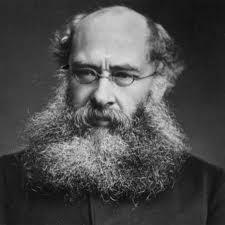
Anthony Trollope
Anthony Trollope ( TROL-əp; 24 April 1815 – 6 December 1882) was an English novelist and civil servant of the Victorian era. Among the best-known of his 47 novels are two series of six novels each collectively known as the Chronicles of Barsetshire and the Palliser novels, as well as The Way We Live Now. His novels address political, social, and gender issues and other topical matters. He also wrote an autobiography, a book on William Makepeace Thackeray, a book on Lord Palmerston, five travel books, and 42 short stories. Trollope's literary reputation dipped during the last years of his life, but he regained somewhat of a following by the mid-20th century.
No one, probably, ever felt himself to be more alone in the world than our old friend the Duke of Omnium, when the Duchess died.
— from The Duke's Children
Most acclaimed

Short stories
For over three decades, Reynolds Price has been one of America's most distinguished writers, in a career that has been remarkable both for its virtuosity and for the variety of literary forms he has embraced. Now he shows himself as much a master of the story as he is of the novel, in a volume that presents fifty stories, including two early collections - The Names and Faces of Heroes and Permanent Errors - as well as more than two dozen new stories that have never been gathered together before. In his introduction, Mr. Price explains how, after the publication of his first two collections, he wrote no new stories for almost twenty years. "But once I needed - for unknown reasons in a new and radically altered life - to return to the story, it opened before me like a new chance...A collection like this then," he adds, "...will show a writer's pre-occupations in ways the novel severely rations (novels are partly made for that purpose - the release from self, long flights through the Other). John Keats's assertion that 'the excellence of every Art is its intensity' has served as a license and standard for me. From the start my stories were driven by heat - passion and mystery, often passion for the mystery I've found in particular rooms and spaces and the people they threaten or shelter - and my general aim is the transfer of a spell of keen witness, perceived by the reader as warranted in character and act.". There is, indeed, much for the reader to "witness" here of passion and mystery, of character and act. And the variety of stories - many of them set in Reynolds Price's native North Carolina, but a surprising number set in distant parts: Jerusalem in "An Early Christmas," the American Southwest in "Walking Lessons," and a number in Europe - will astonish even his most devoted readers. In short, The Collected Stories of Reynolds Price is as deeply rewarding a book as any he has yet published.
The Duke's Children
"Newly restored from the original manuscript and more than a quarter longer than the existing editions: one of the finest novels from one of the greatest English novelists is finally available in the form he intended. Trollope wrote The Duke's Children, his final Palliser novel, as a four-volume work but was required by his publisher to reduce it to three, necessitating the loss of nearly sixty-five thousand words. A team of researchers led by Steven Amarnick has worked with the manuscript at Yale's Beinecke Library to restore the novel to its original form. The result is richer and more complex, with a subtly different ending: a clearly superior book to the one that has always been published. Plantagenet Palliser, the Duke of Omnium, haslost both his vivacious wife, Lady Glencora, and his position as prime minister of Great Britain. The bereft duke is left to try to manage his three grown children, whose rebellions take the various forms of gambling debts, university pranks, and unsuitable romantic attachments. But though he fails to understand his offspring, Palliser truly cares for them, and he navigates the clash of generations with a growing awareness of the necessity of compromises, both political and personal. Insightful, entertaining, and compassionate--and now restored to its full glory--The Duke's Children is a fitting conclusion to the epic Palliser series, one of the most remarkable achievements of British fiction"-- "The newly restored full text of Anthony Trollope's novel The Duke's Children, which his original publisher had made him cut by a quarter (about 65,000 words). His cuts have been restored from the original manuscripts"--
Castle Richmond
Sir Thomas Fitzgerald, a wealthy landowner living at Castle Richmond, County Cork, married Mary Wainwright, whose former husband was believed to have died in Paris. There were three children, Herbert, Emmeline and Mary. Nearby lived the Countess of Desmond, with her daughter Clara and her young son Patrick. Owen Fitzgerald, a relative of Sir Thomas, and his heir after Herbert, lived at Hap House not far away. Owen was in love with Lady Clara and considered himself engaged to her, but the Countess would not acknowledge the engagement, giving as her reason the unconventional life Owen was supposed to live in his bachelor quarters. Her real reason was that she herself was in love with him.