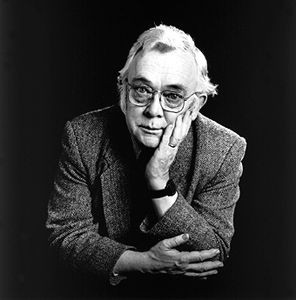
Josef Škvorecký
Personal Information
Description
Biography Born in Náchod, Czechoslovakia, Škvorecký graduated in 1943 from the Reálné gymnasium in his native Náchod. For two years during the Second World War he was a slave labourer in a German aircraft factory. After the war, he began to study at the Faculty of Medicine of Charles University in Prague, but after his first term he moved to the Faculty of Arts, where he studied Philosophy and graduated in 1949.In 1951 he gained a Ph.D. in Philosophy. Between 1952 and 1954, he performed his military service in the Czechoslovak army. He worked briefly as a teacher, editor and translator during the 1950s. During this period he completed several novels including his first novel The Cowards (written 1948-49, published 1958) and The End of the Nylon Age (1956).They were condemned and banned by the Communist authorities after their publication. His prose style, open-ended and improvisational, was an innovation, but this and his democratic ideals were a challenge to the Communist regime. Škvorecký kept writing, and helped nurture the democratic movement that culminated in the Prague Spring in 1968. After the Soviet invasion of Czechoslovakia that year, Škvorecký and his wife, writer and actress Zdena Salivarová, fled to Canada. In 1971, he and his wife founded 68 Publishers which, over the next twenty years, published banned Czech and Slovak books.> The imprint became an important mouthpiece for dissident writers, such as Václav Havel, Milan Kundera, and Ludvík Vaculík, among many others.> For providing this critical literary outlet, the president of post-Communist Czechoslovakia, Václav Havel, later awarded the couple the Order of the White Lion in 1990. He taught at the Department of English at the University of Toronto where he was eventually appointed Professor Emeritus of English and Film. He retired in 1990. (In Canada, he is considered to be a Canadian author despite the fact that he is still mostly publishing in Czech.) Literary Work Most of Škvorecký’s novels are available in English: the novels The Cowards, Miss Silver's Past, The Republic of Whores, The Miracle Game, The Swell Season, The Engineer of Human Souls which won the Canadian Governor General's Award, The Bride of Texas, Dvorak in Love, The Tenor Saxophonist's Story, Two Murders in My Double Life, An Inexplicable Story or The Narrative of Questus Firmus Siculus, his selected short stories When Eve Was Naked and the two short novels The Bass Saxophone and Emöke. A recurring character in several of his novels is Danny Smiricky, who is a partial self-portrait of the author. He wrote four detective novels featuring Lieutenant Boruvka of the Prague Homicide Bureau: The Mournful Demeanor of Lieutenant Boruvka, Sins for Father Knox, The End of Lieutenant Boruvka and The Return of Lieutenant Boruvka. His poetry was published as a collection in 1999 as ...there's no remedy for this pain (...na tuhle bolest nejsou prášky). His non-fiction works include Talkin' Moscow Blues, a book of essays on jazz, literature and politics, an autobiography Headed for the Blues, and two books on the Czech cinema including All the Bright Young Men and Women. Škvorecký wrote for films and television. The feature film The Tank Battalion was adapted from his novel The Republic of Whores. Other features, written for Prague TV, include Eine kleine Jazzmusik, adapted from his story of the same name, The Emöke Legend from a novella of the same name, and a two-hour TV drama Poe and the Murder of a Beautiful Girl, based on Edgar Allan Poe's story The Mystery of Marie Roget. Three very successful TV serials were made from his stories: Sins for Father Knox, The Swell Season and Murders for Luck. In the shadow of the above-mentioned lies a forgotten but unique and brilliant film Pastor's End, based on the novel of the same name. Based on a true story, the movie produced in 1968 never saw the light of day and went straight into locked Communist archives due to the fact that its author "illegally" fled the country. Prominent in his writing for radio was a long-running monthly series on literature for Voice of America. From 1973-1990 he wrote over 200 of these shows covering notable literary works and discussing literary themes. He died in 2012 of cancer in Toronto.
Books
The Republic of whores
Josef Skvorecky, internationally acclaimed for his rich prose and expansive vision, spins a beguiling comical tale of army life under foreign occupation. The Republic of Whores takes place on an army base in rural Czechoslovakia, where the draftees of the Seventh Tank Battalion reluctantly prepare for the inevitable war with America. This is life in the Czechoslovak Stalinist People's Democratic Army at its most insane, bawdy, and raw. It's a romp through the idiocies that prevailed under Soviet occupation and bred fear and nonsense. For all the rules and regulations of oppression, though, the human spirit triumphs here. With endearing ideological indifference, the young men fake tank maneuvers, study Russian texts with horror novels tucked inside, and mock patriotic songs with their own lyrics. Tank Commander Danny Smiricky, the hero of many Skvorecky novels, is at his most subversive and charming. While Danny tries to cope with his boisterous, not-too-bright, homesick troop, he dreams of love and of getting out of the army by fair means or foul. Behind Skvorecky's characteristic ironic humor and sensual detail is the menacing shadow of thoughtless political dogma, personified in Major Borvicka (the Pygmy Devil). The Major would sell his soul (and his fellow soldiers) for Soviet accolades. Meanwhile, the troops will do whatever possible to undermine their rigid, Soviet-loving officers, while taking instructions on everything from compulsory reading tests to history, sex, and love. The drama comes to a head at the Cultural Farewell Party where the soldiers show exactly what they think of "political correctness" and their doctrine-drunk Major.
The tenor saxophonist's story
The Tenor Saxophonist's Story reveals how all the important things in life are complicated - sometimes hilariously so - by the paranoia of Eastern bloc politics. Misguided romance, jazz, fear and betrayal are at the heart of the stories here, all narrated by a young, idealistic musician. "Truths" cleverly drives home the point that some truths are better left unsaid - especially if one is pursuing a passionate, partisan woman. "A Case for Political Inspectors" demonstrates how fear and hypocrisy can shake even the highest class levels. "Krpata's Blues" confirms that the cost of true love - not to mention your own apartment - can be dear indeed. Brash and lyrical, frightening and comic, this tenor saxophonist's riff will linger in the mind long after the final note is sounded.
The return of Lieutenant Boruvka
From Library Journal Boruvka, the melancholy Prague detective (of the End of Lieutenant Boruvka, LJ 5/1/9 and others), has escaped from the Communist Czechoslovakia to Toronto. There he helps to solve a murder of a beautiful, promiscuous woman, together with her stockbroker brother and his girlfriend, who runs a feminist detective agency. What looks like a simple crime of passion turns into an intricate whodunit, involving Czech spies, Nazi war criminals, hired assassins, would-be aristocrats, and three waves of Czech emigres. This satisfying crime story, the fourth and the best in the Boruvka series, is also a playful, witty, and humorous look at the foibles of the Canadians and the immigrant Czechs and the confrontation of the two cultures. Recommended. - Marie Bednar, Pennsylvania State Univ. Libs., University Park Copyright 1991 Reed Business Information, Inc.
Headed for the Blues
Jazz, politics, sex, fear, and the humor necessary to survive absurdity provide the backdrop as Skvorecky seamlessly interweaves his own story with those of his friends; particularly that of his childhood friend Prema, whose life stands in stark contrast to Skvorecky's own. Forced to flee the country shortly after the end of World War II for illegally broadcasting from a stolen transmitter, Prema embarks on an itinerant life, wandering as far as Australia, occasionally dropping Skvorecky "Dear Old Buddy" postcards reporting on a life robbed of its home and its promise. Headed for the Blues recounts Czechoslovakia's evolution from Nazi rule to Soviet-dominated communism, from the age of the "exhausted executioners" ("there were so many executions the Ministry asked them to slow down, the executioners are exhausted") to the age of those petty agents of the secret police called fizls ("rhymes with weasels"), a time when friends and neighbors - even family members - informed on one another. As a culture of fear and mistrust grew in the country, the lives of its people were heedlessly tossed about by the winds of politics. Throughout the book there are fascinating digressions on the subject of writing from a master of twentieth-century literature. Skvorecky discusses his own novels, the works of others, the process of writing, and the differences between real life and his highly autobiographical fiction.
The Miracle Game
Smiricky, from "The Engineer of Human Souls", is a witness to an event, which the Catholic townspeople insist is a miracle, but the Communist Party denounces as a fraud. A priest dies under interrogation. Twenty years later the case is reopened and Danny is drawn into the investigations. From Publishers Weekly This big, lush political novel spans 20 years of recent Czech history, culminating in the Prague Spring and the Russian invasion of 1968. Shortly after the war, Danny Smiricky, the cynical hero of Skvorecky's novel The Engineer of Human Souls , is present--although dozing--in a rural Bohemian church when a statue of St. Joseph moves on its pedestal, seemingly of its own volition. The Catholic clergy call it a miracle, but the Communist secret police conduct their own investigation. Alleging that the event was a fraud, they torture and murder the attending priest. In the more liberal political climate of the late '60s, Smiricky sets out to help a crusading journalist solve the mystery; the novel is loosely structured as a detective story, complete with clues and false trails. But Smiricky's real role is devil's advocate, standing aside from the unfolding drama of modern history--he refers to himself as a "Good Soldier Svejk"--in order to comment on it. As a writer of well-received operettas, Smiricky has special access to the intellectuals involved in the Prague Spring uprising, and he takes amusing, nasty jibes at the real participants. Czech President Havel becomes "the world-famous playwright Hejl" who is already organizing for his future political party; the writer Bohumil Hrabal, also portrayed in an unflattering light, has been transformed into the "gifted non-party novelist Nabal"; etc. Skvorecky's ambitious attempt to capture the spirit and feel of this turbulent era makes for fascinating reading. Copyright 1990 Reed Business Information, Inc. Language Notes Text: English (translation) Original Language: Czech
Bassaxofon
Two jazz-haunted novellas and a memoir of the Czechoslovakian novelist's own youthful obsession with jazz convey the irresistable lure of the music that celebrates freedom and spontaneity but was officially censured as being degenerate.
Nevěsta z Texasu
The Bride of Texas evokes a crowded mid-nineteenth-century panorama as it tells the story of a group of emigres who flee the oppression of the Hapsburg Empire and, in their pursuit of freedom and a better life, find themselves immersed in the chaos of an American war of emancipation. The kaleidoscopic drama is shaped by two parallel romances: Lida, the bride of the title, is a strong-willed young Czech woman who marries a plantation owner's son; her soldier brother, Cyril, falls in love with a young slave woman. And with them we are swept into a world at once unsentimental and romantic, in which love, challenged by racial and cultural boundaries, refuses to be easily snuffed out.
The Oxford book of detective stories
The bride of Texas
The Bride of Texas evokes a crowded mid-nineteenth-century panorama as it tells the story of a group of emigres who flee the oppression of the Hapsburg Empire and, in their pursuit of freedom and a better life, find themselves immersed in the chaos of an American war of emancipation. The kaleidoscopic drama is shaped by two parallel romances: Lida, the bride of the title, is a strong-willed young Czech woman who marries a plantation owner's son; her soldier brother, Cyril, falls in love with a young slave woman. And with them we are swept into a world at once unsentimental and romantic, in which love, challenged by racial and cultural boundaries, refuses to be easily snuffed out.
The end of Lieutenant Boruvka
From Publishers Weekly Unlike its lighthearted predecessor, Sins for Father Knox , Skvorecky's latest collection of detective stories is less concerned with style than with a grittily realistic tone. In a poignant introduction, the author notes that he wanted to examine the Soviet invasion of Czechoslovakia through the eyes of a "simple man"; in this he succeeds admirably, his sly instruction on recent history taking second place to the sprightly energy of these five atmospheric tales. Loosely based on real murder cases, they take irrepressible Czech lieutenant Boruvka from his modest beginning as an investigator of missing persons through the tumultuous events of 1968 and their aftermath. In "Miss Peskova Regrets" a Communist Party bigwig gives a young dancer LSD, then tries to make her subsequent death appear a suicide; such disparate clues as a four-leaf clover and a saucepan of boiled-over milk figure in the characteristically elegant solution. "Strange Archaeology," ostensibly about a grisly homicide, provides a hilarious view of Prague's disastrous housing shortage. In "Ornament in the Grass," Boruvka must decide whether two mischievous teenagers were murdered by trigger-happy invading Soviets or the cynical home army. Least compelling is the melodramatic "Pirates," in which a Czech emigre attempts to smuggle a little girl into the West. Copyright 1990 Reed Business Information, Inc. From Library Journal These five mystery tales by an acclaimed Czech emigre writer feature the melancholy Prague detective of The Mournful Demeanor of Lieutenant Boruvka ( LJ 8/87) and Sins for Father Knox (LJ 2/1/89). Engaging, well written , and witty, they also offer chilling glimpses of life in Czechoslovakia around the time of the Soviet invasion. When the trails of murders of several young girls lead to people with political connections (a son of a high official involved with illegal drugs, a trucking company party secretary running a theft ring, a bank manager with years of party service, and a Soviet soldier), the cases are hushed up. To avenge his growing sense of outrage, Boruvka lets the man responsible for the death of a fanatical secret police informer escape out of the country, ending behind bars himself. Recommended. - Marie Bednar, Pennsylvania State Univ. Libs., University Park Copyright 1990 Reed Business Information, Inc.