Wendell Berry
Personal Information
Description
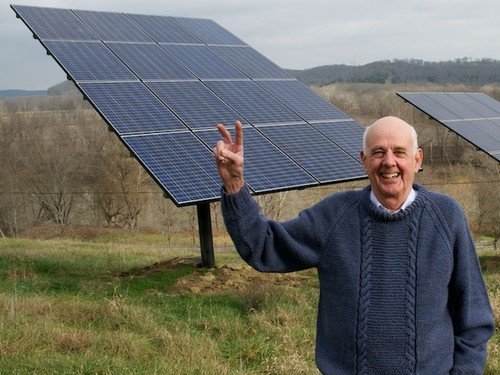
Wendell E. Berry is an American novelist, poet, environmental activist, cultural critic, and farmer. A prolific author, he has written many novels, short stories, poems, and essays. - Wikipedia
Books
Leavings
No one writes like Wendell Berry. Whether essay, novel, story, or poem, his inimitable voice rings true, as natural as the land he has farmed in Kentucky for over 40 years. Following the widely praised Given, this new collection offers a masterful blend of epigrams, elegies, lyrics, and letters, with the occasional short love poem. Alternately amused, outraged, and resigned, Berry's welcome voice is the constant in this varied mix. The book concludes with a new sequence of Sabbath poems, works that have spawned from Berry's Sunday morning walks of meditation and observation. Berry's themes are reflections of his life: friends, family, the farm, the nature around us as well as within. He speaks strongly for himself and sometimes for the lost heart of the country. As he has borne witness to the world for eight decades, what he offers us now in this new collection of poems is of incomparable value.
Bringing it to the table
Long before organic produce was available at your local supermarket, Wendell Berry was farming and writing with the purity of food in mind. For the last five decades, he has embodied mindful eating through his land practices and his writing. In recognition of Berry's influence, Michael Pollan offers an introduction to this new collection. "To read the essays in this sparkling anthology," he writes, "many of them dating back to the 1970s and 1980s, is to realize just how little of what we are saying and hearing today Wendall Berry hasn't already said, bracingly before." This compendium joins today's bestsellers as essential reading for all who care about what they eat.
Whitefoot
A white-footed mouse is swept away in a flood and must carefully watch and wait until it is safe to make a home in its new surroundings.
American Earth
Conversations with Wendell Berry
Since 1960, Wendell Berry (b. 1934) has produced one of the most substantial and consistently thematic bodies of work of any modern American writer. In more than fifty books in various genres-novels, short stories, poems, and essays-he has celebrated a life lived in close communion with neighbors and the earth and has addressed many of our most urgent cultural maladies. His collections of essays urge us to think and act responsibly as members of a community-both human and natural. Volumes of his poems seek to wed us to nature and realign our vision with its mysteries. His growing Port William cycle of novels offers us a fictional model for understanding, for compassion, and for living in constant regard for others. Conversations with Wendell Berry gathers for the first time interviews with the writer, ranging from 1973 to 2006, including one never before published. For readers acquainted with Berry's work, this volume offers insights available nowhere else. It reveals succinctly the main currents of his life's work. What emerges is a citizen-writer profoundly affected by cultural crises at home and in the world.
Hannah Coulter
"In the latest installment in Wendell Berry's long story about the citizens of Port William, Hannah Coulter remembers. Her first husband, Virgil, was declared "missing in action" shortly after the Battle of the Bulge, and after she married Nathan Coulter about all he could tell Hannah about the Battle of Okinawa was "Ignorant boys, killing each other." The community was stunned and diminished by the war, with some of its sons lost forever and others returning home determined to carry on." "Now, in her late seventies, twice-widowed and alone, Hannah sorts through her memories: of her childhood, of young love and loss, of raising children and the changing seasons. She turns her plain gaze to a community facing its long deterioration, where, she says, "We feel the old fabric torn, pulling apart, and we know how much we have loved each other." Hannah offers her summation: her stories and her gratitude, for the membership in Port William, and for her whole life, a part of the great continuum of love and memory, grief and strength."--BOOK JACKET.
Jayber Crow : the life story of Jayber Crow, barber, of the Port William membership, as written by himself
Life Is a Miracle
"In Life is a Miracle, Wendell Berry urges us to begin a "conversation out of school." Believing we are on a course of arrogant and dangerous behavior in science and other intellectual disciplines, this proclamation against modern superstition recommends a shift in priorities and goals. Berry observes, "it is clearly bad for the sciences and the arts to be divided into 'two cultures.' It is bad for scientists to be working without a sense of obligation to cultural tradition. It is bad for artists and scholars in the humanities to be working without a sense of obligation to the world beyond the artifacts of culture." They must be the subjects of one complex conversation."--BOOK JACKET.
Jayber Crow
"Jayber Crow, born in Goforth, Kentucky, orphaned at age ten, began his search as a "pre-ministerial student" at Pigeonville College.". "Eventually, after the flood of 1937, Jayber becomes the barber of the small community of Port William, Kentucky. From behind that barber chair he lives out the questions that drove him from seminary and begins to accept the gifts of community that enclose his answers. The chair gives him a perfect perch from which to listen, to talk, and to see, as life spends itself all around. In this novel full of remarkable characters, he tells his story that becomes the story of his town and its transcendent membership."--BOOK JACKET.
A world lost
Set against the turmoil of the World War II, A World Lost is just one of the classic chapters in Berry's Port William series. The summer of 1944 finds nine-year-old Andy Catlett in that very town in Kentucky, occupied more with watching meadowlarks and dipping into the nearby spring than with the weary news of the day. But when his Uncle Andrew is murdered, Andy confronts his own sense of culpability for the brawl that took his uncle's life. Told from Andy's perspective some 50 years later, the novel explores the gripping power of memory, even after decades have passed — and asks each of us what in our own pasts we might have remedied.