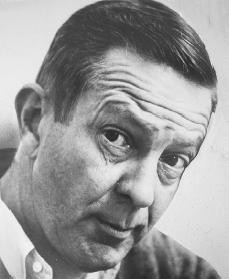
John Cheever
Personal Information
Description
John William Cheever (May 27, 1912 – June 18, 1982) was an American short story writer and novelist. He is sometimes called "the Chekhov of the suburbs". His fiction is mostly set on the Upper East Side of Manhattan; the Westchester suburbs; old New England villages based on various South Shore towns around Quincy, Massachusetts, where he was born; and Italy, especially Rome. His short stories included The Enormous Radio, Goodbye, My Brother, The Five-Forty-Eight, The Country Husband, and The Swimmer, and he also wrote five novels: The Wapshot Chronicle (National Book Award, 1958), The Wapshot Scandal (William Dean Howells Medal, 1965), Bullet Park (1969), Falconer (1977) and a novella, Oh What a Paradise It Seems (1982). A compilation of his short stories, The Stories of John Cheever, won the 1979 Pulitzer Prize for Fiction and a National Book Critics Circle Award, and its first paperback edition won a 1981 National Book Award. On April 27, 1982, six weeks before his death, Cheever was awarded the National Medal for Literature by the American Academy of Arts and Letters. His work has been included in the Library of America.
Books
Collected stories and other writings
Collected Stories and Other Writings combines the entire Pulitzer Prize-winning collection, The Stories of John Cheever, with seven selections from his first book, The Way Some People Live (1943)-here restored to print-and seven additional stories first published in periodicals between 1930 and 1953. Included are masterpieces such as The Enormous Radio, Goodbye, My Brother, and The Swimmer, as well as lesser-known gems.
Essential Cheever
One Great Author. One Great CD. Here are two magnificent stories in which John Cheever celebrates—with unequaled grace and tenderness—the deepest feelings we have. As Cheever wrote, "These stories seem at times to be stories of a long-lost world when the city of New York was still filled with a river light, when you heard the Benny Goodman quartets from a radio in the corner stationery store, and when almost everybody wore a hat."
Thirteen uncollected stories
This is the first new collection of John Cheever stories in more than fifteen years, and the first time these stories have ever been collected. Originally published in the 1930s and 1940s in magazines which run the gamut from obscure leftist literary periodicals, through The New Republic and The Atlantic Monthly, to mass circulation glossies like Colliers and Cosmopolitan, these stories deal with themes and use techniques which are not generally considered to be "Cheeveresque." They will undoubtedly surprise those readers familiar only with Cheever's post-1947 work. Each of these early stories bears the unmistakable stamp of the master storyteller. "Bayonne" is an evocative character study of a waitress whose work serving blue-collar regulars in a diner provides her with more emotional than financial support. "In Passing," which ends with the radical organizer Girsdansky haranguing a small unmoved crowd on the Boston Common at twilight, reveals perhaps more about states of mind during the Depression than standard histories of that era. "Fall River" is an elegy on economic catastrophe in a backwater New England town: Cheever calls up a picture of a wasteland with abandoned factories where "the looms blocked off the floor like discarded machinery in an old opera house." "The Autobiography of a Drummer" is a remarkable portrait of a man who has outlived his time.
The letters of John Cheever
Cheever's letters to his wife, lovers, and children are collected, annotated, and punctuated with passages from journals, presenting the story of the writer's life.
The Enormous Radio
Jim and Irene Westcott live contentedly on the 12th floor in an apartment building with their two children near Sutton Place (their city of residence is not mentioned, but Sutton Place is in New York City). They both love to listen to music, regularly attending concerts and spending time listening to music on their radio.
Falconer
Tells the story of a man, his crime and punishment, and his struggle to remain a man in a world bent on beating him back into childhood.
The world of apples
A collection of humorous stories by the American writer focusing on the volume, inhibitions, and dreams of man.
Fifty Best American Short Stories
Contents: Survivors / Elsie Singmaster -- Lost Phoebe / Theodore Dreiser -- Golden honeymoon / Ring W. Lardner -- I'm a fool / Sherwood Anderson -- My old man / Ernest Hemingway -- Telephone call / Dorothy Parker -- Double birthday / Willa Cather -- Faithful wife / Morley Callaghan -- Little wife / William March -- Babylon revisited / F. Scott Fitzgerald-- How beautiful with shoes / Wilbur Daniel Steele -- Resurrection of a life / William Saroyan -- Only the dead know Brooklyn / Thomas Wolfe -- Life in the day of a writer / Tess Slesinger -- Iron City / Lovell Thompson -- Christ in concrete / Pietro Di Donato -- Chrysanthemums / John Steinbeck -- Bright and morning star / Richard Wright -- Hand upon the waters / William Faulkner -- Net / Robert M. Coates -- Nothing ever breaks except the heart / Kay Boyle -- Search through the streets of the city / Irwin Shaw -- Who lived and died believing / Nancy Hale -- Peach stone / Paul Horgan -- Dawn of remembered spring / Jesse Stuart -- Catbird seat / James Thurber -- Of this time, of that place / Lionel Trilling -- Wind and the snow of winter / Walter Van Tilburg Clark -- Enormous radio / John Cheever -- Children are bored on Sunday / Jean Stafford -- NRACP / George P. Elliott -- In Greenwich there are many gravelled walks / Hortense Calisher -- Other foot / Ray Bradbury -- Three players of a summer game / Tennessee Williams -- Mother's tale / James Agee -- Magic barrel / Bernard Malamud -- Circle in the fire / Flannery O'Connor -- First flower / Augusta Wallace Lyons -- Contest for Aaron Gold / Philip Roth -- One ordinary day, with peanuts / Shirley Jackson -- To the wilderness I wander / Frank Butler -- Ledge / Lawrence Sargent Hall -- This morning, this evening, so soon / James Baldwin -- Tell me a riddle / Tillie Olsen -- Old army game / George Garrett -- Pigeon feathers / John Updike -- Sound of a drunken drummer / H.W. Blattner -- Keyhole eye / John Stewart Carter -- Long day's dying / William Eastlake -- Upon the sweeping flood / Joyce Carol Oates.
Understanding fiction -- Second Edition
The Attack on the Fort Sir Tatton Sykes Captain Isaiah Sellers Lady Blessington RMS. Titanic The Man Who Would Be King The Secret Life of Walter Mitty The Lottery The Girls in Their Sunnner Dresses The Furnished Room De Mortuis The Necklace [Occurrence at Owl Creek Bridge]( A Piece of Neus I See You Never Haircut Crossing into Poland War The Bride Comes to Yellow Sky Tennessee's Partner [Araby]( The Drunkard The Lament Tickets, Please Eventide Old Red Cruel and Barbarous Treatment A Domestic Dilennna Christ in Flanders Love: Three Pages from a Sportsman's Book Love The Killers The Fly I Want to Knou Why The Adulterous Woman [A Rose for Emily]( A Good Man Is Hard to Find In the Penal Colony Through the Quinquina Glass The Bitch A Father-to-Be The Fight The Far and the Near The Sensible Thing A Christmas Memory Realpolitik The Sailor Boy's Tale Amy Foster The Killing of the Dragon Dermuche Disorder and Early Sorro•-w No Place for You, My Love 1 Write Goodbye, My Brother What Happened Noon Wine Blackberry Winter
The housebreaker of Shady Hill, and other stories
Short stories reflecting the manners and mores of the country club set.
The Wapshot Chronicle
Meet the Wapshots of St Botolphs. There is Captain Leander Wapshot, venerable sea-dog and would-be suicide; his licentious older son, Moses; and Moses's adoring and errant younger brother, Coverly. Tragic and funny, ribald and splendidly picaresque, and partly based on Cheever's adolescence in New England, The Wapshot Chronicle is a stirring family narrative in the finest traditions of Trollope, Dickens, and Henry James