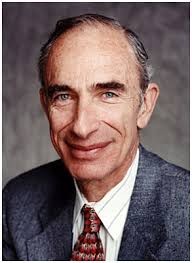
Paul R. Ehrlich
Personal Information
Description
Paul Ralph Ehrlich is an American biologist, best known for his warnings about the consequences of population growth and limited resources. He is the Bing Professor of Population Studies in the department of Biological Sciences at Stanford University and president of Stanford's Center for Conservation Biology. - Wikipedia
Books
American Earth
Human Natures
"A hallmark of Human Natures in Paul Ehrlich's ability to convey lucidly that understanding in the course of presenting an engrossing history of our species. Using personal anecdote, vivid example, and stimulating narrative, he guides us through the thicket of controversies over what science can - and cannot - say about the influence of our evolutionary past on everything from race to religion, from sexual orientation to economic development."--BOOK JACKET.
Birds in jeopardy
As the human population skyrockets and the toxic impact of human society spreads, the natural habitats of birds degrade and diminish and the bird populations decline. Two hundred years ago, when the United States and Canada were home to less than 5 million people, they were also home to some 650 species of birds. Today, more than 280 million people live there, and 33 bird species have already been driven to extinction and well over 150 are in danger of extinction in all. Or parts of their range. This book, organized and written by the authors of The Birder's Handbook, and enriched by 191 strikingly beautiful color paintings illustrating all of the birds treated, is the first concise, authoritative review of the status of the birds currently imperiled in the United States and Canada - those that are federally listed as Endangered or Threatened and those that are listed by the National Audubon Society as suffering local or regional or. Widespread decline. It also treats the birds that have been driven to extinction in the past two centuries, since the stories of their somber fates can help us learn how to save the other birds that are in jeopardy. Because birdwatchers and others are showing increased interest in the tropical birds that survive in Hawaii and Puerto Rico, the book includes separate sections on the imperiled and extinct birds of those areas. Hawaii is of special importance: because it has. Seen so many extinctions just in the years since Cook's arrival (23 species and subspecies), it provides a laboratory for studying the impact of civilization on birds in the wild. The individual texts - written in clear, non-technical language - cover requirements for successful nesting and feeding; worldwide and North American breeding range, wintering range, and imperiled portions of range; current population estimates (for Threatened and Endangered birds); behavioral. And other factors pertinent to conservation; former and/or current threats associated with decline; current status of imperilment; federally funded recovery plans; and the date of last sighting, in those desperate cases where extinction is imminent or already a fact. In the last century, coal miners took canaries into the mines, reasoning that if poisonous gases were present, the birds would give warning by succumbing first. Now birds are serving as miners' canaries once. Again. In the language of ecology, they are good indicator species, warning us that too many people, unbridled consumption of wildlands and other natural resources, faulty technologies, and irresponsible disposal of chemical and other wastes threaten not just birds but ourselves and every other living thing. In our daily lives we seldom see the terrible effects of these forces but they are demonstrated every day by scientific surveys of the environment, around the world. And the reasons for the decline are seldom obscure.
The Cold and the Dark
Examines the catastrophic global, atmospheric, and biological impact of even limited nuclear confrontation.
Healing the planet
Offers scientific and political solutions to current environmental problems.
The golden door
The walled city of Weld is under attack from ferocious flying creatures that raid in the night, bringing death and destruction. The Warden calls for Volunteers to find and destroy the Enemy who is sending the invaders. The heroes of Weld answer the call one by one, never to return. Rye is officially too young to go, but his brothers are among the lost, and he must find them.
Introductory biology
Classification of living things - Classification of plants - Reproduction - Organisms - Water - Life cycles - Human evolution - Food chains_