
KINGDOM OF PRUSSIA AUTHOR · PHILOSOPHY · GERMAN PHILOSOPHY
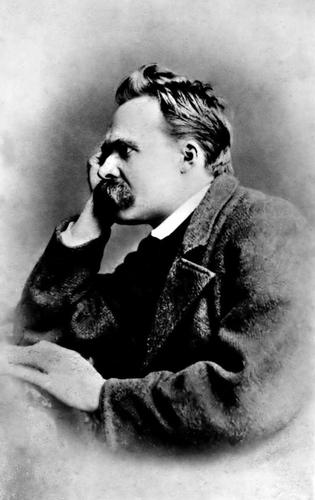
Friedrich Nietzsche
Also known as: Friedrich Wilhelm Nietzsche, F. Nietzsche
Therese Elisabeth Alexandra Förster-Nietzsche (10 July 1846 – 8 November 1935) was the sister of philosopher Friedrich Nietzsche and the creator of the Nietzsche Archive in 1894. Förster-Nietzsche was two years younger than her brother. Their father was a Lutheran pastor in the German village of Röcken bei Lützen. The two children were close during their childhood and early adult years. However, they grew apart in 1885, when Förster-Nietzsche married Bernhard Förster, a former high school teacher who had become a prominent German nationalist and antisemite.
Prologue: Zarathustra speaks of the death of God and proclaims the overman.
— from Also sprach Zarathustra, 1998
Most acclaimed

Zur Genealogie der Moral
On the Genealogy of Morals (1887) is a book about the history of ethics and about interpretation. Nietzsche rewrites the former as a history of cruelty, exposing the central values of the Judaeo-Christian and liberal traditions - compassion, equality, justice - as the product of a brutal process of conditioning designed to domesticate the animal vitality of earlier cultures. The result is a book which raises profoundly disquieting issues about the violence of both ethics and interpretation. Nietzsche questions moral certainties by showing that religion and science have no claim to absolute truth, before turning on his own arguments in order to call their very presuppositions into question. The Genealogy is the most sustained of Nietzsche's later works and offers one of the fullest expressions of his characteristic concerns. This edition places his ideas within the cultural context of his own time and stresses the relevance of his work for a contemporary audience.
Also sprach Zarathustra
1998
A landmark work of philosophy and of literature, Thus Spoke Zarathustra is the fullest expression of Nietzche's belief that "the object of mankind should lie in its highest individuals." In his thirtieth year Zarathustra - the archetypal Ubermensch representative of supreme passion and creativity - abandons his home for the mountains, where he lives, literally and figuratively, on a level of experience far above the conventional standards of good and evil. The exuberant, poetic testimony of Nietzche's great messianic hero (and alter ego) is a vivid demonstration of the philosopher's genius. Walter Kaufmann's celebrated translation - hailed by Newsweek for its "incandescent splendor of language"--Has gained general recognition as the most authoritative version of Zarathustra existing in English.
Hammer of the Gods
"The members of Led Zeppelin are major deities in the pantheon of rock gods. The first and heaviest of the heavy metal monsters, they violently shook the foundations of rock music and took no prisoners on the road. Their tours were legendary, their lives were exalted—and in an era well known for sex and drugs, the mighty Zeppelin set an unattainable standard of excess and mythos for any band that tried to follow them. They were power, they were fantasy, they were black magic. No band ever flew as high as Led Zeppelin or suffered so disastrous a fall. And only some of them lived to tell the tale. Hammer of the Gods is the New York Times bestselling epic saga of the hard reign of Page, Plant, Jones, and Bonham—a spellbinding, electrifying, no-holds-barred classic of rock 'n' roll history that has now been updated to include the continuing adventures of the band"--Publisher's description.