Discover
Mar 7, 1986 — Mar 7, 2034· 48 yrs

ANCIENT ROME AUTHOR · HISTORY · TRANSLATIONS INTO ENGLISH

Sallust

Also known as: Caius Sallustius Crispus, C. Sallustius Crispus

30
BOOKS
4.5
AVG RATING (2)
1
READERS

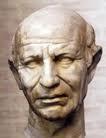
Gaius Sallustius Crispus, generally known simply as Sallust, (86-34 BC), a Roman historian, belonged to a well-known plebeian family, and was born at Amiternum in the country of the Sabines. Throughout his career Sallust always stood by his principle as a popularis, an opposer of Pompey's party and the old aristocracy of Rome. After an ill-spent youth, Sallust entered public life and won election as Quaestor in 55 and one of the tribunes of the people in 52, the year in which the followers of Milo killed Clodius in a street brawl. Sallust then supported the following prosecution of Milo. He also had hostilities with the famous orator Cicero. From the beginning of his public career, Sallust operated as a decided partisan of Caesar, to whom he owed such political advancement as he attained. In 50 the censor Appius Claudius Pulcher removed him from the Senate on the grounds of gross immorality (probably really because of his friendship with Caesar). In the following year, no doubt through Caesar's influence, he was reinstated. In 46 he served as a praetor and accompanied Caesar in his African campaign, which ended in the decisive defeat of the remains of the Pompeian war party at Thapsus. As a reward for his services, Sallust gained appointment as governor of the province of Africa Nova. In this capacity he committed such oppression and extortion that only the influence of Caesar enabled him to escape condemnation. On his return to Rome he purchased and began laying out in great splendour the famous gardens on the Quirinal known as the Horti Sallustiani or Gardens of Sallust. These gardens would later belong to the emperors. Sallust then retired from public life and devoted himself to historical literature, and further developing his Gardens of Sallust, upon which he spent much of his accumulated wealth (Wikipedia).

Amiternum, Ancient Rome
Wikipedia

Sallust conquered a new domain for the literature of the Latins.

— from Sallust

Most acclaimed

#2

Sallust's History of the war against Jugurtha, and of the Conspracy of Catiline: with a dictionary and notes

0.0 (0)
#1

Catiline's War, The Jugurthine War, Histories

0.0 (0)

"The earliest Roman historian with complete works to his name, Sallust (86-c. 35 B.C.) was a senator of the Roman Republic and younger contemporary of Cicero, Pompey and Julius Caesar. His Catilino's War tells of the conspiracy in 63 B.C. led by L. Sergius Catilino, who plotted to assassinate numerous senators and take control of the government, but was thwarted by Cicero. Sallust's vivid account of Roman public life shows a Republic in decline, prey to moral corruption and internal strife. In The Jugurthine War he describes Rome's fight in Africa against the king of the Numidians from 111 to 105 B.C., and provides a damning picture of the Roman aristocracy. Also included in this volume are the major surviving extracts from Sallust's now fragmentary Histories, depicting Rome after the death in 78 B.C. of the dictator Sulla." "A. J. Woodman's translation retains the individualism of the original Latin, while his introduction discusses Sallust's life and political career and his approach lo writing history. This edition includes chronologies, further reading, an index, maps and extensive notes."--Jacket.
#3

[Opera]

0.0 (0)

The book introduces opera and analyzes eight masterpieces: "Don Giovanni" by Mozart, "Dido and Aeneas" by Purcell, "The Barber of Seville" by Rossini, "Rigoletto" by Verdi, "The mastersingers of Nuremberg" by Wagner, "Boris Godunov" by Mussorgsky, "Carmen" by Bizet, and "Tosca" by Puccini. The cd contains key songs from each opera that are broken into "timelines" in the text.

Books

Newest First
