
GERMANY AUTHOR · MYSTICISM · LATIN SERMONS
Meister Eckhart
Also known as: Eckhart Meister, Eckhart Meister.
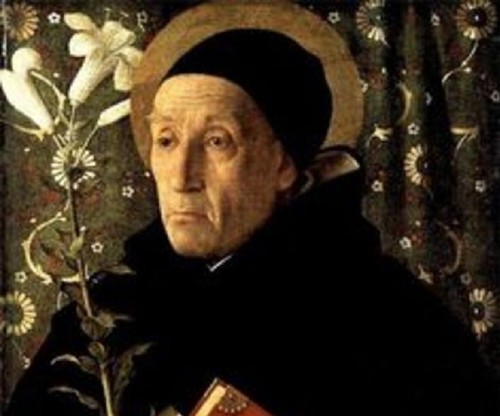
Eckhart von Hochheim (c. 1260 – c. 1328), commonly known as Meister Eckhart (German: [ˈmaɪstɐ ˈʔɛkaʁt]), Master Eckhart, claimed original name Johannes Eckhart, was a German Catholic priest, theologian, philosopher and mystic. He was born near Gotha in the Landgraviate of Thuringia (now Thuringia in central Germany) in the Holy Roman Empire. Eckhart came into prominence during the Avignon Papacy at a time of increased tensions between monastic orders, diocesan clergy, the Franciscan Order, and Eckhart's Dominican Order. In later life, he was accused of heresy and brought up before the local Franciscan-led Inquisition, and tried as a heretic by Pope John XXII with the bull In Agro Dominico of March 27, 1329. In the trial, excerpts of his Book of Divine Consolation were used against Eckhart.
IT IS ADVENT AGAIN.
— from Watch For The Light
Most acclaimed

Watch For The Light
The history of opera has a relatively short duration within the context of the history of music in general. It appeared in 1597, when the first opera, Dafne, by Jacopo Peri, was created. Since then it has developed parallel to the various musical currents that have followed one another over time up to the present day, generally linked to the current concept of classical music. Opera (from the Latin opera, plural of opus, "work") is a musical genre that combines symphonic music, usually performed by an orchestra, and a written dramatic text—expressed in the form of a libretto—interpreted vocally by singers of different tessitura: tenor, baritone, and bass for the male register, and soprano, mezzo-soprano, and contralto for the female, in addition to the so-called white voices (those of children) or in falsetto (castrato, countertenor). Generally, the musical work contains overtures, interludes and musical accompaniments, while the sung part can be in choir or solo, duet, trio, or various combinations, in different structures such as recitative or aria.
Selected writings
1994
Sir Thomas Browne (1605-82), physician and philosopher, is celebrated principally for his Religio Medici and his study of burial customs, Urn Burial, masterpieces of English prose. But a portrait of Browne as a seventeenth-century intellectual must include much that is rarely seen except by specialists. The Pseudodoxia Epidemica, for example, tracts, letters to naturalists and antiquarians, notebooks and observations on natural history, are neglected. This modernised edition includes the complete text of Urn Burial, selections from Religio Medici, and much else to give account of Browne as doctor, scientist, philosopher, Christian, political and social being. Designed for those unfamiliar with Browne's sometimes opaque prose, it includes substantial annotation and a full introduction. . Browne's elaborate wit engages us by its reflective, at times outrageous tone. He can parody himself: 'if elegancy still proceedeth...we shall, within few years, be fain to learn Latin to understand English...' He was 'rich in various knowledge, exuberant in conceptions and conceits; contemplative, imaginative, often truly great and magnificent in his style,' Coleridge said. His work has marked generations of English writers.
Confessions
Visionary, activist, and one of the most important religious thinkers and teachers of our time, Matthew Fox has devoted his career to unleashing the suppressed mystical and life-affirming traditions within Christianity. His theology of "Creation Spirituality" - notably the belief that we are born in "original blessing" - has reinvigorated the faith of countless Christians and earned him the headline-making censure of the Vatican, who officially "silenced" Fox in 1989 and precipitated his dismissal by the Dominican Order in 1993. In this always compelling memoir, Fox, now an Episcopal priest, traces the roots of his radical theology, from his 195Os childhood in Madison, Wisconsin, through formative years spent training in a late-sixties Paris rocked by revolutionary fervor, to taking on the Vatican (which he likens to standing in front of a train), to his most recent experiences as a leader of "rave masses" for urban young people. Written with his characteristic candor and insight, Confessions details Fox's spiritual, intellectual, political, and cultural evolution as an envelope-pushing member of a generation "bold enough to question many things and to seek spirituality over religion.". Fox's story mirrors the questions and concerns of those millions of contemporary seekers with a "passion for holiness"; a yearning for a Christian spirituality committed to social justice, feminism, and environmentalism; and a desire for ritual that heals, celebrates, and honors the gifts of being in each of us. Always relentlessly ahead of his time, Fox embraces his role as a "post-denominational priest," passionately exploring the present and future role of faith, church, and a spirituality grounded in the emphatic belief that finding God is still possible.