
FRANCE AUTHOR · PHILOSOPHY · MODERN CIVILIZATION
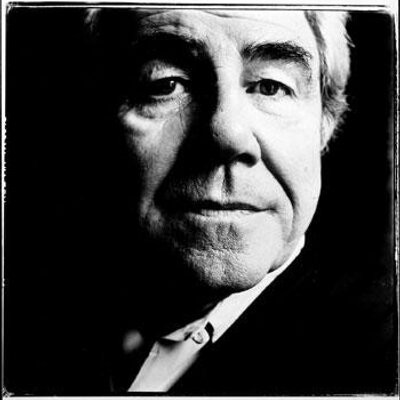
Jean Baudrillard
Jean Baudrillard (UK: , US: ; French: [ʒɑ̃ bodʁijaʁ]; 27 July 1929 – 6 March 2007) was a French sociologist and philosopher with an interest in cultural studies. He is best known for his analyses of media, contemporary culture, and technological communication, as well as his formulation of concepts such as hyperreality. Baudrillard wrote about diverse subjects, including consumerism, critique of economy, social history, aesthetics, Western foreign policy, and popular culture. Among his best-known works are Forget Foucault (1977), Seduction (1978), Simulacra and Simulation (1981), America (1986), and The Gulf War Did Not Take Place (1991). His work is frequently associated with postmodernism and specifically post-structuralism.
THINGS HAVE FOUND A WAY of avoiding a dialectics of meaning that was beginning to bore them: by proliferating indefinitely, increasing their potential, outbidding themselves in an ascension to the limit, an obscenity that henceforth becomes their immanent finality and senseless reason.
— from Fatal strategies
Most acclaimed

Fragments
The eleven plays by Aristophanes that have come down to us intact brilliantly illuminate the eventful period spanned by his forty-year career, beginning with the first production in 427 BCE. But the Athenians knew much more of his work: over forty plays by Aristophanes were read in antiquity, of which nearly a thousand fragments survive. These provide a fuller picture of the poet's ever astonishing comic vitality and a wealth of information and insights about his world. Jeffrey Henderson's new widely acclaimed Loeb edition of Aristophanes is completed by this volume containing what survives from, and about, his lost plays, hitherto inaccessible to the non-specialist, and incorporating the enormous scholarly advances that have been achieved in recent years. Each fragmentary play is prefaced by a summary of what can be inferred about its plot, characters, themes, theatricality, and topical significance. Also included in this edition are the ancient reports about Aristophanes' life, works, and influence on the later comic tradition. Jeffrey Henderson is William Goodwin Aurelio Professor of Greek Language and Literature at Boston University. He is General Editor of the Loeb Classical Library. -- Jacket.
America
1974
Winning is great, but being accepted is greater. ‘America: No Purchase Necessary’ is a feel-good story about acceptance. One of the many perks of winning the national ‘America’s Family’ Sweepstakes is the chance to meet and to make appearances with the President on his reelection campaign. Unbeknownst to the public, the President and his shady campaign manager are profiting off of these appearances, which are beginning to make the headlines as campaign contribution corruption. When an eclectic African-American family becomes the unexpected winner of the prestigious ‘America’s Family’ contest, the President and his shiesty reelection campaign manager tries to get the family disqualified, thinking that this particular family isn’t ‘American-looking’ enough, and to appear with them on the campaign trail will hurt the President’s chance of getting reelected. Oblivious to a shrewd reporter being on their tail, the President and his cocky campaign manager tries to spin their dirty politics through their unsuspecting press secretary. Without being preachy, ‘America: No Purchase Necessary’ gives a lighthearted glimpse into American politics while simultaneously showing a realistic snapshot of life in contemporary America today. Unable to get the Lantern family disqualified as ‘America’s Family’, reluctantly the President meets the family on his reelection campaign trail and, ironically, America begins to fall in love with young Ronnie, who narrates and provides us with his unique autistic insights of his colorful family, while the President’s approval rating dwindles as America begins to see his true colors. Just like any other family in America, the Lanterns have autism, transgender issues, and even a grandmother who’ve come up with her own interesting alternative to plant-base burgers. Ultimately, the Lanterns become more popular than the President, creating a huge problem and causes a gigantic PR headache for his reelection staff. ‘America: No Purchase Necessary’ is an entertaining political satire that looks at race relations in America, and it shows the sometimes-ugly side of America while, at the same time, reflect the goodness in certain people that highlights America’s beauty as well. The Lantern family won the national sweepstakes fair and square, and they only want to be treated as such. If you or your family ever felt left out, pushed out or shut out then Randolph Randy Camp’s ‘America: No Purchase Necessary’ is a story for you.
Selected writings
1994
Sir Thomas Browne (1605-82), physician and philosopher, is celebrated principally for his Religio Medici and his study of burial customs, Urn Burial, masterpieces of English prose. But a portrait of Browne as a seventeenth-century intellectual must include much that is rarely seen except by specialists. The Pseudodoxia Epidemica, for example, tracts, letters to naturalists and antiquarians, notebooks and observations on natural history, are neglected. This modernised edition includes the complete text of Urn Burial, selections from Religio Medici, and much else to give account of Browne as doctor, scientist, philosopher, Christian, political and social being. Designed for those unfamiliar with Browne's sometimes opaque prose, it includes substantial annotation and a full introduction. . Browne's elaborate wit engages us by its reflective, at times outrageous tone. He can parody himself: 'if elegancy still proceedeth...we shall, within few years, be fain to learn Latin to understand English...' He was 'rich in various knowledge, exuberant in conceptions and conceits; contemplative, imaginative, often truly great and magnificent in his style,' Coleridge said. His work has marked generations of English writers.