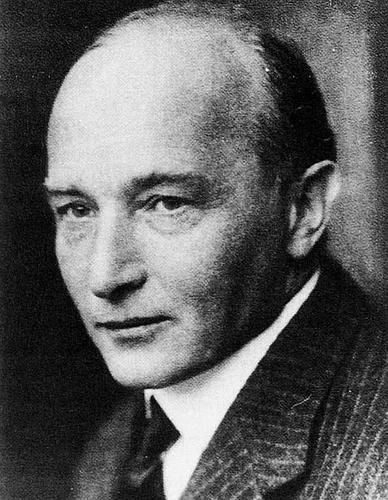
Robert Musil
Personal Information
Description
Robert Musil ( 6. November 1880 in St. Ruprecht bei Klagenfurt; † 15. April 1942 in Genf) war ein österreichischer Schriftsteller und Theaterkritiker. Für sein literarisches Schaffen waren der Erste Weltkrieg sowie die Errichtung der nationalsozialistischen Herrschaft in Deutschland und Österreich bedeutsame Einschnitte. Musils Werk umfasst Novellen, Dramen, Essays, Kritiken und zwei Romane: 1906 erschien Die Verwirrungen des Zöglings Törleß, ein vielfach auch als Schullektüre genutztes Werkbeispiel der literarischen Moderne. An seinem zur Weltliteratur zählenden Hauptwerk Der Mann ohne Eigenschaften, das von autobiographischen Aspekten mitbestimmt ist, hat Musil seit den 1920er Jahren bis zu seinem Tode fortlaufend gearbeitet, ohne es abschließen zu können.
Books
Diaries, 1899-1941
The Diaries of Robert Musil are a secret look into the life and mind of a writer whose fiction embodies one of the twentieth century's daring leaps of consciousness. In a series of notebooks kept through most of his literary career, Musil reflected, often through stunning epigrams, on his childhood, his erotic life, his methods of creative thought and his fellow writers. An indispensable guide to his fiction, essays and plays, the pages of the Diaries provide a skeleton key for his complex unfinished masterpiece, The Man Without Qualities. In the Diaries Robert Musil challenged himself to think about a reality beyond the world that could be apprehended by logic, to entertain the possibilities of forbidden eroticism, to imagine the hidden mystical life of Fascist Europe, and to turn the question of sexual gender into the puzzle of identity.
Selected writings
Eine Art Einleitung / Seinesgleichen Geschieht 1/2
Part of [Mann ohne Eigenschaften](
Agathe, or the Forgotten Sister
"Agathe is the sister of Ulrich, the so-called "man without qualities" who is the major character in Robert Musil's great, unfinished novel of that name. Ulrich is intellectual and skeptical and rebellious and yet for all that rule-bound, held hostage by his attraction to the systematic, even if every existing system-political, ethical, metaphysical-strikes this onetime mathematician as fundamentally suspect. When, however, after many years Ulrich and his younger sister, Agathe, reunite over the bier of their dead father, a celebrated lawyer, both siblings are electrified. They are, for one thing, almost each other's spitting image, while Agathe, who has just separated from her husband, is even more resistant to any kind of status quo than her brother. Engaging in a series of ever more intense and questioning "holy conversations," brother and sister progressively enlarge the boundaries of sexuality, sensuality, and identity, seeking to arrive at a new conception of reality that they are sure lies within each other to discover. Musil's Agathe, or the Forgotten Sister is one of the most unexpected and breathtaking adventures of twentieth-century fiction, while Joel Agee's new English translation captures all the nuance of Musil's famously acute and penetrating style"--