Discover
Nov 4, 1873 — Oct 24, 1958· 84 yrs

UNITED KINGDOM AUTHOR · PHILOSOPHY · PHILOSOPHIE

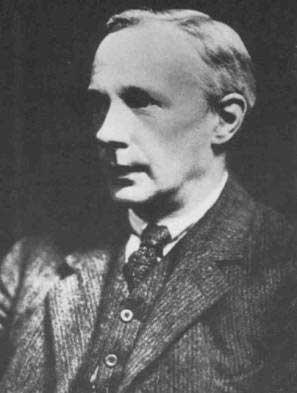
George Edward Moore

14
BOOKS
2.5
AVG RATING (2)
1
READERS
Upper Norwood, United Kingdom
Wikipedia

I. By cause of itself I understand that whose essence involves existence, or that whose nature cannot be conceived unless existing.

— from Ethics

Most acclaimed

#1

Principles of mathematics

0.0 (0)
#2

Ethics

1.0 (1)

The feminist movement has challenged many of the unstated assumptions on which ethics as a branch of philosophy has always rested - assumptions about human nature, moral agency, citizenship and kinship. The twenty-six readings in this book express the discontent of a succession of fiercely articulate women writers, from Mary Wollstonecraft to the present day, with the masculine bias of 'morality'. The editors have contributed an overall introduction, which discusses ethics, feminism and feminist themes in ethics, and have provided introductions to each of the readings, designed to situate in their historical and intellectual context. They have also compiled two lists for further reading: `Ethics: a Feminist Bibliography' and 'The Male Tradition'. Ethics: A Feminist Reader is an essential resource for students and teachers of philosophy, political theory and women's studies. For anyone with a stake in progressive sexual politics it is an inspirational guide. The volume contains essays by: Mary Wollstonecraft, Cicely Hamilton, Margaret Sanger, Betty Friedan, Christine Delphy, Andrea Dworkin, Rosalind Coward, Nickie Roberts, Emma Goldman, Virginia Woolf, Simone de Beauvoir, Audre Lorde June Jordan, Jacqueline Rose, Judith Williamson, Seyla Benhabib, Alexandra Kollontai, Adrienne Rich, Kate Soper, Catherine A. MacKinnon, Elizabeth Wilson, Susan F. Parrsons, Rosalind Pollack Petchesky, Sara Ruddick and Sheila Jeffreys.
#3

Selected writings

1994

0.0 (0)

Sir Thomas Browne (1605-82), physician and philosopher, is celebrated principally for his Religio Medici and his study of burial customs, Urn Burial, masterpieces of English prose. But a portrait of Browne as a seventeenth-century intellectual must include much that is rarely seen except by specialists. The Pseudodoxia Epidemica, for example, tracts, letters to naturalists and antiquarians, notebooks and observations on natural history, are neglected. This modernised edition includes the complete text of Urn Burial, selections from Religio Medici, and much else to give account of Browne as doctor, scientist, philosopher, Christian, political and social being. Designed for those unfamiliar with Browne's sometimes opaque prose, it includes substantial annotation and a full introduction. . Browne's elaborate wit engages us by its reflective, at times outrageous tone. He can parody himself: 'if elegancy still proceedeth...we shall, within few years, be fain to learn Latin to understand English...' He was 'rich in various knowledge, exuberant in conceptions and conceits; contemplative, imaginative, often truly great and magnificent in his style,' Coleridge said. His work has marked generations of English writers.

Books

Newest First
