Discover
Jul 6, 1886 — Jun 16, 1944· 57 yrs

FRANCE AUTHOR · HISTORY · ECONOMIC HISTORY

Marc Bloch

Also known as: Marc Léopold Benjamin Bloch

14
BOOKS
4.0
AVG RATING (1)
0
READERS

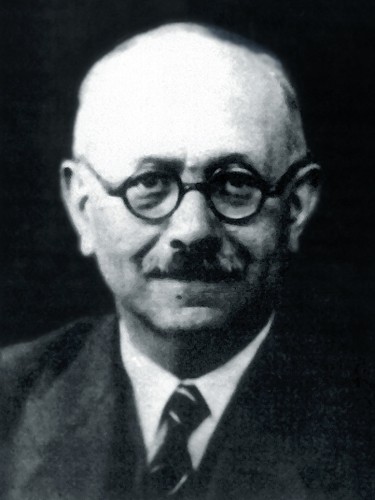
Marc Léopold Benjamin Bloch ( BLOCK; French: [maʁk leɔpɔld bɛ̃ʒamɛ̃ blɔk]; 6 July 1886 – 16 June 1944) was a French historian. He was a founding member of the Annales School of French social history. Bloch specialised in medieval history and published widely on medieval France over the course of his career. As an academic, he worked at the University of Strasbourg (1920 to 1936 and 1940 to 1941), the University of Paris (1936 to 1939), and the University of Montpellier (1941 to 1944). Born in Lyon to an Alsatian Jewish family, Bloch was raised in Paris, where his father—the classical historian Gustave Bloch—worked at Sorbonne University.

2nd arrondissement of Lyon, France
Wikipedia

'YOU see before you the wrath of the Lord breaking forth. . . . There is naught but towns emptied of their folk, monasteries razed to the ground or given to the flames, fields desolated. . . . Everywhere the strong oppresseth the weak and men are like fish of the sea that blindly devour each other.

— from La société féodale, 1968

Most acclaimed

#1

Île-de-France

0.0 (0)
#2

La société féodale

1968

0.0 (0)

Feudal Society is the masterpiece of one of the greatest historians of the century. Marc Bloch's supreme achievement was to recreate the vivid and complex world of Western Europe from the ninth to the thirteenth centuries. For Bloch history was a living organism, and to write of it was an endless process of creative evolution and of growing understanding. The author treats feudalism as a vitalising force in European society. He surveys the social and economic conditions in which feudalism developed; he sees the structures of kinship which underlay the formal relationships of vassal and overlord. For Bloch these relationships are mutual as much as coercive, the product of a dangerous and uncertain world. His insights into the lives of the nobility and the clergy and his deep understanding of the processes at work in medieval Europe, are profound and memorable.

#3

Correspondance

1994

0.0 (0)

How to reconcile the necessary loneliness of the creator and the need to build a community of spirits that are close to the neighboring requirements? For Yves Bonnefoy, sharing is the meaning of the poetic experience, in his eyes different from mere literature. One of the moments is that of writing a letter. The edition of his Correspondence associates the letters he has written with those he has received. It brings out the fabric of a life of man and poet, with its network of friendships, constant or mobile, according to alliances, chances and crumples. This first volume, begun with the collaboration of Yves Bonnefoy, brings together more than nine hundred letters exchanged in the second half of the twentieth century, to which are added some e-mails.^ The dialogues, with forty-nine correspondents, are organized around two axes: on the one hand, links from surrealism - André Breton, Pierre Alechinsky, Gilbert Lely, Christian Dotremont, George Henein, Raoul Ubac, Jacqueline Lamba, André Pieyre of Mandiargues, Hans Bellmer, Jean Brun; on the other hand, the friendships which after fifteen years led to the creation of L'Éphémère (1967-1972), the magnificent magazine published by the Maeght editions: André du Bouchet, Jacques Dupin and Gaëtan Picon , Louis-René des Forêts and Paul Celan.^ The other authors of the letters are in no way secondary characters, neither in themselves, nor by the place they occupied in the world of Bonnefoy: Gaston Bachelard, Jean Wahl and Andre Chastel, his masters; then Gilbert Lely, Salah Stétié, Pierre Jean Jouve, Gabriel Bounoure, Christiane Martin du Gard, Philippe Jaccottet, Boris Schloezer, André Frenaud, Michel Butor, Emil Cioran, Monique Wittig, Paul Benichou, Jean-Pierre Richard or Henry Corbin, for to name only them. Here you will find a wealth of information about the poet's work and the sensibility of an era, with notes enriched with excerpts from the writer's Chronology by himself, also unpublished.--Translation of page 4 of cover by Fabula.
Books

Newest First
