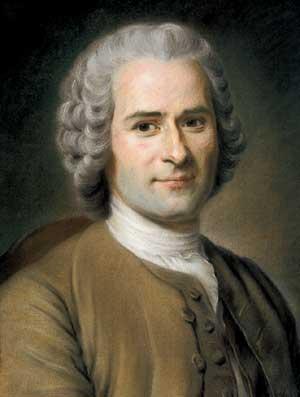
Jean-Jacques Rousseau
Personal Information
Description
Jean-Jacques Rousseau was a major Genevois philosopher, writer, and composer of 18th-century Romanticism. His political philosophy influenced the French Revolution and the development of modern political, sociological and educational thought. His novel, Emile: or, On Education, which he considered his most important work, is a seminal treatise on the education of the whole person for citizenship. His sentimental novel, Julie, ou la nouvelle Héloïse, was of great importance to the development of pre-Romanticism and romanticism in fiction. Rousseau's autobiographical writings: his Confessions, which initiated the modern autobiography, and his Reveries of a Solitary Walker were among the pre-eminent examples of the late 18th-century movement known as the "Age of Sensibility", featuring an increasing focus on subjectivity and introspection that has characterized the modern age. Rousseau also made important contributions to music as a theorist. During the period of the French Revolution, Rousseau was the most popular of the philosophers among members of the Jacobin Club. He was interred as a national hero in the Panthéon in Paris, in 1794, 16 years after his death.
Books
Construire la Grande Pyramide
Comment, face à l'accomplissement de la grande pyramide, ne pas s'interroger sur les moyens de sa mise en Œuvre par une société de cultivateurs, de pêcheurs et de chasseurs qui édifia l'une des plus incroyables entreprises de tous les temps ? Comment s'étonner que, depuis deux siècles, archéologues, architectes, ingénieurs, visionnaires aient rivalisé d'imagination pour, chacun, imposer " la " solution ? Cet essai part des spécificités du chantier, des problèmes impossibles à esquiver, pour aboutir au monument parfait.
Correspondance
Œuvres complètes
Les confessions
Je forme une entreprise qui n'eut jamais d'exemple, et dont l'execution n'aura point d'imitateur. Je veux montrer a mes semblables un homme dans toute la verite de la nature; et cet homme, ce sera moi. Moi seul. Je sens mon coeur, et je connais les hommes. Je ne suis fait comme aucun de ceux que j'ai vus; j'ose croire n'etre fait comme aucun de ceux qui existent. Si je ne vaux pas mieux, au moins je suis autre. Si la nature a bien ou mal fait de briser le moule dans lequel elle m'a jete, c'est ce dont on ne peut juger qu'apres m'avoir lu. Que la trompette du jugement dernier sonne quand elle voudra, je viendrai, ce livre a la main, me presenter devant le souverain juge. Je dirai hautement: Voila ce que j'ai fait, ce que j'ai pense, ce que je fus. J'ai dit le bien et le mal avec la meme franchise. Je n'ai rien tu de mauvais, rien ajoute de bon; et s'il m'est arrive d'employer quelque ornement indifferent, ce n'a jamais ete que pour remplir un vide occasionne par mon defaut de memoire. J'ai pu supposer vrai ce que je savais avoir pu l'etre, jamais ce que je savais etre faux. Je me suis montre tel que je fus: meprisable et vil quand je l'ai ete; bon, genereux, sublime, quand je l'ai ete: j'ai devoile mon interieur tel que tu l'as vu toi-meme. Etre eternel, rassemble autour de moi l'innombrable foule de mes semblables; qu'ils ecoutent mes confessions, qu'ils gemissent de mes indignites, qu'ils rougissent de mes miseres. Que chacun d'eux decouvre a son tour son coeur au pied de ton trone avec la meme sincerite, et puis qu'un seul te dise, s'il l'ose: je fus meilleur que cet homme-la.
Le Devin du village, intermède, 1 act
Manuscript full score, not paginated
Emile, of Over de opvoeding
Als een denkbeeldige, ideale pedagoog die een jonge, door de cultuur onbedorven mens begeleidt op de weg naar volwassenheid, verwoordt de Franse schrijver 81712-1778) zijn opvoedkundige ideeen.
Julie, or, The new Heloise
"Rousseau's great epistolary novel, Julie, or the New Heloise, has been virtually unavailable in English since 1810. In it, Rousseau reconceptualized the relationship of the individual to the collective and articulated a new moral paradigm. The story follows the fates and smoldering passions of Julie d'Etange and St. Preux, a one-time lover who reenters Julie's life at the invitation of her unsuspecting husband, M. de Wolmar. The complex tones of this work made it a commercial success and a continental sensation when it first appeared in 1761, and its embodiment of Rousseau's system of thought, in which feelings and intellect are intertwined, redefined the function and form of fiction for decades. As the characters negotiate a complex maze of passion and virtue, their purity of soul and honest morality reveal, as Rousseau writes in his preface, "the subtleties of heart of which this work is full." A comprehensive introduction and careful annotations make this novel accessible to contemporary readers, both as an embodiment of Rousseau's philosophy and as a portrayal of the tension and power inherent in domestic life."--BOOK JACKET.
Political writings
Emile, or, Concerning education : extracts containing the principal elements of pedagogy found in the first three books
Essay on the Origin of Languages and Writings Related to Music (Collected Writings of Rousseau)
Las ensoñaciones del paseante solitario
Iniciadas en el otoño de 1776, LAS ENSOÑACIONES DEL PASEANTE SOLITARIO pueden ser consideradas como el testamento de JEAN-JACQUES ROUSSEAU (1712-1778). El término «ensoñaciones» alude tanto a los estados contemplativos, casi místicos, como a las meditaciones basadas en el raciocinio más riguroso. La traducción de Mauro Armiño ha tomado como referencia el texto definitivamente fijado tras décadas de investigaciones eruditas; el prólogo y las notas aclaran los principales problemas de interpretación del manuscrito. El volumen ofrece como complemento, además de una breve cronología, cinco apéndices: las veintisiete «Cartas de baraja» también póstumas; los treinta y cinco fragmentos que componen «Mi retrato»; cuatro cartas dirigidas a Malesherbes en enero de 1762; la semblanza hecha por Bernardin de Saint-Pierre, evocación doméstica de los hábitos y manías cotidianas de Rousseau, y un texto del Abate Rozier.
