Discover

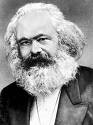
Karl Marx

Personal Information

Born May 5, 1818
Died March 14, 1883 (64 years old)
Trier, statelessness
Also known as: Karl Heinrich Marx, Carlos Marx
10 books
3.8 (5)
124 readers

Description

German philosopher, economist, sociologist, journalist and revolutionary socialist

Books

Newest First

Writings of the young Marx on philosophy and society

0.0 (0)
0

This translation and edition of the writings of young Marx by two scholars, one an outstanding philosopher, the other a specialist in German literature, marks a significant contribution to Marxian studies.

Misère de la philosophie

0.0 (0)
61

The Poverty of Philosophy (French: Misère de la philosophie) is a book by Karl Marx published in Paris and Brussels in 1847, where he lived in exile from 1843 until 1849. It was originally written in French as a critique of the economic and philosophical arguments of French anarchist Pierre-Joseph Proudhon set forth in his 1846 book The System of Economic Contradictions, or The Philosophy of Poverty. (Source: [Wikipedia](

Der 18. Brumaire des Louis Bonaparte

3.7 (3)
23

"The Eighteenth Brumaire of Louis Bonaparte" is one of Karl Marx' most profound and most brilliant monographs. It may be considered the best work extant on the philosophy of history. On the 18th Brumaire (Nov. 9th), the post-revolutionary development of affairs in France enabled the first Napoleon to take a step that led with inevitable certainty to the imperial throne. The circumstance that fifty and odd years later similar events aided his nephew, Louis Bonaparte, to take a similar step with a similar result, gives the name to this work-"The Eighteenth Brumaire of Louis Bonaparte."

Zur Kritik der Hegelschen Rechtsphilosophie

0.0 (0)
10

Dieser berühmte Text erschien 1844 in den Deutsch-Französischen Jahrbüchern. Marx geht in dieser Kritik der „deutschen Zustände“ von der Religion aus, welche er als „Opium des Volkes“ bezeichnet (womit er eine Formulierung von Heinrich Heine zuspitzte). Doch im Sinne der Emanzipation ist über eine „Kritik des Himmels“ hinaus für Marx eine „Kritik der Politik“ notwendig, welche nicht alleine durch die Philosophie, sondern nur durch das Handeln der Klasse des Proletariats erfolgen könne. Dem Bild Hegels von der Philosophie als der „Eule der Minerva“, die „erst mit der einbrechenden Dämmerung ihren Flug“ beginnt, setzt Marx am Ende seiner Einleitung das „Schmettern des gallischen Hahns“ entgegen, durch welches, „wenn alle innern Bedingungen erfüllt sind“, der „deutsche Auferstehungstag“ verkündet werde. (Aus dem [Wikipedia-artikel](
