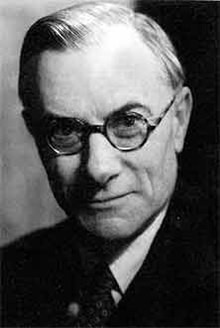
Edward Hallet Carr
Description
Edward Hallett "Ted" Carr CBE FBA (28 June 1892 – 3 November 1982) was a British historian, diplomat, journalist and international relations theorist, and an opponent of empiricism within historiography. Carr was best known for A History of Soviet Russia, a 14-volume history of the Soviet Union from 1917 to 1929 including The Bolshevik Revolution, 1917-1923 (3 vols.), The Interregnum, 1923-1924 (1 vols.), Socialism in One Country, 1924-1926 (3 vols.), Foundations of a Planned Economy, 1926-1929 (3 vols.), for his writings on international relations, particularly The Twenty Years' Crisis, and for his book What Is History? in which he laid out historiographical principles rejecting traditional historical methods and practices. Source: [E. H. Carr]( on Wikipedia.
Books
Karl Marx
What is history?
A philosophical interpretation of history, examining the significance of historical study as a science and a reflection of social values.
German-Soviet relations between the two World Wars, 1919-1939
"Note on sources": p. 138-141.
The Twenty Years' Crisis, 1919-1939
E. H. Carr's classic work on international relations published in 1939 was immediately recognized by friend and foe alike as a defining work. The author was one of the most influential and controversial intellectuals of the 20th century. The issues and themes he developed continue to have relevance to modern day concerns with power and its distribution in the international system.
Michael Bakunin
Lebendig geschriebene Einführung in Leben und Werk des legendären russischen Revolutionärs und Anarchisten Michail Bakunin. (Quelle: [Libertad Verlag](
International Relations Between the Two World Wars, 1919-39
"First published under the title 'International relations since the peace treaties.'" Appendices:--1. The Monroe doctrine.--2. Wilson's fourteen points.--3. Extracts from the Covenant of the League of Nations.
