Discover
Jan 22, 1957 — —· 69 yrs

UNITED KINGDOM AUTHOR · BIOGRAPHY · HISTORY

Francis Wheen

15
BOOKS
2.5
AVG RATING (2)
0
READERS

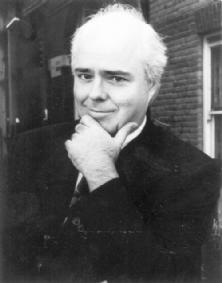
Francis Wheen is a prolific freelance journalist and broadcaster, and has worked for the New Statesman, Independent, Mirror, Gay News, Today, New Socialist and Tatler. Having presented News-Stand on BBC Radio 4 for a number of years, Francis has appeared often on ITV's What the Papers Say and more recently on BBC2's Have I Got News For You. He was also the writer of Wheen's World a regular column appearing in the Guardian, for which he was voted Columnist of the Year.

United Kingdom
Wikipedia

Marx did not leave any major methodological statements, comparable, for instance, to the philosophical part of Engel's Anti-Duhring.

— from Karl Marx, 1982

Most acclaimed

#1

Karl Marx

1982

0.0 (0)

"Karl Marx (1818-1883)--philosopher, historian, sociologist, economist, current affairs journalist, and editor--was one of the most influential and revolutionary thinkers of modern history, but he is rarely thought of as a Jewish thinker, and his Jewish background is either overlooked or misrepresented. Here, distinguished scholar Shlomo Avineri argues that Marx's Jewish origins did leave a significant impression on his work. Marx was born in Trier, then part of Prussia, and his family had enjoyed equal rights and emancipation under earlier French control of the area. But then its annexation to Prussia deprived the Jewish population of its equal rights. These developments led to the reluctant conversion of Marx's father, and similar tribulations radicalized many young intellectuals of that time who came from a Jewish background. Avineri puts Marx's Jewish background in its proper and balanced perspective, and traces Marx's intellectual development in light of the historical, intellectual, and political contexts in which he lived."--Amazon.com.
#2

Television

0.0 (0)

"The self-possessed protagonist and narrator of Jean-Philippe Toussaint's novel is an acedemic on sabbatical in Berlin. He plans to write a groundbreaking study of Titian, but after a couple of months, all he's completed is "When Musset." He blames his obsession with watching TV for preventing him from writing more, so he decides to stop watching television all together (after the end of the Tour de France, of course). Still unable to write his book, he is haunted by television, from the video surveillance screens in a museum to a moment when it seems everyone in Berlin is tuned in to Baywatch. One of Toussaint's funniest antiheroes, the protagonist of Television turns daily occurrences into comic nightmares about the influence of television on our lives."--BOOK JACKET.

#3

The Soul of Indiscretion

0.0 (0)

452 pages, 8 unnumbered pages of plates : 20 cm

Books

Newest First
