
UNITED KINGDOM AUTHOR · HISTORY · BIOGRAPHY
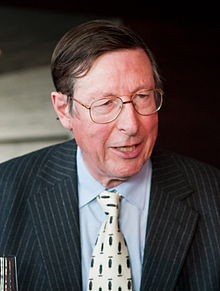
Max Hastings
Also known as: Sir Max Hastings
Sir Max Hugh Macdonald Hastings (born 28 December 1945) is a British journalist and military historian, who has worked as a foreign correspondent for the BBC, editor-in-chief of The Daily Telegraph, and editor of the Evening Standard. He is also the author of numerous books, chiefly on defence matters, which have won several major awards. Source: [Max Hastings]( on Wikipedia
IN the middle of the journey of our life I came to myself within a dark wood where the straight way was lost.
— from Inferno, 2008
Most acclaimed

Inferno
2008
From one of our finest military historians, a monumental work that shows us at once the truly global reach of World War II and its deeply personal consequences. World War II involved tens of millions of soldiers and cost sixty million lives -- an average of twenty-seven thousand a day. For thirty-five years, Max Hastings has researched and written about different aspects of the war. Now, for the first time, he gives us a magnificent, single-volume history of the entire war. Through his strikingly detailed stories of everyday people -- of soldiers, sailors and airmen; British housewives and Indian peasants; SS killers and the citizens of Leningrad, some of whom resorted to cannibalism during the two-year siege; Japanese suicide pilots and American carrier crews—Hastings provides a singularly intimate portrait of the world at war. He simultaneously traces the major developments—Hitler's refusal to retreat from the Soviet Union until it was too late; Stalin's ruthlessness in using his greater population to wear down the German army; Churchill's leadership in the dark days of 1940 and 1941; Roosevelt's steady hand before and after the United States entered the war—and puts them in real human context. Hastings also illuminates some of the darker and less explored regions under the war's penumbra, including the conflict between the Soviet Union and Finland, during which the Finns fiercely and surprisingly resisted Stalin's invading Red Army; and the Bengal famine in 1943 and 1944, when at least one million people died in what turned out to be, in Nehru's words, "the final epitaph of British rule" in India. Remarkably informed and wide-ranging, Inferno is both elegantly written and cogently argued. Above all, it is a new and essential understanding of one of the greatest and bloodiest events of the twentieth century. - Publisher.
Armageddon
Armageddon is the epic story of the last eight months of World War II in Europe by Max Hastings--one of Britain's most highly regarded military historians, whose accounts of past battles John Keegan has described as worthy "to stand with that of the best journalists and writers" (New York Times Book Review).In September 1944, the Allies believed that Hitler's army was beaten, and expected that the war would be over by Christmas. But the disastrous Allied airborne landing in Holland, American setbacks on the German border and in the Hurtgen Forest, together with the bitter Battle of the Bulge, drastically altered that timetable. Hastings tells the story of both the Eastern and Western Fronts, and paints a vivid portrait of the Red Army's onslaught on Hitler's empire. He has searched the archives of the major combatants and interviewed 170 survivors to give us an unprecedented understanding of how the great battles were fought, and of their human impact on American, British, German, and Russian soldiers and civilians. Hastings raises provocative questions: Were the Western Allied cause and campaign compromised by a desire to get the Soviets to do most of the fighting? Why were the Russians and Germans more effective soldiers than the Americans and British? Why did the bombing of Germany's cities continue until the last weeks of the war, when it could no longer influence the outcome? Why did the Germans prove more fanatical foes than the Japanese, fighting to the bitter end? This book also contains vivid portraits of Stalin, Churchill, Eisenhower, Montgomery, and the other giants of the struggle. The crucial final months of the twentieth century's greatest global conflict come alive in this rousing and revelatory chronicle.From the Hardcover edition.
World War II
1999
World War II was the most intensively photographed conflict in history. Military and press photographers, propagandists, camera-wielding soldiers and civilians--all took the opportunity to record the tumultuous events of 1939-45. The scenes they captured of mass suffering and individual heroism, of atrocious cruelty and humanitarianism against the odds, of hate and comradership, misery and hope, remain undiminished in their intensity and constitute a vital record of an extra ordinary period. World War II: A Photographic History features 900 clearly captioned images selected from a wide variety of sources, many of which are seen here for the first time. Every major theatre of conflict is covered, from the ice seas of the Arctic Circle to the jungles of the South Pacific, from the deserts of North Africa to the steppes of Russia. Throughout, proper historical grounding is given by an informative, indexed commentary summarizing the many complex events of the period.