
SPAIN AUTHOR · FICTION · HISTORY
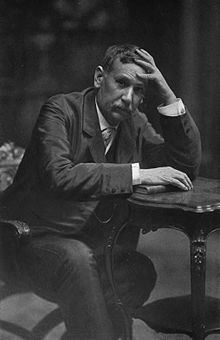
Benito Pérez Galdós
Benito María de los Dolores Pérez Galdós (Spanish pronunciation: [beˈnito ˈpeɾeθ ɣalˈðos]; 10 May 1843 – 4 January 1920) was a Spanish realist novelist and politician. He was a leading literary figure in 19th-century Spain, and some scholars consider him second only to Miguel de Cervantes in stature as a Spanish novelist. Pérez Galdós was a prolific writer, publishing 31 major novels, 46 historical novels in five series, 23 plays, and the equivalent of 20 volumes of shorter fiction, journalism and other writings. He remains popular in Spain, and is considered equal to Charles Dickens, Honoré de Balzac and Leo Tolstoy. He is less well known in Anglophone countries, but some of his works have now been translated into English.
IN the middle of the journey of our life I came to myself within a dark wood where the straight way was lost.
— from Inferno, 2008
Most acclaimed

Inferno
2008
From one of our finest military historians, a monumental work that shows us at once the truly global reach of World War II and its deeply personal consequences. World War II involved tens of millions of soldiers and cost sixty million lives -- an average of twenty-seven thousand a day. For thirty-five years, Max Hastings has researched and written about different aspects of the war. Now, for the first time, he gives us a magnificent, single-volume history of the entire war. Through his strikingly detailed stories of everyday people -- of soldiers, sailors and airmen; British housewives and Indian peasants; SS killers and the citizens of Leningrad, some of whom resorted to cannibalism during the two-year siege; Japanese suicide pilots and American carrier crews—Hastings provides a singularly intimate portrait of the world at war. He simultaneously traces the major developments—Hitler's refusal to retreat from the Soviet Union until it was too late; Stalin's ruthlessness in using his greater population to wear down the German army; Churchill's leadership in the dark days of 1940 and 1941; Roosevelt's steady hand before and after the United States entered the war—and puts them in real human context. Hastings also illuminates some of the darker and less explored regions under the war's penumbra, including the conflict between the Soviet Union and Finland, during which the Finns fiercely and surprisingly resisted Stalin's invading Red Army; and the Bengal famine in 1943 and 1944, when at least one million people died in what turned out to be, in Nehru's words, "the final epitaph of British rule" in India. Remarkably informed and wide-ranging, Inferno is both elegantly written and cogently argued. Above all, it is a new and essential understanding of one of the greatest and bloodiest events of the twentieth century. - Publisher.
Reality
"Ghost stories for the digital age by the Booker Prize-longlisted author of The Wall. In 2017, inspired in part by Henry James' "The Turn of the Screw," the acclaimed English novelist John Lanchester published a ghost story in The New Yorker. "Signal" was a sensation among readers and was featured on public radio-and it was the first short story of any kind Lanchester had ever written. Since then he's written several more eerie stories of contemporary life and the perils of technology that plunk the reader down in the uncanny world of The Twilight Zone or Black Mirror, and Reality and Other Stories gathers the best of them. A mysterious tall man haunts a country house in search of a cell signal; a translator at an academic conference starts hearing things over his headset that nobody should hear; a family discovers their dependence on the latest technological gadget goes to the very foundations of human relations; and the merry contestants in a reality TV show may actually be... somewhere very hellish indeed. Reality and Other Stories is a book of disquiet that captures the severe disconnection and distraction of our time"--
Doña Perfecta
One of the most popular writers in Spain, and perhaps the best known in other countries, is Benito Pérez Galdós. In nearly all his works he has sought to portray some particular phase of Spanish life. Though Galdós is not strictly speaking a "realist," his stories are intensely Spanish, and hence appeal to every foreigner interested in the daily life and doings and in the national customs of the Spanish people. - Introduction.