Discover

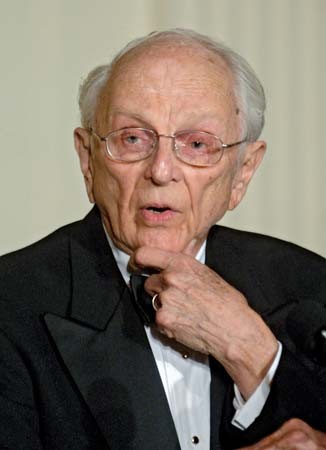
David Herbert Donald

Personal Information

Born October 1, 1920
Died January 1, 2009 (88 years old)
Goodman, United States
Also known as: Donald, David Herbert, Ed., David Herbert[Ed. ] Donald
18 books
4.0 (2)
24 readers

Description

David Herbert Donald was an American historian, best known for his acclaimed 1995 biography of Abraham Lincoln. - Wikipedia

Books

Newest First

Lincoln Reconsidered

0.0 (0)
7

Collection of provactive essays that probe the multiple depths of Abraham Lincoln--life and mythology.

Charles Sumner And The Coming Of The Civil War

4.0 (1)
2

In this brilliant biography—a Pulitzer Prize—winning national bestseller—David Herbert Donald, Harvard professor emeritus, traces Sumner's life as the nation careens toward civil war. In a period when senators often exercised more influence than presidents, Senator Charles Sumner was one of the most powerful forces in the American government and remains one of the most controversial figures in American history. His uncompromising moral standards made him a lightning rod in an era fraught with conflict. Sumner's fight to end slavery made him a hero in the North and stirred outrage in the South. In what has been called the first blow of the Civil War, he was physically attacked by a colleague on the Senate floor. Unwavering and arrogant, Sumner refused to abandon the moral high ground, even if doing so meant the onslaught of the nation's most destructive war. He used his office and influence to transform the United States during the most contentious and violent period in the nation's history. Charles Sumner and the Coming of the Civil War presents a remarkably different view of our bloodiest war through an insightful reevaluation of the man who stood at its center.

"We are Lincoln men"

0.0 (0)
1

This examines the significance of friendship in Abraham Lincoln's life and the role it played in his presidency. Though Lincoln had hundreds of acquaintances and dozens of admirers, he had almost no intimate friends. Behind his mask of affability and endless stream of humorous anecdotes, he maintained an inviolate reserve that only a few were ever able to penetrate. In this highly original book, two-time Pulitzer Prize-winner David Herbert Donald examines, for the first time, these close friendships and explores their role in shaping Lincoln's career.

Look Homeward

0.0 (0)
2

A portrait of an American novelist examining the forces of his life that were intertwined with his writing and the academic and literary worlds of which he was a part.

Charles Sumner and the Rights Of Man

4.0 (1)
1

Recipient of the National Book Award for History and Biography (Nonfiction), David Herbert Donald's second volumne on Sumner is favorable but critical, and, recognizes his large contribution to the positive accomplishments of Reconstruction. It covers Sumner's career during the Civil War and afterward, and is a book that remains of interest to historians today.

The Civil War and Reconstruction

0.0 (0)
0

Discusses the Civil War and Reconstruction and their effects on the nation and on Black Americans in particular.

Lincoln's Herndon

0.0 (0)
1

Herndon was Lincoln's friend, law partner, and biographer during the "Abe Lincoln in Illinois" days; this book reveals how a country lawyer became a national figure and what happened to the friend he left behind when he became President.--From the publisher.

Why the North Won the Civil War

0.0 (0)
5

In this classic exploration of the Confederacy's defeat in the Civil War, two-time Pulitzer Prize-winner David Herbert Donald and author of Lincoln assembles insightful and probing essays from six of America's most distinguished historians. Focusing on the political, military, economic, social, and diplomatic reasons behind the Union victory, this collection presents the most complete picture of this key aspect of Civil War studies. In an essay new to this edition, Henry Steele Commager offers a historiographical overview of the collapse of the Confederacy. Richard N. Current describes the economic superiority of the North and shows how the civilian resources of the South were dissipated during the war. T. Harry Williams examines the deficiencies of the Southern military strategy and leadership. Norman A. Graebner discusses the reluctance of France and England to aid the South. David Herbert Donald, in his own essay, reports that excessive Southern emphasis on individual freedom fatally undermined military discipline. And David M. Potter suggests that a lack of political leadership in the South resulted in gross incompetence. And exclusively for this edition, the editor has written a new foreword and completely updated the bibliography to create the most comprehensive and enlightening guide to understanding why the North won the Civil War. - Publisher.

Lincoln at home

0.0 (0)
2

"With a brief account of their first years in the White House and the complete collection of all the known letters exchanged by Abraham and Mary Todd Lincoln, this portrait defines the sixteenth president as a dedicated - though often a desperately busy and distracted - family man.". "Lincoln at Home is an intimate and rare glimpse of the president as husband and father, a cheerful man pinned to the floor while playing with his children, and a desolate man struck down with grief at the death of his son. Beyond this, we are shown a personal side of the man who managed one of the most difficult periods in American history."--BOOK JACKET.

Divided We Fought

0.0 (0)
0

A very nice survey of beautifully reproduced images —mostly photos— from the American Civil War. Many of the captions are based on eyewitness accounts or original letters. Edited with text by David Donald; picture editing by Hirst Milhollen and Milton Kaplan; captions edited by Milhollen, Kaplan, and Hulen Stuart. Profusely illustrated with full- and half-page black & white photos and illustrations.