Discover

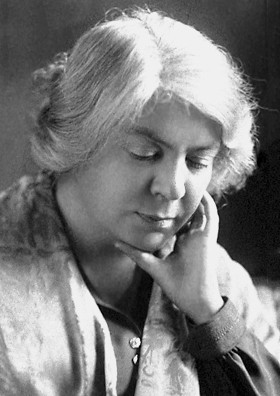
Grazia Deledda

Personal Information

Born January 1, 1871
Died January 1, 1936 (65 years old)
Nuoro, Kingdom of Italy
Also known as: Grazia, Deledda, Maria Grazia Deledda
15 books
4.1 (8)
68 readers
Categories

Description

Italian writer. In 1926, Grazia Deledda was awarded the Nobel Prize in Literature.

Books

Newest First

Ashes

5.0 (1)
12

"As the Revolutionary War rages on, Isabel and Curzon are reported as runaways, and the awful Bellingham is determined to track them down. With purpose and faith, Isabel and Curzon march on, fiercely determined to find Isabel's little sister Ruth, who is enslaved in a Southern state"--

The church of solitude

0.0 (0)
1

"The Church of Solitude tells the story of Maria Concezione, a young Sardinian seamstress living with breast cancer at the cusp of the twentieth century. Overwhelmed by the shame of her diagnosis, she decides that no one can know what has happened to her, but the heavy burden of this secrecy changes her life in dramatic ways and almost causes the destruction of several people in her life. This surprising novel paints the portrait of a woman facing the unknown with courage, faith, and self-reliance, and is the last and most autobiographical work of Grazia Deledda, who died of breast cancer in 1936, shortly after its publication. An afterword by the translator offers additional information on the author and examines the social and historical environment of that time."--BOOK JACKET.

Canne al vento

3.5 (2)
19

Set in the barren lands of Sardnia, the novel involves the themes of poverty, honor and superstition. Early 20th Century rural Sardnia described in the book is still nowadays a combination of an apparently static society, related to millenary customs, and a land striding towards a both industrial and technological progress. Unlike other artists of that time, discussing the most sensitive and concerned about its cultural side, grasping the deep and upsetting meaning of this change. We can see this in her projection of the island community. It is not a story for its own sake, neither is it enclosed within the Sardnian borders. What was valid for the island was also for Italy at the time, and the world.

Cosima

0.0 (0)
1

This book tells the story of an aspiring female writer who grows up during the last decades of 19th century Sardinia. Formal education for women was rare at that time, and literary careers virtually unheard of. It describes the young woman's struggle against the disapproval of her family and friends at her creative ambitions, but it also contains rich details of family life and rural traditions.

Elias Portolu

0.0 (0)
4

"After serving time in mainland Italy for a minor theft, Elias Portolu returns home to Nuoro, in rural Sardinia. Lonely and vulnerable after his prison exile, he falls in love with Maddalena, his brother's fiancee. He finds himself trapped by social and religious strictures, his passion and guilt winding into a spiral of anguish and paralyzing indecision. For guidance he turns to the village priest, who advises him to resist temptation; then he turns to the pagan "father of the woods," who recognizes the weakness of human will and urges him to declare his love before it is too late. Finally Elias chooses a course that provides a measure of redemption but forces him into a position from which he can only helphlessly observe the results of his affair."--Back cover.

Dopo il divorzio

0.0 (0)
3

Giovanna and Costantino Ledda are a happily married young Sardinian couple living a contented village existence with their small child and extended family. But after Costantino is wrongly convicted of murdering his uncle and imprisoned, the now‐impoverished Giovanna reluctantly divorces him under a newly enacted divorce law and marries Brontu Dejas, a wealthy but cruel drunkard who has always coveted her. While enduring a slave’s existence within this new marriage as well as the community’s derision of her as the “wife with two husbands,” the broken Giovanna is unexpectedly reunited with an embittered Costantino after his exoneration and early release from prison, and the two resume their now‐illicit relationship. An exploration of hypocrisy, expiation, and the human disruption of a supernatural order that remorselessly reasserts itself, After the Divorce is set in an insular society of ancient, religious roots grappling with the intrusion of modern, secular social mores and is among the earliest of the serious works on which Grazia Deledda’s literary reputation is based. Deledda—the first Italian woman to win the Nobel Prize for Literature—critiqued the social norms of her native Sardinia through verismo depictions of the struggles of the lower classes, into which she wove elements of her own personal tragedies.

The mother

5.0 (1)
13

Pearl Buck paints the portrait of a poor woman living in a remote village whose joys are few and hardships are many. As the ancient traditions, which she bases her philosophies upon, begin to collide with the new ideals of the communist era, this peasant woman must find a balance between them and deal with the consequences.

Ivy

0.0 (0)
2

Can you keep a secret? Aston University might be teeming with prestigious and wealthy students, but the currency on campus isn’t their millions. It’s their secrets. And the three women living at Clarence Manor are filthy rich in lies and deceit. Two of the roommates have played this game for years. Some would consider them masters of a ruse. The third might be new to Aston, but she’s no stranger to secrets. Cassia, the outsider. Elora, the ice princess. And Ivy, the puppet master. Who’s hiding the ugliest truths? We’ll let you be the judge. Go ahead. Whisper your confessions in our ear. We promise not to tell.

Honest Souls

0.0 (0)
0

"Anna Malvas is taken in by her uncle Paolo Velena and his family soon after she becomes an orphan. Anna enters their home as a child and grows into adulthood, falling in and out of love and eventually blossoming into a poised young woman." "Along the way, Anna's vivid descriptive narrative accompanies us as we discover the Sardinia of the late 19th-century. Anna's story is set around cameo-like vignettes interspersed with simple details - descriptions of a wedding dress and the scented white paper it is wrapped within, the intricacies of Richelieu embroidery, the procedure for sun drying tomatoes - which enhance the fabric of the story. Throughout Honest Souls, Anna's story is imbibed with folkloric zest, making the novel a valuable snapshot of the small-town Sardinia of her day." --Book Jacket.
