
ANCIENT ROME AUTHOR · TRANSLATIONS INTO ENGLISH · POETRY
Horace
Also known as: Quintus Horatius Flaccus, Q. Horatius Flaccus
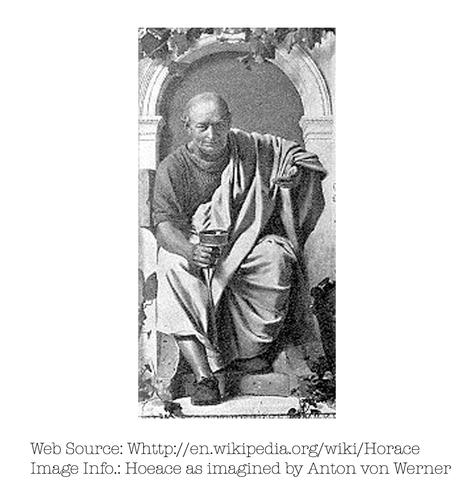
Quintus Horatius Flaccus (Classical Latin: [ˈkʷiːntʊs (h)ɔˈraːtiʊs ˈfɫakːʊs]; 8 December 65 BC – 27 November 8 BC), commonly known in the English-speaking world as Horace ( HORR-iss), was the leading Roman lyric poet during the time of Augustus (also known as Octavian). The rhetorician Quintilian regarded his Odes as the only Latin lyrics worth reading: "He can be lofty sometimes, yet he is also full of charm and grace, versatile in his figures, and felicitously daring in his choice of words." Horace also crafted elegant hexameter verses (Satires and Epistles) and caustic iambic poetry (Epodes). The hexameters are amusing yet serious works, friendly in tone, leading the ancient satirist Persius to comment: "as his friend laughs, Horace slyly puts his finger on his every fault; once let in, he plays about the heartstrings". His career coincided with Rome's momentous change from a republic to an empire. An officer in the republican army defeated at the Battle of Philippi in 42 BC, he was befriended by Octavian's right-hand man in civil affairs, Maecenas, and became a spokesman for the new regime.
NE'ER did I taste Castalia's stream;
— from Satirae
Most acclaimed

Collected works
Take a quick look at a comprehensive classics bookshelf, or perhaps a definitive video and DVD collection, and chances are you'll find at least one of Jane Austen's works. Austen's novels are prized not only for their light irony, humour, and depiction of contemporary English country life, but also for their underlying serious qualities. Highly readable, full of dry wit and sage advice, Austen makes for a delightful change of pace from today's usual modern fare. This ebook gives you all six of her novels as well as bonus material in the form of several minor works. Sense and sensibility -- Pride and prejudice -- Mansfield Park -- Emma -- Northanger Abbey -- Persuasion -- Love and friendships -- An unfinished novel in letters -- The history of England -- A collection of letters -- Scraps -- The first act of a comedy -- A letter from a young lady -- A tour through Wales -- A tale.
Satirae
JUVENAL, Decimus Iunius Iuvenalis (c. A.D. 600-100); master of satirical hexameter poetry, was born in Aquinum, a rich freedman's son(?) who became a declaimer until middle age, and then between A.D. 100 and 140 used his powers in the composition first of scathing satires on Roman life, attacking the dead rather than the living, with special reference to ineptitude in poetry (Satire I); vices of fake philosophers (2); grievances of the worthy poor (3); and of clients (5); a council-meeting under Emperor Dominian (4); vicious women (6); prospects of letters and learning under a new emperor (7); virtue not birth as giving nobility (8); and the vice of homosexuals (9); we have the true object of prayer (10);, paraphrased by Johnson in 'The Vanity of Human Wishes'; spend-thrift and frugal eating (11); a friend's escape from shipwreck; and will-hunters(12); guilty conscience and desire for revenge (13); parents as examples (14); cannibalism in Egypt (15); privileges of soldiers (16, unfinished). PERSIUS, Aulus, Persius Flaccus (A.D. 34-62) of Volaterrae was of equestrian rank; he came to Rome and was trained in 'grammar', rhetoric, and Stoic philosophy. In company with his mother, sister and aunt and enjoying the friendship of Lucan and other famous people, he lived a sober life. He left six Satires only (in hexameters); after a prologue (in scazon metre) we have a Satire on the corruption of literature and morals (1); foolish methods of prayer (2); deliberately wrong living and lack of philosophy (3); the well-born insincere politician, and some of our own weaknesses (4); praise of Cornutus the Stoic; servility of men (5); and a chatty poem addressed to the poet Bassus (6).
The epistles of Horace
Book digitized by Google from the library of the University of Michigan and uploaded to the Internet Archive by user tpb.