
UNITED STATES AUTHOR · FICTION · SOCIAL LIFE AND CUSTOMS
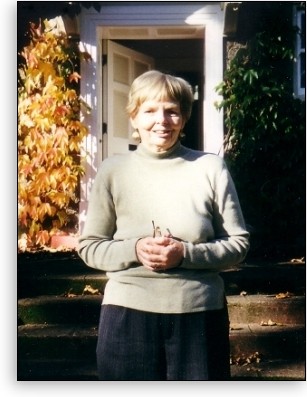
Carol Shields
Also known as: Shields Carol, Shields, Carol, 1935-
Carol Ann Shields (née Warner; June 2, 1935 – July 16, 2003) was an American-born Canadian novelist and short story writer. She is best known for her 1993 novel The Stone Diaries, which won the U.S. Pulitzer Prize for Fiction as well as the Governor General's Award in Canada.
SOMETHING IS ALWAYS SAYING TO ME: Be plain.
— from Collected stories
Most acclaimed

Jane Austen
At the heart of Jane Austen's story lies a mystery: how a woman of "genteel poverty," the seventh child of a country clergyman, an unmarried spinster for whom life was often a struggle against the indignities of financial dependency, could have produced works of such magnificent warmth and wisdom. Valerie Grosvenor Myer's flawless research proves Austen's books grew from the preoccupations of her social set - respectability, financial security, and most of all, marriage. "It is a truth universally acknowledged," begins Pride and Prejudice, "that a single man in possession of a good fortune must be in want of a wife." In that one line are revealed the principal forces at work in Austen's novels - and in the world from which they were drawn. For many middle-class women of Austen's day, marriage was paradoxically the only method of achieving independence. Marriage could also be a life sentence. Myer shows that by many accounts Austen was pretty and flirtatious (though occasionally also sharp-tongued), and the object of at least two proposals, but obstinate in her refusal to marry for other than love. Her obstinacy condemned her to reliance on her family for financial support. As Myer points out, it also enabled Austen to write her immortal novels. Using letters, family memories, and of course the novels themselves, Myer provides a detailed and revealing look at Jane Austen - her relationship with her beloved sister Cassandra, her devotion to and pride in her brothers and their children (who remembered "Aunt Jane" with warm affection), and her independence of mind and spirit. Austen's fondest dream was to establish herself not as another "silly female novelist," but as a serious and self-supporting writer. She reveled in the reviews of those of the novels published - anonymously - during her brief lifetime. Yet as Myer shows, no one, least of all Austen herself, could have imagined her posthumous popularity.
Collected stories
This indispensable volume contains the best of Frank O’Connor's short fiction. From “Guests of the Nation” to “The Mad Lomasneys” to “First Confession” to “My Oedipus Complex,” these tales of Ireland have touched generations of readers the world over and placed O'Connor alongside W. B. Yeats and James Joyce as the greatest of Irish authors. Analyzing a Robert Browning poem, O'Connor once wrote: “Since a whole lifetime must be crowded into a few minutes, those minutes must be carefully chosen indeed and lit by an unearthly glow.” Each of the sixty-seven stories gathered here achieves the same incredible feat of the imagination, laying bare entire lives and histories within the space of a few pages. Dublin schoolteacher Ned Keating waves good-bye to a charming girl and to any thoughts of returning to his village home in the lyrical and melancholy “Uprooted.” A boy on an important mission is waylaid by a green-eyed temptress and seeks forgiveness in his mother’s loving arms in “The Man of the House,” a tale that draws on O'Connor’s own difficult childhood. A series of awkward encounters and humorous misunderstandings perfectly encapsulates the complicated legacy of Irish immigration in “Ghosts,” the bittersweet account of an American family’s pilgrimage to the land of their forefathers. As a writer, critic, and teacher, O'Connor elevated the short story to astonishing new heights. This career-spanning anthology, epic in scope yet brimming with the small moments and intimate details that earned him a reputation as Ireland’s Chekhov, is a testament to Frank O’Connor's magnificent storytelling and a true pleasure to read from first page to last.