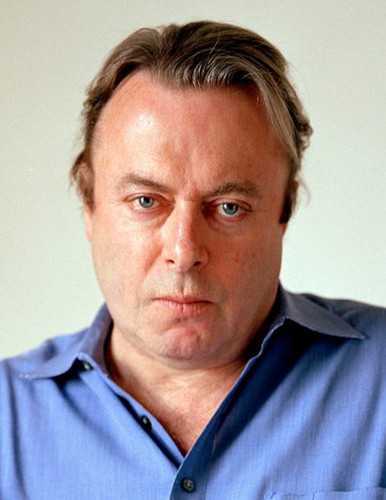
Christopher Hitchens
Personal Information
Description
CHRISTOPHER HITCHENS was born in 1949 in England and was a graduate of Balliol College at Oxford University. He was the father of three children and the author of more than twenty books and pamphlets, including collections of essays, criticism, and reportage. His book, god Is Not Great: How Religion Poisons Everything, was a finalist for the 2007 National Book Award and an international bestseller. His bestselling memoir, Hitch-22, was a finalist for the 2010 National Book Critics Circle Award for autobiography. A visiting professor of liberal studies at the New School in New York City, he was also the I.F. Stone professor at the Graduate School of Journalism at the University of California, Berkeley. He was a columnist, literary critic, and contributing editor at Vanity Fair, The Atlantic, Slate, Times Literary Supplement, The Nation, New Statesman, World Affairs, Free Inquiry, among other publications. Christopher Hitchens died in December 2011 at the age of 62.
Books
The Parthenon marbles
In 1801, Lord Elgin removed some of the Parthenon's most beautiful sculptures to Britain, sparking a controversy which continues to this day. Hitchens recounts the history of the Elgin Marbles, and forcefully argues for their return to Greece.
Is Christianity good for the world?
The gloves come off in this electric exchange, originally hosted by Christianity Today, as leading atheist Christopher Hitchens (author of God is not Great) and Christian apologist Douglas Wilson (author of Letter from a Christian Citizen) go head-to-head on this divisive question. The result is entertaining and provocative -- a glimpse into the ongoing debate. - Back cover.
God Is Not Great
In the tradition of Bertrand Russell's Why I Am Not a Christian and Sam Harris's recent bestseller, The End of Faith, Christopher Hitchens makes the ultimate case against religion. With a close and erudite reading of the major religious texts, he documents the ways in which religion is a man-made wish, a cause of dangerous sexual repression, and a distortion of our origins in the cosmos. With eloquent clarity, Hitchens frames the argument for a more secular life based on science and reason, in which hell is replaced by the Hubble Telescope's awesome view of the universe, and Moses and the burning bush give way to the beauty and symmetry of the double helix.
Thomas Paine's Rights of man
Thomas Paine was one of the greatest advocates of freedom in history, and his Declaration of the Rights of Man, first published in 1791, is the key to his reputation. Inspired by his outrage at Edmund Burke's attack on the French Revolution, Paine's text is a passionate defense of man's inalienable rights. Since its publication, Rights of Man has been celebrated, criticized, maligned, suppressed, and co-opted. But here, polemicist and commentator Christopher Hitchens marvels at its forethought and revels in its contentiousness. Hitchens, a political descendant of the great pamphleteer, demonstrates how Paine's book forms the philosophical cornerstone of the United States, and how, "in a time when both rights and reason are under attack," Thomas Paine's life and writing "will always be part of the arsenal on which we shall need to depend." (New Statesman)--From publisher description.
Love, poverty, and war
"I did not, I wish to state, become a journalist because there was no other ‘profession' that would have me. I became a journalist because I did not want to rely on newspapers for information." Love, Poverty and War: Journeys and Essays showcases America's leading polemicist's rejection of consensus and cliché, whether he's reporting from abroad in Indonesia, Kurdistan, Iraq, North Korea, or Cuba, or when his pen is targeted mercilessly at the likes of William Clinton, Mother Theresa ("a fanatic, a fundamentalist and a fraud"), the Dalai Lama, Noam Chomsky, Mel Gibson and Michael Bloomberg. Hitchens began the nineties as a "darling of the left" but has become more of an "unaffiliated radical" whose targets include those on the "left," who he accuses of "fudging" the issue of military intervention in the Balkans, Afghanistan and Iraq. Yet, as Hitchens shows in his reportage, cultural and literary criticism, and opinion essays from the last decade, he has not jumped ship and joined the right but is faithful to the internationalist, contrarian and democratic ideals that have always informed his work.
Blood, class, and empire
Since the end of the Cold War so-called experts have been predicting the eclipse of America's "special relationship" with Britain. But as events have shown, especially in the wake of 9/11, the political and cultural ties between America and Britain have grown stronger. This book examines the dynamics of this relationship, its many cultural manifestations--the James Bond series, PBS' "Brit kitsch," Rudyard Kipling--and explains why it still persists. Contrarian, essayist and polemicist Christopher Hitchens notes that while the relationship is usually presented as a matter of tradition, manners, and common culture, sanctified by wartime alliance, the special ingredient is empire; transmitted from an ancien regime that has tried to preserve and renew itself thereby. England has attempted to play Greece to the American Rome, but ironically having encouraged the United States to become an equal partner in the business of empire, Britain found itself supplanted.--From publisher description.
The trial of Henry Kissinger
Drawing on first-hand testimony, previously unpublished documentation and broad sweeps through material released under the Freedom of Information Act, Christopher Hitchens mounts a devastating indictment of a man whose ambition and ruthlessness have directly resulted in both individual murders and widespread, indiscriminate slaughter.--Publisher description.
Unacknowledged legislation
"Many have seen the encounter between literature and politics as necessarily fraught. Norman Podhoretz, for instance, examined the intersection under the rubric 'The Bloody Crossroads' (a term he borrowed from Lionel Trilling). Christopher Hitchens, in this sparkling engagement with literature and its producers, prefers a different approach. Taking inspiration from Shelley's description of the poet as an 'unacknowledged legislator', he shows that whilst the engagement between writers and those in power is not always smooth, it generally embodies a dialectic that is worth investigation." "Hitchens provides rich evidence that his own sallies as a political journalist are nourished by an erudite familiarity with a broad sweep of novelists, essayists and poets. In these pages Oscar Wilde's profound radicalism is uncovered; George Orwell's role as a fulcrum between left and right is carefully appraised; the languid irony and cosmopolitanism of Gore Vidal are celebrated; and a discussion of the fatwah issued against Salman Rushdie prompts a meditation on the West's misunderstood encounter with Islam. Along the way, a refined and knowledgeable palate samples offerings from, amongst others, P.G. Wodehouse, Arthur Conan Doyle, Dorothy Parker, F. Scott Fitzgerald, T.S. Eliot, Christopher Isherwood, Anthony Powell, Saul Bellow, Alan Bloom, Philip Larkin and Patrick O'Brian, and dethrones the overrated, conspicuous among them such figures as Tom Wolfe and Isaiah Berlin."--Jacket.
No one left to lie to
Hitchen’s analyzes the character of Bill Clinton in regard to critical actions undertaken during his presidency. In particular Hitches examines “the Monika Lewinsky affair” and Clinton’s response to the impeachment process. Includes an analysis of “triangulation”, ie, Clinton’s political strategy of playing “the left” against “the right” in order to promote his personal ambitions and satisfy his “lust for power”.
The Missionary Position
Recipient of the Nobel Peace Prize, feted by politicians, the Church and the world's media, Mother Teresa of Calcutta appears to be on the fast track to sainthood. But what, asks Christopher Hitchens, makes Mother Teresa so divine? In a frank expose of the Teresa cult, Hitchens details the nature and limits of one woman's mission to the world's poor. He probes the source of the heroic status bestowed upon an Albanian nun whose only declared wish is to serve God. He asks whether Mother Teresa's good works answer any higher purpose than the need of the world's privileged to see someone, somewhere, doing something for the Third World. He unmasks pseudo-miracles, questions Mother Teresa's fitness to adjudicate on matters of sex and reproduction, and reports on a version of saintly ubiquity which affords genial relations with dictators, corrupt tycoons and convicted frauds.
Imperial spoils
When Thomas Bruce, seventh earl of Elgin and British ambassador to the Ottoman empire, removed the Parthenon's sculptured friezes to the British Museum, he ignited a controversy that has not abated in a century and a half. Was Elgin a preservationist or an imperialist thief? Should Britain return the marbles to the Greek government? In this short, gracefully written, engaging broadside, Hitchens, a columnist for the Nation, makes a forceful case for full restitution of the sculptures. Lord Elgin, who considered keeping the marbles himself and charging admission to see them, comes off as an enterprising pirate. In a prefatory essay on the Parthenon, Browning, a classics professor at the University of London, traces the building's history as temple to Athena, makeshift Christian church, school for Greek girls, Turkish arms dump. The international effort now underway to restore the Parthenon and the Acropolis is discussed in a closing essay by Binns, who heads the British Committee for the Restitution of the Parthenon Marbles.