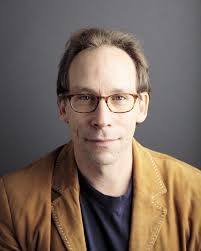
Lawrence Maxwell Krauss
Description
Lawrence Maxwell Krauss is an American theoretical physicist and cosmologist who is Foundation Professor of the School of Earth and Space Exploration at Arizona State University, and director of its Origins Project. He is known as an advocate of the public understanding of science, of public policy based on sound empirical data, of scientific skepticism and of science education, and works to reduce the influence of what he opines as superstition and religious dogma in popular culture. Krauss is the author of several bestselling books, including The Physics of Star Trek (1995) and A Universe from Nothing (2012), and chairs the Bulletin of the Atomic Scientists Board of Sponsors. Source: Wikipedia
Books
What Are You Optimistic About?
The nightly news and conventional wisdom tell us that things are bad and getting worse. Yet despite dire predictions, scientists see many good things on the horizon. John Brockman, publisher of Edge (www.edge.org), the influential online salon, recently asked more than 150 high-powered scientific thinkers to answer a vital question for our frequently pessimistic times: "What are you optimistic about?"Spanning a wide range of topics—from string theory to education, from population growth to medicine, and even from global warming to the end of world—What Are You Optimistic About? is an impressive array of what world-class minds (including Nobel Laureates, Pulitzer Prize winners, New York Times bestselling authors, and Harvard professors, among others) have weighed in to offer carefully considered optimistic visions of tomorrow. Their provocative and controversial ideas may rouse skepticism, but they might possibly change our perceptions of humanity's future.
Fear of physics
"Assume the cow is a sphere." So begins this lively, irreverent, and informative look at everything from the physics of boiling water to cutting-edge research at the observable limits of the universe. Rich with anecdotes and accessible examples (like the cow as sphere, which illustrates the principle of simplifying the world in order to explain it), Fear of Physics nimbly ranges over the tools and thought behind the world of modern physics, taking the mystery out of what is essentially a very human intellectual endeavor.
Hiding in the mirror
Draws on the works of scientists, mathematicians, artists, and writers to consider the concept of alternate universes, exploring popular theories about such topics as black holes, life in other dimensions, and string theory.
Quintessence
"Imagine an Age of Exploration full of alchemy, human dissection, sea monsters, betrayal, torture, religious controversy, and magic. In Europe, the magic is thin, but at the edge of the world, where the stars reach down close to the Earth, wonders abound. This drives the bravest explorers to the alluring Western Ocean. Christopher Sinclair is an alchemist who cares only about one thing: quintessence, a substance he believes will grant magical powers and immortality. And he has a ship."--
The physics of Star trek
With a foreword by Stephen HawkingAustralian Institute of Physics (Tas.) Schools Physics Quiz, 1997 - School Participation Awa rd awarded to The Hutchins School.
Quantum Man
Perhaps the greatest physicist of the second half of the twentieth century, Richard Feynman changed the way we think about quantum mechanics, the most perplexing of all physical theories. Here the author, himself a theoretical physicist, offers a scientific biography: a narrative coupled with clear and novel expositions of science at the limits. An immensely colorful persona in and out of the office, Feynman revolutionized our understanding of nature amid a turbulent life. The author presents that life, from the death of Feynman's childhood sweetheart during the Manhattan Project to his reluctant rise as a scientific icon, seen through the science, providing a new understanding of the legacy of a man who has fascinated millions. A reflection on the issues that drive physics today, this work captures the story of a man who was willing to break all the rules to tame a theory that broke all the rules. Traces the colorful, turbulent life of the Nobel Prize-winning physicist, from the death of his childhood sweetheart during the Manhattan Project to his rise as an icon in the scientific community.
A Universe from Nothing
"Internationally known theoretical physicist and bestselling author Lawrence Krauss offers provocative, revelatory answers to the most basic philosophical questions: Where did our universe come from? Why is there something rather than nothing? And how is it all going to end? Why is there something rather than nothing?" is asked of anyone who says there is no God. Yet this is not so much a philosophical or religious question as it is a question about the natural world--and until now there has not been a satisfying scientific answer. Today, exciting scientific advances provide new insight into this cosmological mystery: Not only can something arise from nothing, something will always arise from nothing. With his wonderfully clear arguments and wry humor, pioneering physicist Lawrence Krauss explains how in this fascinating antidote to outmoded philosophical and religious thinking. As he puts it in his entertaining video of the same title, which has received over 675,000 hits, "Forget Jesus. The stars died so you could be born." A mind-bending trip back to the beginning of the beginning, A Universe from Nothing authoritatively presents the most recent evidence that explains how our universe evolved--and the implications for how it's going to end. It will provoke, challenge, and delight readers to look at the most basic underpinnings of existence in a whole new way. And this knowledge that our universe will be quite different in the future from today has profound implications and directly affects how we live in the present. As Richard Dawkins has described it: This could potentially be the most important scientific book with implications for atheism since Darwin"-- "Authoritatively presents the most recent evidence that explains how our universe evolved--and the implications for how it's going to end"--