
UNITED STATES AUTHOR · LANGUAGE ACQUISITION · NONFICTION
Steven Pinker
Also known as: Steven Pinker, Stephen Pinker
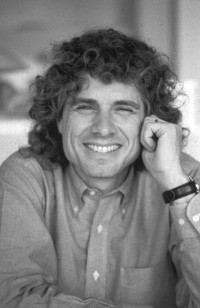
Steven Arthur "Steve" Pinker is a Canadian-born American cognitive scientist, psychologist, linguist, and popular science author. He is Johnstone Family Professor in the Department of Psychology at Harvard University, and is known for his advocacy of evolutionary psychology and the computational theory of mind.
"BLANK SLATE" IS a loose translation of the medieval Latin term tabula rasa-literally, "scraped tablet."
— from The Blank Slate
Most acclaimed

The better angels of our nature
From Goodreads: Selected by The New York Times Book Review as a Notable Book of the Year The author of The New York Times bestseller The Stuff of Thought offers a controversial history of violence. Faced with the ceaseless stream of news about war, crime, and terrorism, one could easily think we live in the most violent age ever seen. Yet as New York Times bestselling author Steven Pinker shows in this startling and engaging new work, just the opposite is true: violence has been diminishing for millennia and we may be living in the most peaceful time in our species's existence. For most of history, war, slavery, infanticide, child abuse, assassinations, pogroms, gruesome punishments, deadly quarrels, and genocide were ordinary features of life. But today, Pinker shows (with the help of more than a hundred graphs and maps) all these forms of violence have dwindled and are widely condemned. How has this happened? This groundbreaking book continues Pinker's exploration of the essence of human nature, mixing psychology and history to provide a remarkable picture of an increasingly nonviolent world. The key, he explains, is to understand our intrinsic motives- the inner demons that incline us toward violence and the better angels that steer us away-and how changing circumstances have allowed our better angels to prevail. Exploding fatalist myths about humankind's inherent violence and the curse of modernity, this ambitious and provocative book is sure to be hotly debated in living rooms and the Pentagon alike, and will challenge and change the way we think about our society.
The Blank Slate
In The Blank Slate, Steven Pinker, one of the world's leading experts on language and the mind, explores the idea of human nature and its moral, emotional, and political colorings. With characteristic wit, lucidity, and insight, Pinker argues that the dogma that the mind has no innate traits-a doctrine held by many intellectuals during the past century-denies our common humanity and our individual preferences, replaces objective analyses of social problems with feel-good slogans, and distorts our understanding of politics, violence, parenting, and the arts. Injecting calm and rationality into debates that are notorious for ax-grinding and mud-slinging, Pinker shows the importance of an honest acknowledgment of human nature based on science and common sense.
Learnability and cognition
Before Steven Pinker wrote bestsellers on language and human nature, he wrote several technical monographs on language acquisition that have become classics in cognitive science. Learnability and Cognition, first published in 1989, brought together two big topics: how do children learn their mother tongue, and how does the mind represent basic categories of meaning such as space, time, causality, agency, and goals? The stage for this synthesis was set by the fact that when children learn a language, they come to make surprisingly subtle distinctions: pour water into the glass and fill the glass with water sound natural, but pour the glass with water and fill water into the glass sound odd. How can this happen, given that children are not reliably corrected for uttering odd sentences, and they don't just parrot back the correct ones they hear from their parents? Pinker resolves this paradox with a theory of how children acquire the meaning and uses of verbs, and explores that theory's implications for language, thought, and the relationship between them. As Pinker writes in a new preface, "The Secret Life of Verbs," the phenomena and ideas he explored in this book inspired his 2007 bestseller The Stuff of Thought: Language as a Window into Human Nature. These technical discussions, he notes, provide insight not just into language acquisition but into literary metaphor, scientific understanding, political discourse, and even the conceptions of sexuality that go into obscenity.