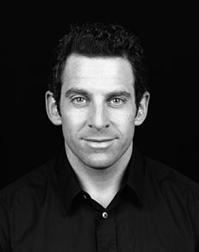
Sam Harris
Personal Information
Description
Sam Harris (born 1967) is an American non-fiction writer, neuroscientist and proponent of scientific skepticism. He is the author of The End of Faith (2004), which won the 2005 PEN/Martha Albrand Award, and Letter to a Christian Nation (2006), a rejoinder to the criticism his first book attracted.
Books
What Are You Optimistic About?
The nightly news and conventional wisdom tell us that things are bad and getting worse. Yet despite dire predictions, scientists see many good things on the horizon. John Brockman, publisher of Edge (www.edge.org), the influential online salon, recently asked more than 150 high-powered scientific thinkers to answer a vital question for our frequently pessimistic times: "What are you optimistic about?"Spanning a wide range of topics—from string theory to education, from population growth to medicine, and even from global warming to the end of world—What Are You Optimistic About? is an impressive array of what world-class minds (including Nobel Laureates, Pulitzer Prize winners, New York Times bestselling authors, and Harvard professors, among others) have weighed in to offer carefully considered optimistic visions of tomorrow. Their provocative and controversial ideas may rouse skepticism, but they might possibly change our perceptions of humanity's future.
Lying
"Most forms of private vice and public evil are kindled and sustained by lies. Acts of adultery and other personal betrayals, financial fraud, government corruption--even murder and genocide--generally require an additional moral defect: a willingness to lie. In [this book] ... Harris argues that we can radically simplify our lives and improve society by merely telling the truth in situations where others often lie"--Dust jacket flap.
The end of faith
A startling analysis of the clash of faith and reason in today's world, this historical tour of mankind's willingness to suspend reason in favor of religious beliefs, even when those beliefs are used to justify atrocities, asserts that in the shadow of weapons of mass destruction, we can not expect to survive our religious differences indefinitely. Most controversially, argues that moderate lip service to religion only blinds us to the real perils of fundamentalism. Harris also draws on new evidence from neuroscience and insights from philosophy to explore spirituality as a biological, brain-based need, and invokes that need in taking a secular humanistic approach to solving the problems of this world.
Free will
[Free Will]is a 2012 book by the American author and neuroscientist Sam Harris. Harris argues that the truth about the human mind (that free will is an illusion) does not undermine morality or diminish the importance of political and social freedom, and can as well as should change the way we think about some of the most important questions in life.
Islam and the future of tolerance
In this short book, Sam Harris and Maajid Nawaz invite you to join an urgently needed conversation: Is Islam a religion of peace or war? Is it amenable to reform? Why do so many Muslims seem drawn to extremism? What do words like Islamism, jihadism, and fundamentalism mean in today's world? Remarkable for the breadth and depth of its analysis, this dialogue between a famous atheist and a former radical is all the more startling for its decorum. Harris and Nawaz have produced something genuinely new: they engage one of the most polarizing issues of our time -- fearlessly and fully -- and actually make progress. Islam and the Future of Tolerance has been published with the explicit goal of inspiring a wider public discussion by way of example. In a world riven by misunderstanding and violence, Harris and Nawaz demonstrate how two people with very different views can find common ground.
Waking Up
Something was happening to their friendship. Robbie Fisher had always been a couple of years and a few changes behind her neighbour, Jason Morrow. Still, he'd lent an ear to all her dreams and troubles right up to the time he'd left for university. Now he was back in Cincinnati, looking after his parents home for the summer. But Robbie no longer felt comfortable confiding in him. He was the man with the golden future, while hers was still in question. What could he be to her now? Stranger, big brother, friend or something disturbingly new? It was a dilemma Robbie could discuss with no one—Jason least of all!
The Moral Landscape
What is the best “moral” decision that you can make in any given situation? Many aspects of your physical being work in unison to be able to use your cognitive processes to even come to a conscious decision. There have been many instances, especially recently, where scientific research is being conducted wherein people think about not just morality and what it means to them but also what is occurring inside the various regions of the brain. Sam Harris, the author of this book, tries to argue that we as humans should try to use science in a way to help us come to better moral decisions that increase the well-being of all humans. Like the studies I was referring to, Mr. Harris wants those scientific studies to be used in such a way as to try to help us make better, quicker, more efficient, and most importantly, the most beneficial decisions to improve or maintain our well-being. Although I do not agree will all the arguments that Mr. Harris presents, I do believe that reading this book is a worthwhile endeavor. Mr. Harris argues that there are objective moral values that can be and possibly are established into society through science. A relativist, he begins to break down the moral decisions and the bodily functions that occur, for conscious creatures from the molecular level, and introduces the reader to the general research that is being conducted in various cognitive areas. He makes no qualms as to how he is opposed to religious thought, and if you are offended, I suggest you move ahead from this section. He presents several instances where brain scans and diagrams show what parts of the brain are being used when someone is having a religious experience or felt the presence of their religious deity. He also presents an extensive section to the studies that have been done on people with diagnosed schizophrenia. The studies that are discussed brought new information to me on how cognitive diseases and patients of those diseases are studied and treated in hospitals and extended stay medical areas. The best argument that Mr. Harris does present has to do with the medical use of science to help out the human species. He wants to use medical research to the point where we can cure certain diseases, slow the aging process, stop certain syndromes, and just help out all the humans that need medical attention, and in this regard I would have to agree with using science in this fashion. Not everything about this book is for everyone. When reading this, you need to have an open-mind and just listen to what Mr. Harris is saying. Although you may not agree with all of the arguments, the information presented and the new ways to think about morality and moral decision making do provide an interesting context that should expand your noggin. Mr. Harris does get to the real core concept of morality; making decisions using your own cognitive processes to improve the well-being of yourself and others around you.