Discover
Sep 15, 1923 — Aug 26, 2015· 91 yrs

UNITED KINGDOM AUTHOR · DRAMA · DRAMATIC PRODUCTION

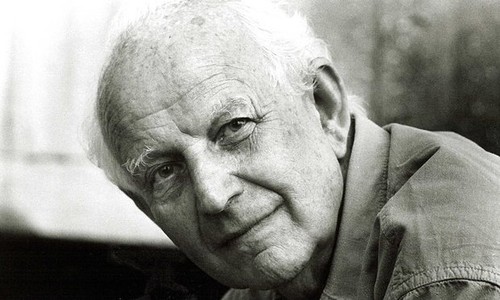
John Russell Brown

Also known as: John Russell-Brown, John R. Brown

37
BOOKS
4.0
AVG RATING (5)
0
READERS

John Russell Brown was a distinguished Shakespearean scholar who was also involved in practical theatre – he was a close associate of the director Peter Hall at the National Theatre for 15 years from 1973. Earlier, his academic career started at the Shakespeare Institute, where he was a fellow (1951-55), followed by 10 years as an English lecturer at Birmingham University, becoming professor and head of drama and theatre arts at Birmingham from 1964 to 1971. Ever active, ever busy, he was professor of English at Sussex University (1971-82) during his time with Hall. Afterwards he concentrated on his writing and was professor of theatre at the University of Michigan, Ann Arbor (1985-97). - The Guardian, UK.

Bristol, United Kingdom

Shakespeare's life began near the reflecting, gleaming river Avon, which today flows past Stratford's Church of the Holy Trinity where he lies buried, and past a theatre where his dramas are seen and heard by visitors from all nations.

— from Shakespeare, 1977

Most acclaimed

#2

Studying Shakespeare (Casebook)

1990

0.0 (0)
#1

Shakespeare

1977

0.0 (0)

Shakespeare has been the lodestar of English literature, not only to our finest biographers & critics but to our greatest imaginative writers as well. Oscar Wilde, Mark Twain & James Joyce have all written of the man— as enigma, ancestor or phantom. In Shakespeare Burgess, whose Nothing Like the Sun Harold Bloom called "the only successful novel ever written about Shakespeare," takes up that daunting challenge once again, reimagining the actual world of Shakespeare the author, actor & man. Burgess is mindful of the few facts we have about Shakespeare & handles them with great dexterity. But this isn't a mere recounting of facts. It's an attempt by one virtuoso writer to capture the likeness of the supreme virtuoso, to locate him exactly & take his measure. It's also an attempt to present him —as only a gifted professional writer can —as a working writer among others, a man of his time in his own milieu. Shakespeare the Elizabethan upstart? Literary genius without peer? The representative man? The actor among actors, businessman among businessmen? What Burgess so skillfully gets across —alongside what he calls "the main facts about the life & society from which the poems & plays arose"— is a genuine feel for who Shakespeare was & where he was. In the end, Burgess claims for himself the right of every Shakespeare-lover: "to paint his own portrait of the man."
#3

Hamlet

5.0 (1)

This Handbook's central commentary leads the reader through Hamlet's text, noting what it requires from its actors and the choices they are offered. Attention is also paid to plot and dramatic structure, the changing activity and grouping of persons on stage, and variations of pace. An account is given of early editions, the theatrical conditions of early performances, and the social, political and cultural context of the time, with generous quotations from contemporary writings. Notable productions and performances are described and a variety of critics cited to offer a number of different ways to understand the play's achievements and significance.

Books

Newest First
