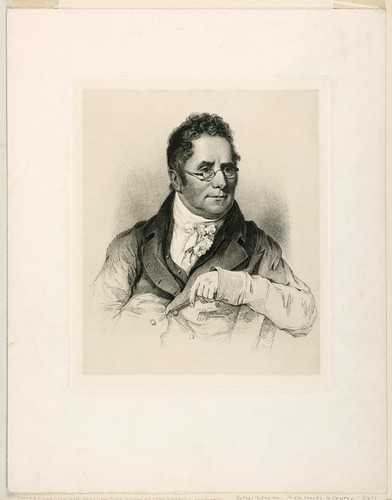
James Hogg
Description
There is no description yet, we will add it soon.
Books
The Private Memoirs and Confessions of A Justified Sinner (With A Detail of Curious Traditionary Facts, And Other Evidence, By The Editor)
"This now-famous book was given a hostile reception when it first appeared in 1824. It was not reprinted until the late 1830s, when a heavily bowdlerised version was included in a posthumous edition of Hogg's collected Tales and Sketches published by Blackie & Son of Glasgow. Thereafter Confessions of a Justified Sinner attracted little interest until the 1890s, when the unbowdlerised text was printed for the first time since the 1820s. However, the current high reputation of Hogg's novel did not fully begin to establish itself until 1947, when a warmly enthusiastic Introduction by Andre Gide appeared in a new edition of the unbowdlerised text."--BOOK JACKET.
Women, Feminism and the Media (Media Topics)
Over the past few decades feminist media scholarship has flourished, to become a major influence on the fields of media, film and cultural studies. At the same time, the cultural shift towards 'post-feminism' has raised questions about the continuing validity of feminism as a defining term for this work. This book explores the changing and often ambivalent relationship between the three terms women, feminism and media in the light of these recent debates. At the same time it places them within the broader discussions within feminist theory - about subjectivity, identity, culture, and narrative - of which they have formed a crucial part. The book is organised around four key topic areas. 'Fixing into Images' offers a rethinking of one of the first preoccupations of feminist media analysis: the relationship between women and images. 'Narrating Femininity' explores the narratives of femininity produced in media texts in the light of theories of narrative and identity. 'Real Women' examines both the continuing absence of women's voices from the genres of news and documentary, and their over-presence within popular 'reality' media forms. Finally, 'Technologies of Difference' examines the relationship between feminism, women and new media technologies. Throughout, the book explores key issues within feminist media studies both through specific examples and via critical engagement with the work of major theoretical writers. -- Back cover.
The Great English Short-Story Writers, Volume 1
I. THE EVOLUTION OF THE SHORT-STORY II. THE APPARITION OF MRS. VEAL. By Daniel Defoe (1661-1731) III. THE MYSTERIOUS BRIDE. By James Hogg (1770-1835) IV. THE DEVIL AND TOM WALKER. By Washington Irving (1783-1859) V. [DR. HEIDEGGER'S EXPERIMENT]( By Nathaniel Hawthorne (1807-1864) VI. [THE PURLOINED LETTER]( By Edgar Allan Poe (1809-1849) VII. RAB AND HIS FRIENDS. By Dr. John Brown (1810-1882) VIII. THE BOOTS AT THE HOLLY-TREE INN. By Charles Dickens (1812-1870) IX. A STORY OF SEVEN DEVILS. By Frank R. Stockton. (1834-1902) X. A DOG'S TALE. By Mark Twain (1835) XI. THE OUTCASTS OF POKER FLAT. By Bret Harte (1839-1902) XII. THE THREE STRANGERS. By Thomas Hardy (1840) XIII. JULIA BRIDE. By Henry James (1843) XIV. A LODGING FOR THE NIGHT. By Robert Louis Stevenson (1850-1894)
The Penguin Book of Horror Stories
The Monk of horror, or The Conclave of corpses, by Anonymous The Astrologer's prediction, or The Maniac's fate, by Anonymous The expedition to Hell, by James Hogg Mateo Falcone, by Prosper Merimee [Facts in the Case of M. Valdemar]( by Edgar Allan Poe Le Grande Breteche, by Honore de Balzac The romance of certain old clothes, by Henry James Who knows?, by Guy de Maupassant The body snatcher, by Robert Louis Stevenson The death of Olivier Becaille, by Emile Zola The boarded window, by Ambrose Bierce Lost hearts, by M.R. James The sea-raiders, by H.G. Wells The derelict, by William Hope Hodgson Thurnley Abbey, by Perceval Landon The fourth man, by John Russell In the penal colony, by Franz Kafka The waxwork, by A.M. Burrage Mrs. Amworth, by E.F. Benson The reptile, by Augustus Muir Mr. Meldrum's Mania, by John Metcalfe The beast with five fingers, by William Fryer Harvey Dry September, by William Faulkner Couching at the door, by D.K. Broster The two bottles of relish, by Lord Dunsany The man who liked Dickens, by Evelyn Waugh Taboo, by Geoffrey Household The thought, by L.P. Hartley Comrade death, by Gerald Kersh Leningen versus the ants, by Carl Stephenson The brink of darkness, by Yvor Winters Activity time, by Monica Dickens Earth to Earth, by Robert Graves The dwarf, by Ray Bradbury The Portabello Road, by Muriel Spark No flies on Frank, by John Lennon Sister Coxall's revenge, by Dawn Muscillo Thou shalt not suffer a witch ..., by Dorothy K. Haynes The terrapin, by Patricia Highsmith [Man from the south]( by Roald Dahl Uneasy home-coming, by Will F. Jenkins The Aquarist, by J.N. Allan An interview with M. Chakko, by Vilas Sarang
The spy : a periodical paper of literary amusement and instruction : published weekly in 1810 and 1811
QUEEN'S WAKE: A LEGENDARY POEM; ED. BY DOUGLAS S. MACK
"The Queen's Wake is one of the landmarks of British Romantic poetry. It focuses on the return of Mary, Queen of Scots to Scotland in 1561 to take personal rule of her kingdom after her years in France. In the poem poets and bards hold a poetic competition (a 'wake') in Holyrood Palace to welcome the Queen home. In the descriptions of the songs and the people who sing them various Scottish poets of Hogg's own period can be recognised, giving the reader a sense of the condition of poetry in Hogg's Scotland." "Another key concern of the poem is the state of Scotland in 1561 - a crucial period in Scottish history, coming a year after the legislation was passed that brought in the Scottish Reformation. The Queen's Wake looks back to the pre-1560 world of Catholic Scotland and explores the tensions between that old world and an emerging modernity." "When The Queen's Wake was published in 1813 it proved an unexpected popular success, placing Hogg for a while alongside Byron and Scott as one of the most admired British poets of that time. Over the next six years Hogg was encouraged by major players in the Edinburgh book trade to make substantial revisions, to make the poem even more attractive and saleable. The fifth edition (1819) is an enhanced and carefully polished version from the now established and respected poet. It is markedly different from the edgy, powerful and unsettling first version of The Queen's Wake, which was the work of an impecunious and marginalised outsider." "Thus the poem exists in significantly different authorial versions, each reflecting Hogg's circumstances at the time. In recent years a consensus has emerged that in cases of this kind the modern reader is best served by having access to editions of both versions. The Stirling/ South Carolina Research Edition of The Queen's Wake therefore presents both the first and fifth edition of the poem."--Jacket.
