Discover
May 20, 1806 — May 8, 1873· 66 yrs

UNITED KINGDOM OF GREAT BRITAIN AND IRELAND AUTHOR · PHILOSOPHY · LIBERTY

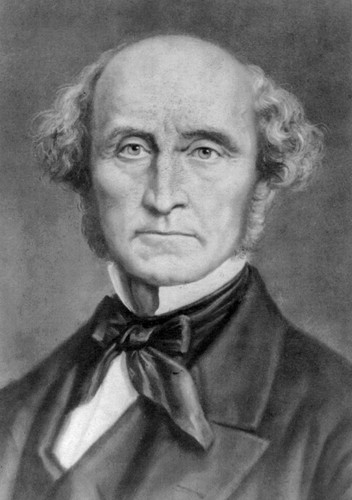
John Stuart Mill

Also known as: J. S. Mill, John S. Mill

54
BOOKS
4.1
AVG RATING (18)
0
READERS

John Stuart Mill (20 May 1806 – 8 May 1873), usually cited as J. S. Mill, was a British philosopher, political economist, and civil servant. One of the most influential thinkers in the history of liberalism, he contributed widely to social theory, political theory, and political economy. Dubbed "the most influential English-speaking philosopher of the nineteenth century", Mill's conception of liberty justified the freedom of the individual in opposition to unlimited state and social control. Source: [John Stuart Mill]( on Wikipedia.

London Borough of Islington, United Kingdom of Great Britain and Ireland
Wikipedia

THERE are very few scientific books whose permanent place in literature seems so well established as that of John Stuart Mill's "Principles of Political Economy."

— from Principles of political economy

Most acclaimed

#1

Nature

1897

4.0 (1)

Nature, History, State: 1933-1934 presents the first complete English-language translation of Heidegger's seminar 'On the Essence and Concepts of Nature, History and State', together with full introductory material and interpretive essays by five leading thinkers and scholars: Robert Bernasconi, Peter Eli Gordon, Marion Heinz, Theodore Kisiel and Slavoj Žižek. The seminar, which was held while Heidegger was serving as National Socialist rector of the University of Freiburg, represents important juncture in the development of Heidegger's political thought. The text is important evidence for anyone considering the tortured question of Heidegger's Nazism and its connection to his philosophy in general.

#2

Socialism

0.0 (0)

In this major new work, one of America's leading thinkers of the democratic Left argues convincingly that socialist renewal is the only hope for progress and freedom in the twenty-first century. A new civilization is already in the making, Harrington maintains, one of increasing automation and unprecedented international interdependence. Old frontiers are crumbling around the world as huge multinational companies, often in collaboration with their respective governments, already engage in global planning. The costs of this transformation are borne not only by the Third World but also by the new poor and precarious middle classes of the co-called advanced nations. Tracing two centuries of socialist history, Harrington shows that despite all its flaws and failures, the basic principles are sound. Because it places human values before doctrinaire political or blindly monetary considerations, it may also well be, Harrington says, our only hope for the future. - Jacket flap.

#3

Additional Letters

0.0 (0)

Books

Newest First
